
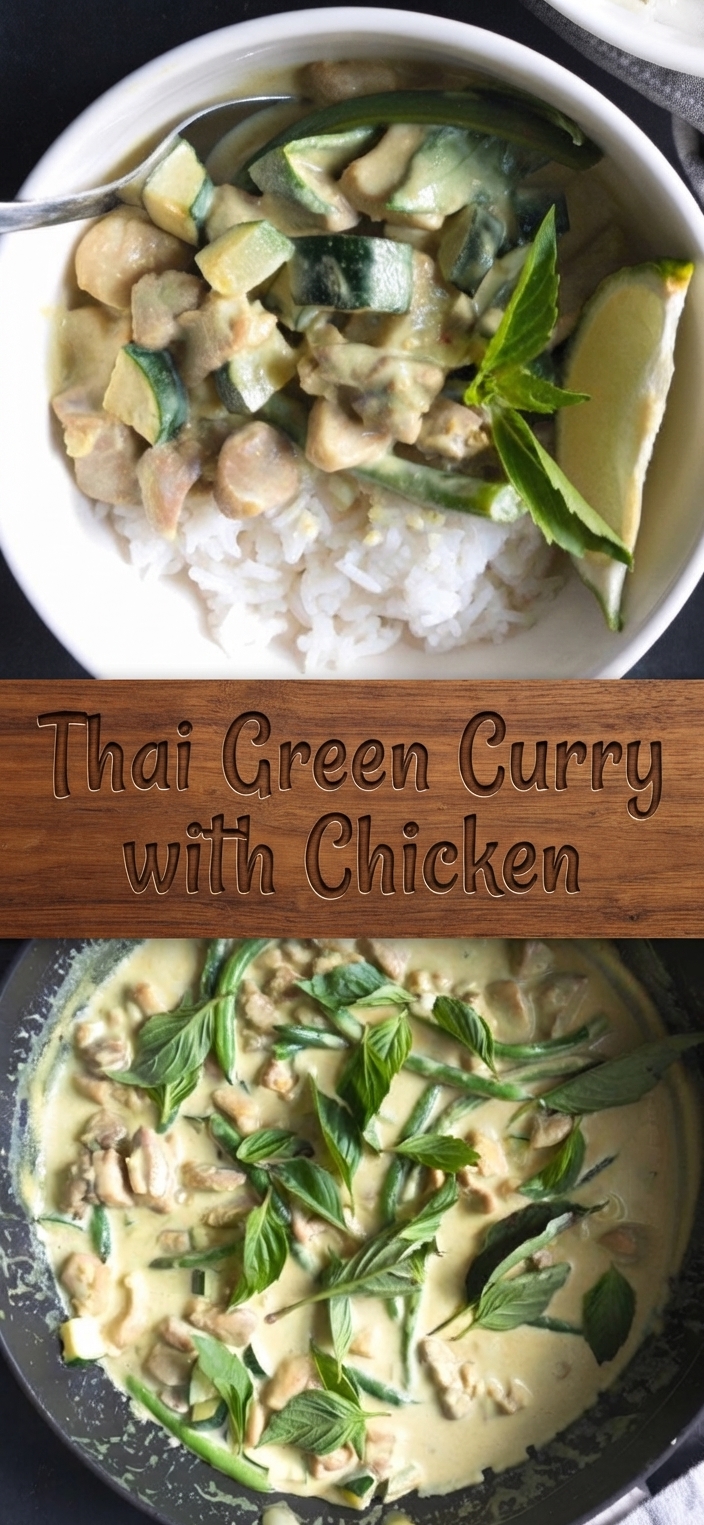
Thai Green Curry with Chicken
Experience the vibrant flavors of Thailand in your own kitchen with this fragrant and creamy Thai Green Curry with Chicken. This recipe perfectly balances heat from green chilies with the cooling richness of coconut milk, creating a luscious sauce that coats tender chicken, crisp green beans, and hearty zucchini. It’s a surprisingly quick weeknight meal that looks and tastes like it came from a favorite restaurant. Served over fluffy jasmine rice, it’s a comforting, satisfying, and aromatic dish that will invigorate your senses.
Ingredients
For the Curry:
-
1 lb (450g) boneless, skinless chicken breast or thighs, cut into bite-sized pieces
-
1 tablespoon vegetable oil, or other neutral oil
-
2–3 tablespoons Thai green curry paste (adjust to preferred spice level; check label to ensure it is vegetarian/vegan-friendly)
-
1 can (13.5 oz / 400ml) full-fat coconut milk
-
1/2 cup chicken or vegetable stock (or water)
-
1 medium zucchini, quartered lengthwise and sliced into 1/2-inch half-moons
-
1 cup fresh green beans, trimmed and cut into 1- to 2-inch pieces
-
1 tablespoon fish sauce (or substitute high-quality soy sauce or tamari for a vegetarian version)
-
1 tablespoon coconut sugar, brown sugar, or granulated sugar
-
1/2 cup fresh Thai basil leaves (packed), plus extra for garnish
-
1 lime, cut into wedges, for serving
For Serving:
-
Steamed jasmine rice
Instructions
-
Prepare the Chicken: Heat the vegetable oil in a large wok or saucepan over medium-high heat. Once hot, add the chicken pieces in a single layer. Sear the chicken, stirring occasionally, until it is cooked through and lightly browned (about 5–7 minutes). Remove the chicken from the pan and set aside on a plate.
-
Bloom the Curry Paste: In the same pan (reduce heat slightly if it’s too hot), add the Thai green curry paste. Stir constantly for about 1–2 minutes until the paste becomes very fragrant and slightly darkened. This process, called blooming, intensifies the flavors.
-
Create the Sauce: Pour in a small amount (about 1/4 cup) of the thick top layer from the can of coconut milk and stir vigorously to combine with the curry paste, creating a thick, oily emulsion. Cook for 1 minute, stirring, until the oil begins to separate from the paste. Pour in the remaining coconut milk and the chicken stock (or water). Stir well to fully incorporate the paste into the liquid. Bring the mixture to a gentle simmer.
-
Simmer the Vegetables: Add the sliced zucchini and cut green beans to the simmering curry. Cook for about 5–7 minutes, or until the vegetables are tender-crisp. They should still have a slight bite.
-
Combine and Finish: Return the cooked chicken to the pan, along with any juices accumulated on the plate. Stir in the fish sauce (or soy sauce alternative) and the sugar. Continue to simmer for another 2–3 minutes, allowing the chicken to reheat and the flavors to meld. Taste the curry and add a touch more sugar or fish sauce to balance the salty, sweet, and savory notes as desired.
-
Wilt the Basil: Just before serving, remove the pan from the heat. Stir in the 1/2 cup of fresh Thai basil leaves. The residual heat will cause them to wilt and release their essential oils, turning a vibrant green.
-
Serve: Immediately serve the hot curry over bowls of steamed jasmine rice. Garnish with a few fresh Thai basil leaves and a squeeze of fresh lime juice from the wedges.
Tips for Success
-
Curry Paste Matters: The quality and heat level of curry pastes can vary significantly between brands. Start with less paste (2 tablespoons) and add more if you prefer a spicier curry. Many commercial pastes are excellent; just be sure to check the ingredients list.
-
Coconut Cream Separation: It is normal for coconut milk to separate in the can into a thick cream and a thinner liquid. This is perfect for the recipe. Using the cream to fry the paste first helps develop a deeper flavor.
-
Don’t Overcook the Vegetables: To maintain a pleasant texture, avoid boiling the vegetables to mush. They should be tender but retain a bright color and a slight snap.
-
Customize Your Veggies: This recipe is flexible. You can substitute or add other vegetables like bamboo shoots, bell peppers, or eggplant.
-
Toasted Coconut Garnish: For an extra layer of flavor and texture, garnish the finished dish with a sprinkle of toasted, unsweetened coconut flakes.
Storage and Reheating
-
Storage: Allow any leftover curry to cool completely within two hours. Transfer to an airtight container and store in the refrigerator for up to 3–4 days.
-
Reheating: Reheat gently in a saucepan over medium-low heat, stirring occasionally, until warmed through. If the sauce has become too thick, you can add a splash of water or coconut milk to thin it to the desired consistency. Be careful not to boil it, as this can cause the coconut milk to curdle.
Serving Suggestions
-
Rice is Nice: Thai Green Curry is traditionally served over fragrant jasmine rice, which perfectly soaks up the flavorful sauce.
-
Side Dish: To complete the meal, serve alongside a simple side like a cool cucumber salad or steamed Asian greens with oyster sauce.
-
Freshness is Key: Do not skip the final additions of fresh Thai basil and lime juice; they provide the essential bright and herby notes that make this dish truly authentic and balanced.
Closing
This Thai Green Curry with Chicken is a fantastic way to bring the complex and delightful flavors of Thai cuisine to your dinner table. It is a perfect harmony of spice, creaminess, and fresh aromatic herbs. Whether you are cooking for your family or hosting a small dinner party, this dish is sure to impress. Enjoy the process and the delicious result!