
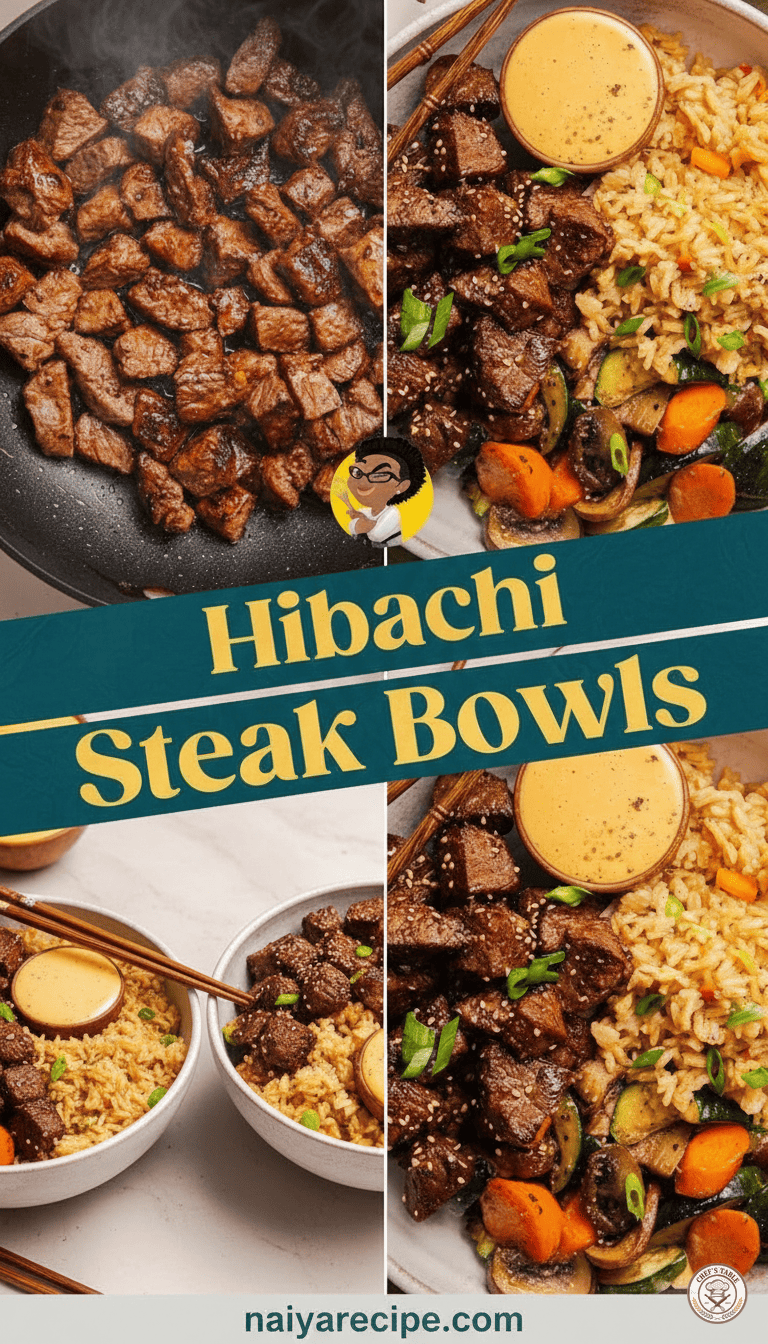
Are you craving that delicious, sizzling experience of a hibachi grill but want to enjoy it from the comfort of your own home? Look no further! These Hibachi Steak Bowls are the perfect solution. Packed with tender, flavorful steak, vibrant stir-fried vegetables, and a savory fried rice base, all drizzled with that iconic, creamy hibachi sauce, this recipe brings the magic of the Japanese steakhouse right to your kitchen.
Forget about reservations and waiting times. With this comprehensive guide, you’ll be able to recreate an authentic hibachi feast that rivals your favorite restaurant. We’ll break down each component, from perfecting the steak to stir-frying the vegetables and whipping up a quick fried rice, ensuring every bite is a burst of deliciousness. Get ready to impress your family and friends with a meal that’s not only incredibly tasty but also surprisingly simple to prepare.
The Heart of the Meal: Perfectly Cooked Hibachi Steak
The star of any hibachi meal is undoubtedly the steak. For our Hibachi Steak Bowls, we’re aiming for tender, juicy, and perfectly seared pieces of beef that have a beautiful caramelized crust.
Choosing Your Cut of Steak
While hibachi restaurants often use cuts like sirloin or filet mignon, you have options for home cooking.
- Sirloin: A popular choice for hibachi, sirloin is flavorful and relatively tender. It’s also a more budget-friendly option.
- Ribeye: If you’re looking for a richer, more marbled steak, ribeye is an excellent choice. The fat marbling renders beautifully, adding incredible flavor and tenderness.
- New York Strip: Another great option, offering a good balance of tenderness and flavor.
For this recipe, we’ll focus on sirloin, as it’s widely available and delivers fantastic results. Regardless of your choice, make sure to get a cut that’s at least 1-inch thick, as this will help you achieve a good sear without overcooking the interior.
Preparing the Steak
- Pat Dry: This is a crucial step! Use paper towels to thoroughly pat the steak dry on all sides. Moisture on the surface will prevent a good sear and instead steam the meat.
- Cut into Bite-Sized Cubes: Once dry, cut the steak into approximately 1-inch cubes. Uniform pieces will ensure even cooking.
- Seasoning: A simple seasoning is all you need. Sprinkle the steak cubes generously with salt and black pepper. You can also add a touch of garlic powder for extra flavor.
Cooking the Steak
The key to perfect hibachi steak is high heat and quick cooking.
- Preheat Your Pan: Place a large skillet or cast-iron pan over high heat. Add 1-2 tablespoons of a high smoke point oil, such as avocado oil, grapeseed oil, or canola oil. Let the oil get shimmering hot – you should see wisps of smoke just starting to appear.
- Sear in Batches: Don’t overcrowd the pan! Cook the steak in batches to ensure each piece gets direct contact with the hot surface and develops a beautiful crust. If you add too much at once, the temperature of the pan will drop, and the steak will steam rather than sear.
- Cook Until Browned: Place the steak cubes in a single layer in the hot pan. Let them cook undisturbed for 2-3 minutes per side, until deeply browned and caramelized. You want a nice crust on all sides.
- Finish Cooking: Depending on your desired doneness, you might need an extra minute or two. For medium-rare, aim for an internal temperature of 130-135°F (54-57°C). Remember that the steak will continue to cook slightly after it’s removed from the heat.
- Remove from Pan: Once cooked to your liking, remove the steak from the pan and set it aside on a plate. It’s okay if some browned bits (fond) remain in the pan; these will add flavor to your vegetables!
Vibrant and Flavorful Hibachi Vegetables
No hibachi bowl is complete without a medley of crisp-tender vegetables. We’re going for vibrant colors and a delightful crunch that complements the steak perfectly.
Choosing Your Vegetables
The beauty of hibachi vegetables is their versatility. Classic choices include:
- Zucchini: A must-have, zucchini becomes tender and slightly sweet when stir-fried.
- Carrots: Adds a touch of sweetness and beautiful orange color.
- Onions: Provides a pungent aromatic base that mellows beautifully with cooking.
- Mushrooms: White button or cremini mushrooms absorb flavors wonderfully.
- Broccoli: Adds a lovely green color and a slight bite.
- Snap Peas: For an extra pop of sweetness and crunch.
Feel free to mix and match based on your preferences and what’s in season.
Preparing and Cooking the Vegetables
- Chop Evenly: Cut all your chosen vegetables into uniform, bite-sized pieces. This ensures they cook evenly. For carrots, you might want to slice them a bit thinner or on a bias as they take longer to cook than zucchini or mushrooms.
- Heat the Pan: Use the same pan you cooked the steak in (no need to clean it – those browned bits add flavor!). Add another tablespoon of high smoke point oil if needed.
- Stir-Fry in Order: Add the vegetables that take longer to cook first.
- Carrots and Onions: Start with these, stir-frying for 3-4 minutes until they begin to soften.
- Zucchini and Mushrooms (and other quick-cooking veggies): Add these next, stir-frying for another 3-5 minutes, until they are crisp-tender. You don’t want them mushy!
- Season Lightly: As the vegetables cook, season them with a pinch of salt and black pepper. You can also add a dash of soy sauce towards the end for an extra umami boost.
- Remove from Pan: Once the vegetables are cooked to your desired tenderness, remove them from the pan and set aside with the steak.
The Foundation: Quick and Easy Hibachi Fried Rice
A hearty serving of flavorful fried rice is the ultimate base for our hibachi bowls. We’re going for a simple yet delicious version that comes together quickly.
Key to Good Fried Rice: Day-Old Rice
This is non-negotiable for excellent fried rice! Freshly cooked rice is too moist and will result in a sticky, clumpy mess. Day-old rice, or even rice that’s been cooked and cooled completely in the refrigerator for a few hours, has dried out sufficiently to achieve that perfect separate grain texture.
Ingredients for Fried Rice
- Day-Old Cooked Rice: 3-4 cups (preferably short or medium grain, but long grain works too).
- Sesame Oil: For flavor and a good sear.
- Garlic: Minced.
- Ginger: Grated (optional, but adds a lovely zing).
- Soy Sauce: Low sodium is a good choice to control saltiness.
- Unsalted Butter: Adds richness.
- Green Onions: Sliced for garnish and flavor.
- Frozen Peas and Carrots: A classic addition for color and nutrition (thaw them first).
- Eggs: Scrambled.
Making the Fried Rice
- Scramble the Eggs: In a small bowl, lightly whisk 2-3 eggs with a pinch of salt. Heat a small amount of oil in your skillet over medium-high heat. Pour in the eggs and quickly scramble them until cooked through but still soft. Remove and set aside.
- Sauté Aromatics: Add a tablespoon of sesame oil to your pan over medium-high heat. Add the minced garlic and grated ginger (if using) and stir-fry for about 30 seconds until fragrant.
- Add Rice: Add the day-old rice to the pan. Break up any clumps with your spatula. Spread the rice out and let it sit undisturbed for a minute or two to get some crispy bits on the bottom, then stir-fry for 3-4 minutes.
- Add Vegetables and Sauce: Stir in the thawed peas and carrots. Pour in the soy sauce and a knob of unsalted butter. Continue to stir-fry, mixing everything thoroughly, until the rice is heated through and well-coated.
- Incorporate Eggs and Green Onions: Stir in the scrambled eggs and most of the sliced green onions. Cook for another minute to combine. Taste and adjust seasoning if needed.
The Secret Weapon: Creamy Hibachi Sauce
The signature creamy, tangy, and slightly sweet hibachi sauce is what truly ties everything together in these bowls. It’s surprisingly simple to make at home!
Ingredients for Hibachi Sauce
- Mayonnaise: Full-fat for the best creaminess.
- Ketchup: Adds sweetness and tang.
- Rice Vinegar: For a bright, acidic kick.
- Soy Sauce: For umami and saltiness.
- Garlic Powder: For that essential garlicky flavor.
- Paprika: A touch for color and subtle warmth.
- Sugar: A pinch to balance the flavors.
- Sriracha or Chili Garlic Sauce: (Optional) For a little heat, if you like it.
Whisking Up the Sauce
In a small bowl, simply combine all the ingredients and whisk until completely smooth. Taste and adjust to your liking – add more sugar for sweetness, more vinegar for tang, or more Sriracha for heat. Let the sauce sit for at least 15 minutes in the refrigerator for the flavors to meld. You can even make this a day ahead!
Assembling Your Hibachi Steak Bowls
Now for the best part – building your magnificent bowls!
- Start with Rice: Divide the hibachi fried rice among your serving bowls, creating a generous base.
- Add Vegetables: Arrange a portion of the stir-fried hibachi vegetables next to the rice.
- Top with Steak: Place the perfectly cooked hibachi steak cubes on top of the rice and vegetables.
- Drizzle with Sauce: Generously drizzle that irresistible creamy hibachi sauce over everything. Don’t be shy!
- Garnish: Finish with a sprinkle of toasted sesame seeds and some extra sliced green onions for freshness and visual appeal.
Tips for Success and Variations
- Prep Ahead: You can chop all your vegetables and make the hibachi sauce a day in advance to make dinner preparation even quicker. You can also cook the rice the day before.
- Keep Warm: If you’re cooking for a crowd, you can keep the cooked steak, vegetables, and rice warm in a low oven (around 200°F or 90°C) while you finish the other components.
- Add Shrimp: For a “surf and turf” option, quickly cook some shrimp after the steak and vegetables. Season them simply with salt, pepper, and garlic powder, and stir-fry until pink and opaque.
- Spice It Up: If you love heat, feel free to add a pinch of red pepper flakes to your vegetables or increase the Sriracha in your sauce.
- Gluten-Free Option: Use tamari instead of regular soy sauce for both the fried rice and the hibachi sauce.
- Vegetarian Option: Skip the steak and add extra vegetables, or incorporate pan-fried tofu or tempeh seasoned similarly to the steak.
Why You’ll Love These Hibachi Steak Bowls
These Hibachi Steak Bowls are more than just a meal; they’re an experience. They offer:
- Restaurant-Quality Flavor at Home: You’ll be amazed at how authentic and delicious this homemade version is.
- Customizable: Easily adapt the vegetables and protein to suit your preferences and what you have on hand.
- Balanced Meal: A perfect combination of protein, vegetables, and carbohydrates for a satisfying and nutritious dinner.
- Fun to Make: The process of cooking each component and then assembling the bowls is enjoyable and rewarding.
- Great for Leftovers: The components hold up well, making them fantastic for meal prep or next-day lunches.
So, ditch the takeout menu tonight and embark on your own culinary adventure. These Hibachi Steak Bowls are sure to become a new favorite in your recipe rotation, bringing smiles and satisfied appetites to everyone at your table. Enjoy the sizzle, the aroma, and most importantly, the incredible taste of your very own homemade hibachi feast!