
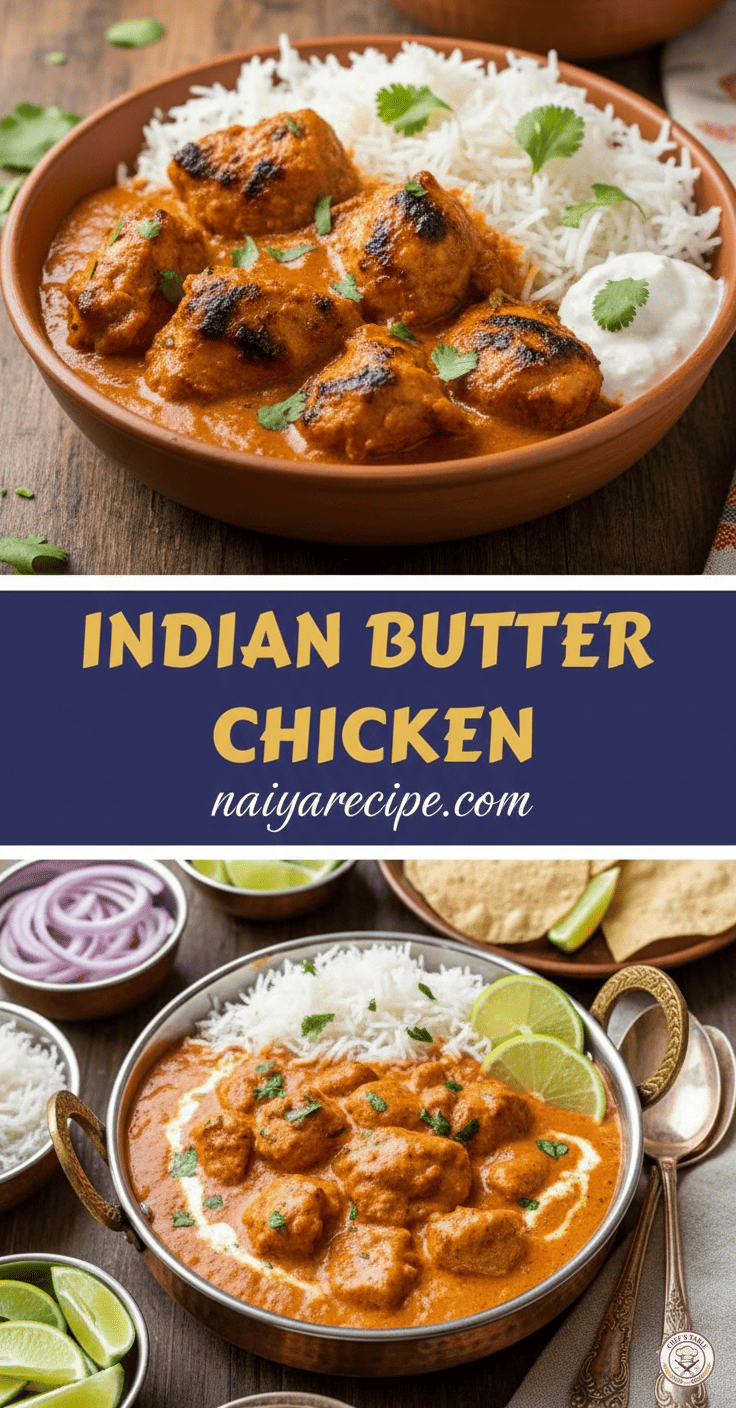
Introduction to Indian Butter Chicken
Butter chicken, or Murgh Makhani, is a classic Indian dish renowned for its rich, creamy, and mildly spiced tomato-based sauce. It’s a beloved staple in Indian restaurants worldwide and a favorite for many home cooks. This dish perfectly balances savory, tangy, and subtly sweet flavors, making it incredibly appealing to a wide range of palates. If you’re looking for a meal that’s both comforting and exotic, butter chicken is an excellent choice. Our version focuses on creating that authentic, mouth-watering taste right in your own kitchen, with easily accessible ingredients and straightforward steps.
The History and Origin of Butter Chicken
The story of butter chicken is as rich and flavorful as the dish itself. It originated in the 1950s at the Moti Mahal restaurant in Delhi, India. The chefs there, looking for a way to use leftover tandoori chicken, simmered it in a rich tomato and butter gravy. The addition of cream gave it a silky texture, and the result was an instant hit. The dish quickly gained popularity, not just in India but across the globe, becoming one of the most famous Indian exports. It’s a testament to culinary innovation, turning simple leftovers into a global sensation. This recipe pays homage to that heritage, bringing you a taste of that original Delhi magic.
Why This Recipe is a Must-Try
Our Indian Butter Chicken recipe stands out for several reasons. Firstly, it captures the authentic flavors you’d expect from a high-quality Indian restaurant. We focus on balancing the spices, ensuring a harmonious blend that isn’t overpowering. Secondly, while it tastes incredibly indulgent, it’s designed to be approachable for home cooks. You won’t need specialized equipment or obscure ingredients. Thirdly, this recipe is incredibly versatile. It pairs perfectly with fragrant Basmati rice, warm naan bread, or even a light salad. It’s also a fantastic dish for meal prepping, as the flavors tend to deepen overnight.
Key Ingredients and Their Role
To create truly exceptional Indian Butter Chicken, understanding the role of each ingredient is crucial.
For the Chicken Marinade:
- Boneless, Skinless Chicken Thighs: We recommend thighs over breasts as they remain more tender and juicy during cooking, absorbing the marinade’s flavors beautifully.
- Plain Yogurt: Acts as a tenderizer and helps the spices adhere to the chicken. It also adds a subtle tang.
- Ginger-Garlic Paste: A foundational aromatic in Indian cuisine, providing a pungent, warm base flavor.
- Lemon Juice: Brightens the flavors and helps tenderize the chicken.
- Spices (Turmeric, Red Chili Powder, Cumin, Coriander, Garam Masala): These form the aromatic backbone of the marinade, infusing the chicken with depth and warmth.
For the Gravy:
- Ghee or Neutral Oil: Ghee (clarified butter) adds a rich, nutty flavor that is traditional. A neutral oil can be used as a substitute.
- Onions: Provide a sweet and savory base for the gravy when sautéed.
- Ginger-Garlic Paste: Again, crucial for the aromatic depth of the sauce.
- Canned Crushed Tomatoes: Form the tangy, robust foundation of the gravy.
- Cashews: These are a secret ingredient for many restaurant-style curries, providing incredible creaminess and a subtle nutty flavor without the need for excessive heavy cream.
- Spices (Turmeric, Red Chili Powder, Cumin, Coriander, Garam Masala, Kasuri Methi): Kasuri Methi (dried fenugreek leaves) is especially important here, adding a unique, slightly bitter, and aromatic complexity that defines butter chicken.
- Unsalted Butter: A generous amount of butter is essential, contributing to the dish’s name and its signature richness.
- Heavy Cream: Adds a luxurious, velvety texture and mellows the spices, bringing the “creamy” aspect to the forefront.
- Sugar (optional): A pinch can balance the acidity of the tomatoes, especially if your tomatoes are particularly tart.
- Salt: To taste, enhancing all the other flavors.
- Fresh Cilantro: For garnish, adding a fresh, herbaceous finish.
Step-by-Step Cooking Instructions
Follow these detailed steps to create your perfect Indian Butter Chicken.
Step 1: Prepare and Marinate the Chicken
Cut the chicken thighs into 1-inch pieces. In a large bowl, combine the chicken with plain yogurt, ginger-garlic paste, lemon juice, turmeric powder, red chili powder, ground cumin, ground coriander, and garam masala. Mix well to ensure every piece of chicken is coated. Cover the bowl and refrigerate for at least 30 minutes, or ideally for 2-4 hours, to allow the flavors to penetrate the chicken. For maximum flavor, you can marinate it overnight.
Step 2: Cook the Chicken
Heat a tablespoon of ghee or oil in a large pan or skillet over medium-high heat. Once hot, add the marinated chicken pieces in a single layer, working in batches if necessary to avoid overcrowding the pan. Cook the chicken for 3-4 minutes per side, until browned and slightly charred on the edges. The chicken does not need to be cooked through at this stage, as it will finish cooking in the gravy. Remove the chicken from the pan and set aside.
Step 3: Prepare the Gravy Base
In the same pan, reduce the heat to medium. Add another tablespoon of ghee or oil. Once melted, add the chopped onions and cook until softened and translucent, about 5-7 minutes. Add the ginger-garlic paste and cook for another minute until fragrant, being careful not to burn it.
Step 4: Build the Flavorful Gravy
Stir in the canned crushed tomatoes. If using whole or diced tomatoes, crush them with a spoon as they cook. Add the cashews, turmeric powder, red chili powder, ground cumin, ground coriander, and garam masala. Mix everything well. Bring the mixture to a gentle simmer, then reduce the heat to low, cover the pan, and cook for 15-20 minutes. This allows the tomatoes to break down and the spices to meld together, creating a rich base. Stir occasionally to prevent sticking.
Step 5: Achieve Creaminess and Smoothness
Once the gravy base has cooked, remove it from the heat and allow it to cool slightly. Carefully transfer the mixture to a blender. Blend until completely smooth. This step is crucial for achieving that signature velvety texture of butter chicken. If the mixture is too thick, you can add a small amount of water to aid blending. Pass the blended sauce through a fine-mesh sieve back into the pan for an extra smooth, restaurant-quality gravy. This step is optional but highly recommended for the best texture.
Step 6: Finish the Gravy
Return the pan with the smooth gravy to medium-low heat. Add the unsalted butter and stir until it melts and is fully incorporated into the sauce. Add the cooked chicken back into the gravy. Stir in the kasuri methi (dried fenugreek leaves), crushing them lightly between your palms before adding to release their aroma. Pour in the heavy cream and stir gently until everything is combined. If desired, add a pinch of sugar to balance the flavors. Season with salt to taste.
Step 7: Simmer and Serve
Bring the butter chicken to a gentle simmer and cook for another 5-10 minutes, allowing the chicken to finish cooking through and absorb the rich flavors of the gravy. Do not boil vigorously, as this can cause the cream to separate. The sauce should be thick enough to coat the back of a spoon. Taste and adjust seasonings if necessary.
Garnish generously with fresh cilantro before serving.
Serving Suggestions
Indian Butter Chicken is incredibly versatile and pairs well with a variety of accompaniments.
- Basmati Rice: The classic choice. Its fragrant, separate grains are perfect for soaking up the rich sauce.
- Naan Bread: Warm, soft, and chewy naan is ideal for scooping up every last drop of the delicious gravy. Garlic naan or butter naan would be particularly delightful.
- Roti or Chapati: For a lighter option, these whole wheat flatbreads are also excellent.
- Cucumber Raita: A cooling yogurt-based side dish that provides a refreshing contrast to the richness of the curry.
- Simple Green Salad: A light salad can cut through the richness and add a fresh element to your meal.
- Lime Wedges and Sliced Red Onions: Offering these as optional garnishes allows diners to add a fresh burst of citrus and a pungent crunch, enhancing the overall experience.
Tips for the Best Butter Chicken
- Marination is Key: Don’t skip or shorten the marination time. The longer the chicken marinates, the more tender and flavorful it will be.
- Don’t Overcrowd the Pan: When cooking the chicken, ensure you cook it in batches. Overcrowding will steam the chicken instead of browning it, preventing the development of crucial flavor.
- Toast Your Spices: Briefly toasting the whole spices (if using) at the beginning of the gravy preparation can release their aromas more intensely. For ground spices, ensure they are cooked sufficiently in the oil/ghee before adding liquids.
- The Cashew Secret: Don’t omit the cashews! They are vital for achieving that restaurant-style creamy texture and subtle nutty depth without making the sauce heavy.
- Kasuri Methi is Essential: This ingredient provides a distinctive flavor profile unique to butter chicken. While optional, it elevates the dish significantly. If you can’t find it, you can omit it, but the flavor will be slightly different.
- Low and Slow Simmer: Once the cream is added, maintain a gentle simmer. High heat can cause the cream to split, resulting in a grainy texture.
- Adjust Sweetness/Tanginess: Taste the gravy after it’s fully cooked. If it’s too tart from the tomatoes, a little sugar can balance it. If it needs more tang, a squeeze of fresh lemon juice at the end can do wonders.
- Make Ahead: Butter chicken tastes even better the next day! The flavors have more time to meld and deepen. It reheats beautifully.
Health and Dietary Notes
This recipe is naturally Gluten-Free if you ensure all your spices are pure and not blended with gluten-containing fillers. It is also nut-free friendly if you omit the cashews (though it will change the texture slightly). For a lactose-free version, use lactose-free yogurt and cream, and replace ghee with a suitable oil. This recipe is also free from alcohol, pork, bacon, ham, and lard, making it suitable for a variety of dietary preferences.
Conclusion
Creating Indian Butter Chicken at home is a rewarding experience. The aroma that fills your kitchen, the vibrant colors, and the incredible depth of flavor make it a truly special meal. This recipe, with its carefully balanced spices and creamy texture, promises a culinary journey to the heart of India. Whether you’re making it for a special occasion or a comforting weeknight dinner, this butter chicken is sure to become a cherished recipe in your repertoire. Enjoy the process, savor the flavors, and share the joy of this magnificent dish with your loved ones.