
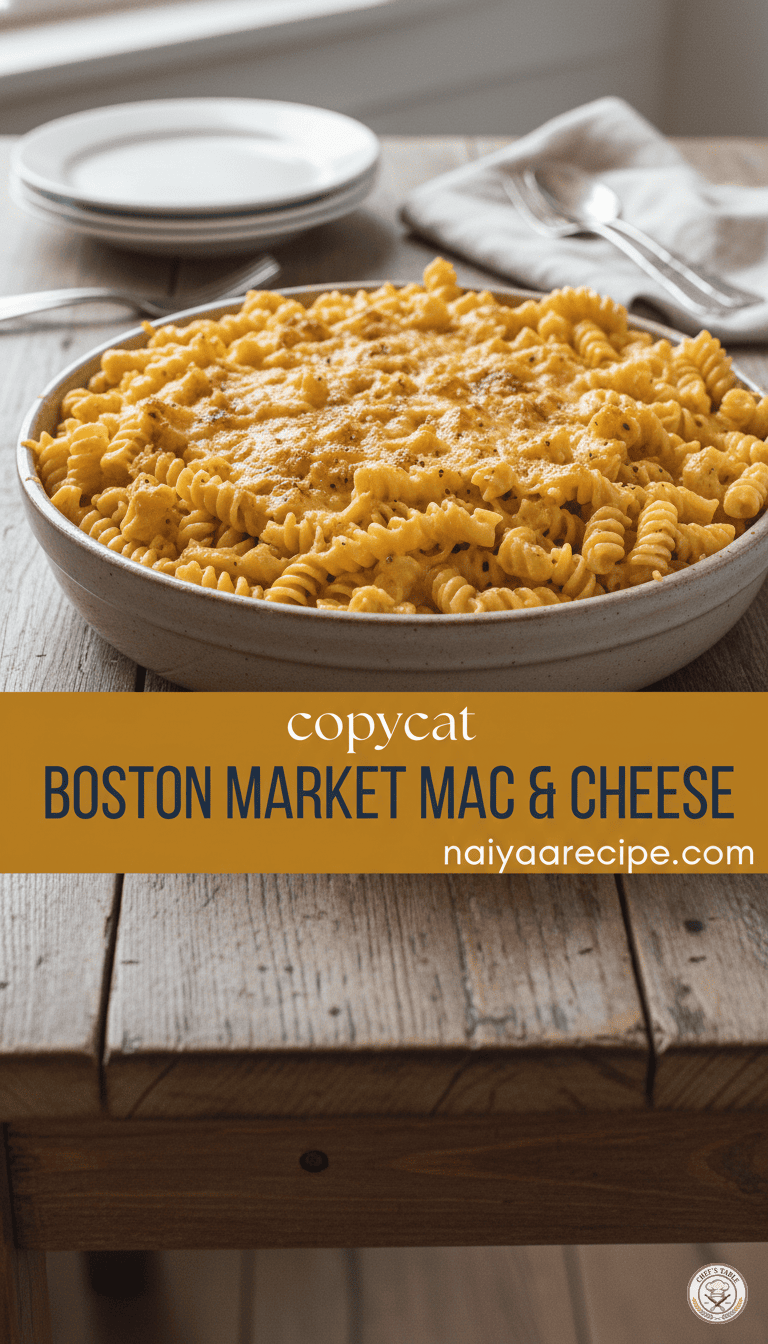
There are some dishes that just evoke a sense of comfort and nostalgia, and for many, Boston Market’s Mac & Cheese is high on that list. That creamy, cheesy, perfectly satisfying side dish has graced countless dinner tables and remains a beloved staple. But what if you could recreate that magic in your own kitchen? What if you could capture that distinctive flavor and texture, serving up a dish that tastes just like the original, but with the pride of having made it yourself? Get ready, because that’s exactly what we’re going to do today with this incredible copycat recipe.
This isn’t just another mac and cheese recipe; this is an homage to a classic, meticulously crafted to bring that Boston Market experience right to your plate. We’ll delve into the secrets behind that signature creaminess, the perfect blend of cheeses, and the simple techniques that elevate this dish from good to absolutely unforgettable. Whether you’re a long-time fan of Boston Market or simply a lover of all things mac and cheese, this recipe is guaranteed to become a new favorite in your culinary repertoire.
The Quest for the Perfect Copycat
Replicating a beloved restaurant dish can often feel like a culinary detective mission. You’re searching for clues, dissecting flavors, and experimenting with ingredients until you hit that sweet spot. For Boston Market’s Mac & Cheese, the key lies in understanding a few fundamental elements: the type of pasta, the cheese blend, and the method of creating that luscious, smooth sauce.
First, let’s talk about the pasta. While some mac and cheese recipes call for elbow macaroni, Boston Market famously uses cavatappi, also known as cellentani. This corkscrew-shaped pasta is absolutely brilliant for mac and cheese. Its spirals and ridges are perfect for trapping that rich, creamy cheese sauce in every nook and cranny, ensuring a burst of flavor with every bite. The texture it provides is also a delightful contrast to the smoothness of the sauce, adding to the overall sensory experience. Don’t skimp on this detail; using the right pasta makes a noticeable difference.
Next, the cheese. This is where the magic truly happens. A single cheese simply won’t do if you’re aiming for that complex, comforting flavor profile. Our copycat recipe employs a thoughtful combination of cheeses, each playing a crucial role. We’ll lean heavily on sharp cheddar for its robust, tangy flavor, which is essential for that classic mac and cheese taste. However, to achieve the ultimate creaminess and melt, we’ll also incorporate other cheeses that contribute to the sauce’s silky texture without overpowering the cheddar. The blend is carefully balanced to ensure maximum flavor and a consistent, gooey consistency that coats every piece of pasta beautifully.
Finally, the sauce. This is where many homemade mac and cheese recipes either shine or falter. The goal is a velvety smooth, lump-free sauce that clings to the pasta without being too thick or too thin. Our recipe utilizes a classic roux-based sauce, which is the secret to achieving that perfect consistency and richness. A roux, a mixture of cooked butter and flour, provides the foundational structure for the sauce, ensuring it thickens beautifully and holds its texture. We’ll guide you through the process of creating a flawless roux, ensuring your sauce is nothing short of spectacular.
Ingredients You’ll Need
Gathering the right ingredients is the first step to culinary success. For this copycat Boston Market Mac & Cheese, you’ll want to ensure you have fresh, high-quality components to achieve the best flavor.
- 1 pound cavatappi pasta (or cellentani): As mentioned, this is key for the authentic texture.
- ½ cup unsalted butter: The foundation of our rich roux.
- ½ cup all-purpose flour: To create the roux and thicken the sauce.
- 5 cups whole milk: Whole milk provides the richness and creaminess necessary for a decadent sauce. Avoid skim or low-fat milk, as they won’t give you the same luxurious texture.
- 1 teaspoon dry mustard powder: This might seem like an unusual addition, but dry mustard is a secret weapon in cheese sauces. It doesn’t make the sauce taste like mustard; instead, it enhances the savory notes of the cheese and helps to emulsify the sauce, preventing it from breaking.
- ½ teaspoon smoked paprika: Adds a subtle depth and warmth, a hint of smokiness that elevates the overall flavor profile.
- ¼ teaspoon cayenne pepper (optional): For a very subtle kick that rounds out the flavors without making it spicy. If you’re sensitive to heat, you can omit this.
- Salt and freshly ground black pepper to taste: Essential for seasoning and balancing the flavors.
- 4 cups (about 1 pound) freshly grated sharp cheddar cheese: Grate your own for the best melt and flavor. Pre-shredded cheeses often contain anti-caking agents that can make the sauce gritty.
- 1 cup (about 4 ounces) freshly grated Gruyère cheese (or Monterey Jack/Colby Jack): Gruyère adds a nutty, complex flavor and incredibly smooth melt. If you can’t find it, Monterey Jack or Colby Jack are good alternatives for their melting properties.
- ½ cup freshly grated Parmesan cheese: For an extra layer of salty, umami depth.
Step-by-Step Instructions
Now that we have our ingredients ready, let’s dive into the cooking process. Follow these steps carefully to ensure a perfect batch of copycat Boston Market Mac & Cheese every time.
Step 1: Cook the Pasta
- Bring a large pot of salted water to a rolling boil. Salting the water generously is crucial for seasoning the pasta from the inside out.
- Add the cavatappi pasta to the boiling water and cook according to package directions until al dente. This means it should be tender but still have a slight bite to it. Overcooked pasta will become mushy in the sauce.
- Once cooked, drain the pasta thoroughly in a colander. Do not rinse the pasta; the residual starch on the surface helps the sauce adhere better. Set aside.
Step 2: Prepare the Roux
- In a large, heavy-bottomed saucepan or Dutch oven, melt the unsalted butter over medium heat.
- Once the butter is fully melted and slightly shimmering, gradually whisk in the all-purpose flour. Continue whisking constantly for 1-2 minutes. This creates the roux.
- The roux should cook until it forms a pale golden paste. Cooking the flour sufficiently helps to eliminate any raw flour taste, which is vital for a smooth, flavorful sauce.
Step 3: Build the Béchamel
- Gradually add the whole milk to the roux, a little at a time, whisking continuously to prevent lumps. It’s important to add the milk slowly, especially at the beginning, to create a smooth base.
- Continue whisking until all the milk is incorporated and the sauce is smooth.
- Bring the sauce to a gentle simmer, whisking frequently. Allow it to simmer for 5-7 minutes, or until it has thickened to a consistency that coats the back of a spoon. It should be thick enough to cling, but still pourable.
- Remove the saucepan from the heat. This is important before adding the cheese to prevent the cheese from becoming oily or grainy.
Step 4: Create the Cheese Sauce
- Stir in the dry mustard powder, smoked paprika, and cayenne pepper (if using) into the thickened béchamel sauce. Whisk until well combined.
- Add the freshly grated sharp cheddar cheese, Gruyère (or alternative), and Parmesan cheese to the sauce.
- Stir gently but continuously until all the cheeses are completely melted and the sauce is smooth and creamy. The residual heat from the béchamel will be enough to melt the cheese beautifully. Do not return the sauce to the heat once the cheese has been added, as this can cause the cheese to separate and become greasy.
- Taste the cheese sauce and season generously with salt and freshly ground black pepper as needed. Remember that cheese is salty, so add salt incrementally until it’s just right.
Step 5: Combine and Serve
- Add the cooked and drained cavatappi pasta to the cheese sauce in the saucepan.
- Gently stir to coat every piece of pasta evenly with the luscious cheese sauce. Ensure all the pasta is submerged and well-coated.
- Serve immediately! This mac and cheese is best enjoyed fresh, when the sauce is at its creamiest and the pasta is perfectly tender.
Tips for Success
Achieving the perfect mac and cheese every time involves a few key considerations. Here are some tips to help you master this copycat recipe:
- Grate Your Own Cheese: This cannot be stressed enough. Pre-shredded cheeses are often coated with cellulose or other anti-caking agents that can make your cheese sauce grainy and prevent it from melting smoothly. Taking the extra few minutes to grate your own cheese will make a world of difference in the texture and creaminess of your sauce.
- Don’t Overcook the Pasta: Al dente is the goal. The pasta will continue to cook slightly when combined with the hot cheese sauce. If you overcook it initially, you’ll end up with mushy mac and cheese.
- Whisk, Whisk, Whisk: When making the roux and adding the milk, consistent whisking is your best friend. This prevents lumps and ensures a smooth, silky sauce.
- Low and Slow Heat for Cheese: When adding the cheese, ensure the sauce is off the heat. Adding cheese to a boiling sauce can cause the fats to separate, leading to a greasy, clumpy mess. The residual heat is sufficient to melt the cheese perfectly.
- Season as You Go: Taste your sauce at different stages. Add salt and pepper incrementally. Remember that cheese is inherently salty, so be mindful not to over-salt.
- Serving Suggestions: While this mac and cheese is undeniably delicious on its own, it makes an excellent side dish for roasted chicken, grilled steak, or even as part of a BBQ spread. A sprinkle of fresh parsley or chives before serving can add a nice touch of color and freshness.
- Storage and Reheating: Leftover mac and cheese can be stored in an airtight container in the refrigerator for up to 3-4 days. To reheat, gently warm on the stovetop over low heat, adding a splash of milk or cream to loosen the sauce and restore its creaminess. You can also reheat it in the microwave, stirring occasionally.
Why This Recipe Works
This copycat Boston Market Mac & Cheese isn’t just a recipe; it’s a carefully balanced culinary endeavor designed for maximum flavor and authentic texture. The combination of cavatappi pasta, a robust cheese blend, and a perfectly executed béchamel sauce creates a symphony of textures and tastes that perfectly mirrors the beloved original.
The dry mustard powder and smoked paprika, though seemingly minor additions, are flavor amplifiers. The mustard powder enhances the cheese’s tang and helps to create a stable emulsion, while the paprika adds a subtle smokiness and warmth that is characteristic of comfort food. The blend of sharp cheddar for boldness, Gruyère for nuttiness and melt, and Parmesan for umami depth ensures a complex flavor profile that keeps you coming back for more.
By following these detailed instructions and tips, you’re not just making mac and cheese; you’re crafting a culinary experience. You’re bringing the comforting taste of a classic into your home, ready to be shared with family and friends, or simply savored on a cozy evening. So go ahead, gather your ingredients, fire up your stove, and prepare to indulge in the best copycat Boston Market Mac & Cheese you’ve ever tasted. Enjoy every decadent, cheesy bite!
The Enduring Appeal of Mac & Cheese
Macaroni and cheese holds a special place in the hearts of many, transcending cultural boundaries and generational divides. It’s the ultimate comfort food, a dish that instantly brings to mind warmth, home, and satisfaction. But what is it about mac and cheese, particularly a well-made version like this copycat Boston Market recipe, that gives it such enduring appeal?
Part of it lies in the simplicity of its core ingredients: pasta, cheese, and a creamy sauce. These are humble components, yet when combined expertly, they transform into something extraordinary. The familiar flavors of cheddar, often the star of the show, are universally loved. It’s a taste that many grow up with, creating a powerful connection to childhood memories and simpler times.
Beyond nostalgia, the sensory experience of mac and cheese is incredibly satisfying. The visual appeal of golden, bubbly cheese sauce clinging to perfectly cooked pasta is enticing. The aroma that fills the kitchen as it cooks is pure bliss, promising a delicious meal. Then comes the texture: the slight chew of al dente pasta contrasted with the smooth, velvety, and often gooey cheese sauce. Each spoonful offers a delightful mouthfeel that is both comforting and indulgent.
Furthermore, mac and cheese is incredibly versatile. While this recipe aims for a specific copycat flavor, the foundational elements can be adapted to countless variations. You can add different cheeses, mix in vegetables, or incorporate various proteins to create a completely new dish. It can be a simple side or a hearty main course. Its adaptability ensures it remains relevant and exciting in the culinary world.
The Boston Market version, in particular, carved out its niche by perfecting that balance of creaminess and robust cheese flavor, making it a benchmark for many. This copycat recipe strives to achieve that exact benchmark, allowing you to replicate that beloved experience whenever a craving strikes. It’s a testament to the power of a well-executed classic, a dish that proves comfort food doesn’t have to be complicated to be profoundly satisfying.
So, as you prepare and enjoy this copycat Boston Market Mac & Cheese, take a moment to appreciate the culinary journey you’ve embarked on. From simple ingredients to a truly iconic dish, you’re creating not just food, but an experience. And that, in essence, is the magic of mac and cheese.