
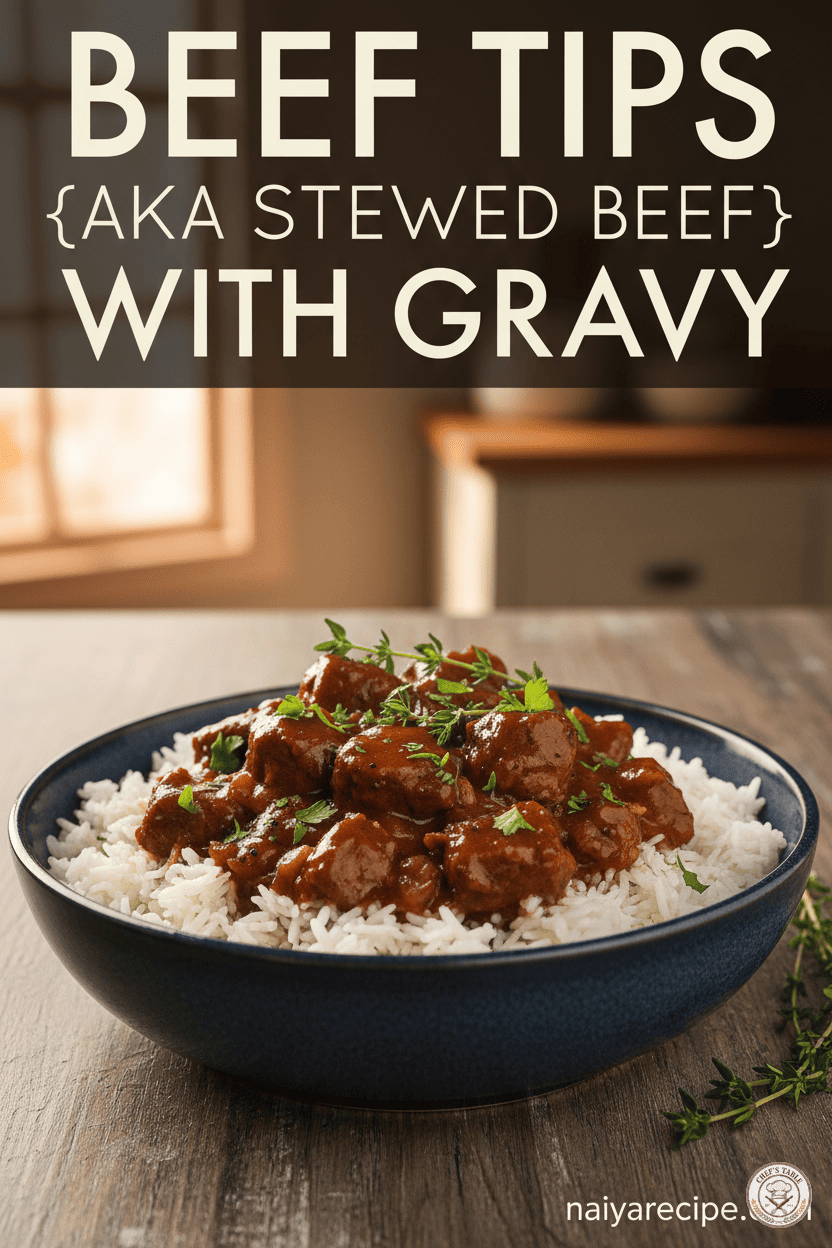
There are some dishes that just speak to the soul, comforting us with their rich flavors and tender textures. Beef Tips with Gravy is unequivocally one of them. This classic, hearty meal, often interchangeably called stewed beef, is a staple in many households for good reason. It’s incredibly satisfying, relatively simple to prepare, and yields a generous portion of melt-in-your-mouth beef smothered in a savory, luscious gravy that’s perfect over a bed of fluffy rice, creamy mashed potatoes, or even noodles.
The beauty of Beef Tips lies in its humble origins and the way it transforms simple ingredients into something extraordinary. It’s a dish that evokes memories of family dinners, cozy evenings, and the comforting aroma wafting from the kitchen. Forget complicated culinary techniques; this recipe focuses on low and slow cooking, allowing the beef to become incredibly tender and the flavors to meld into a harmonious symphony.
Why This Recipe Works
This recipe isn’t just another beef stew. It’s specifically designed to deliver fork-tender beef in a rich, flavorful gravy that clings beautifully to whatever you choose to serve it with. Here’s why it stands out:
- Sear for Flavor: Searing the beef before simmering is a crucial step that locks in juices and creates a beautiful caramelized crust, adding depth and complexity to the final dish. This Maillard reaction is key to building a robust flavor base.
- Low and Slow Cooking: This method is the secret to achieving truly tender beef. Simmering the beef for an extended period breaks down tough connective tissues, resulting in meat that practically melts in your mouth.
- Homemade Gravy: While store-bought gravy can be convenient, making it from scratch using the flavorful drippings from the beef is what elevates this dish from good to unforgettable. The gravy isn’t just a thick sauce; it’s an integral part of the experience, infused with all the savory goodness of the beef and aromatics.
- Simple Ingredients, Big Flavor: You don’t need a long list of exotic ingredients to make this dish spectacular. Everyday pantry staples, combined with quality beef, are all it takes.
The Cut of Beef Matters
For Beef Tips, the choice of beef cut is important. You want a cut that benefits from low and slow cooking. Avoid lean, quick-cooking cuts like sirloin or tenderloin, as they will dry out and become tough with extended cooking. Instead, opt for:
- Chuck Roast: This is arguably the best choice. It’s well-marbled, flavorful, and becomes incredibly tender when slow-cooked. Look for boneless chuck roast and cut it into 1 to 1.5-inch cubes.
- Round Roast (Bottom or Top Round): While leaner than chuck, round roasts can also work if cooked slowly and carefully. They tend to be a bit tougher initially, but will soften with prolonged simmering.
- Stew Meat: Often pre-cut and labeled as “stew meat” at the grocery store, this is usually a mix of tougher cuts, frequently chuck or round. If using pre-cut stew meat, ensure the pieces are relatively uniform in size for even cooking.
No matter which cut you choose, consistency in size is key. Aim for 1 to 1.5-inch cubes so they cook evenly and are easy to eat.
Beyond the Plate: The Versatility of Beef Tips
While traditionally served over rice, Beef Tips with Gravy is incredibly versatile. Here are a few serving suggestions to inspire you:
- Creamy Mashed Potatoes: The classic pairing. The fluffy potatoes soak up every drop of that delicious gravy.
- Egg Noodles: A comforting alternative to rice or potatoes, egg noodles provide a wonderful texture contrast.
- Crusty Bread: Don’t let any of that precious gravy go to waste! A good piece of crusty bread is perfect for mopping up every last bit.
- Polenta: For a slightly different twist, serve the beef tips over creamy polenta.
- Vegetable Medley: Add some steamed or roasted vegetables on the side for a complete meal. Green beans, broccoli, or glazed carrots would be excellent choices.
Making the Perfect Gravy
The gravy is what brings this dish together. A good gravy should be thick enough to cling to the beef and your chosen accompaniment, yet still pourable and incredibly flavorful. Here’s how we achieve that:
- Deglazing: After searing the beef, the browned bits left at the bottom of the pan (fond) are packed with flavor. Deglazing the pan with broth scrapes up these bits, incorporating them into your liquid base and adding immense depth to the gravy.
- Roux: A roux (a cooked mixture of fat and flour) is the traditional thickener for gravy. It provides a smooth, lump-free consistency. We’ll use the fat from searing the beef and a bit of added oil if needed, combined with all-purpose flour.
- Slow Simmering: Once the gravy is thickened, allow it to simmer gently. This gives the flour a chance to cook out its raw taste and allows the flavors to deepen and meld.
Ingredients You’ll Need
This recipe uses straightforward ingredients, but the quality of each ingredient will shine through in the final dish.
- Beef: 2 pounds boneless chuck roast or stew meat, cut into 1 to 1.5-inch cubes.
- All-Purpose Flour: For coating the beef and thickening the gravy.
- Oil: Vegetable oil or a similar neutral oil for searing.
- Onion: 1 large yellow onion, chopped. Adds a foundational sweetness and aromatic depth.
- Garlic: 4 cloves, minced. Essential for a rich savory flavor.
- Beef Broth: 4 cups (32 ounces) good quality beef broth. This is the base of our gravy, so choose a flavorful one.
- Worcestershire Sauce: 1 tablespoon. Adds an umami punch and depth. Ensure it’s free of any undesirable ingredients based on your dietary preferences.
- Dried Thyme: 1 teaspoon. A classic herb that pairs wonderfully with beef.
- Bay Leaves: 2. Infuse a subtle, aromatic quality into the stew.
- Salt and Black Pepper: To taste. Season generously at each stage of cooking.
- Fresh Parsley (optional): For garnish, adding a touch of freshness and color.
- Cooked Rice, Mashed Potatoes, or Noodles: For serving.
Step-by-Step Instructions
Follow these steps carefully for the best Beef Tips with Gravy you’ve ever made.
1. Prepare the Beef
Pat the beef cubes thoroughly dry with paper towels. This is crucial for achieving a good sear. In a large bowl, toss the beef with 2 tablespoons of all-purpose flour, 1 teaspoon of salt, and 1/2 teaspoon of black pepper until evenly coated. The flour coating will help create a beautiful crust and also contribute to thickening the gravy later.
2. Sear the Beef
Heat 2 tablespoons of oil in a large heavy-bottomed pot or Dutch oven over medium-high heat. Once the oil is shimmering and hot, add the beef in a single layer, making sure not to overcrowd the pot. You’ll likely need to work in batches. Sear the beef for 3-4 minutes per side, until deeply browned on all sides. Do not rush this step; the browning is essential for flavor development. Remove the seared beef from the pot and set aside. Repeat with remaining beef, adding more oil if needed.
3. Sauté Aromatics
Reduce the heat to medium. Add the chopped onion to the pot, along with another tablespoon of oil if the pot is dry. Cook the onion for 5-7 minutes, stirring occasionally, until softened and translucent. Add the minced garlic and cook for another minute until fragrant, being careful not to burn it.
4. Build the Gravy Base
Sprinkle 2 tablespoons of all-purpose flour over the cooked onions and garlic. Stir constantly for 1-2 minutes, allowing the flour to cook out its raw taste and form a roux with the residual fat. This is the foundation of your rich gravy.
Slowly pour in the beef broth, whisking continuously to prevent lumps. Continue whisking until the mixture is smooth and begins to thicken slightly.
5. Simmer the Beef
Return the seared beef to the pot. Add the Worcestershire sauce, dried thyme, and bay leaves. Stir to combine everything. Bring the mixture to a gentle simmer, then reduce the heat to low, cover the pot, and let it cook for at least 2 to 2.5 hours, or until the beef is incredibly tender. The longer it simmers, the more tender the beef will become. Stir occasionally to prevent sticking and ensure even cooking.
6. Adjust and Finish
Once the beef is tender, remove the bay leaves. Taste the gravy and adjust seasonings as needed, adding more salt and pepper if desired. If the gravy is too thin for your liking, you can uncover the pot and let it simmer for an additional 15-30 minutes to reduce and thicken further. Alternatively, you can mix a tablespoon of cornstarch with a tablespoon of cold water, stir it into the simmering gravy, and cook for another minute until thickened.
7. Serve
Spoon the hot beef tips and gravy generously over cooked rice, mashed potatoes, or egg noodles. Garnish with fresh chopped parsley, if using, for a touch of color and freshness.
Tips for Success
- Don’t Skimp on Searing: This step is truly non-negotiable for maximum flavor. A good sear means a flavorful gravy.
- Patience is Key: Low and slow cooking is the secret to tender beef. Resist the urge to rush the simmering process.
- Adjust Thickness: If your gravy is too thick, simply stir in a little more beef broth until desired consistency is reached.
- Batch Cooking: This recipe is fantastic for meal prepping! It reheats beautifully and often tastes even better the next day as the flavors continue to meld.
- Storage: Store leftover Beef Tips with Gravy in an airtight container in the refrigerator for up to 3-4 days. It also freezes well for up to 3 months. Thaw overnight in the refrigerator and reheat gently on the stovetop or in the microwave, adding a splash of broth if needed.
Common Questions
Q: Can I make this in a slow cooker?
A: Yes, you can! After searing the beef and sautéing the aromatics (steps 1-4), transfer everything to a slow cooker. Add all remaining ingredients, stir, cover, and cook on low for 6-8 hours or on high for 3-4 hours, until the beef is tender. You might need to make a cornstarch slurry (1 tbsp cornstarch + 1 tbsp cold water) and stir it in during the last 30 minutes of cooking if you want a thicker gravy.
Q: My gravy is lumpy, what happened?
A: Lumpy gravy usually occurs when the flour isn’t fully incorporated and whisked constantly when adding the liquid. To fix it, you can carefully pour the gravy through a fine-mesh sieve or use an immersion blender to smooth it out directly in the pot.
Q: Can I add vegetables to the stew?
A: Absolutely! While this recipe focuses on just the beef and gravy, you can certainly add vegetables. Carrots, celery, and potatoes are common additions. Add harder vegetables like carrots and potatoes during the last hour of simmering so they cook through but don’t become mushy. Softer vegetables like peas can be stirred in during the last 15-20 minutes.
Q: Why do I need to pat the beef dry?
A: Patting the beef dry removes surface moisture. When meat is wet, the moisture steams the meat instead of allowing it to brown and form a crust. A dry surface allows for better contact with the hot pan and thus, a better sear.
A Comfort Food Classic
Beef Tips with Gravy is more than just a meal; it’s an experience. It’s the kind of dish that brings people together, fills hungry bellies, and leaves everyone feeling warm and content. Its rich, savory flavors and tender beef make it a timeless classic that will undoubtedly become a treasured recipe in your own kitchen. So, gather your ingredients, take your time with each step, and prepare to enjoy a truly comforting and delicious homemade meal. naiyarecipe.com