
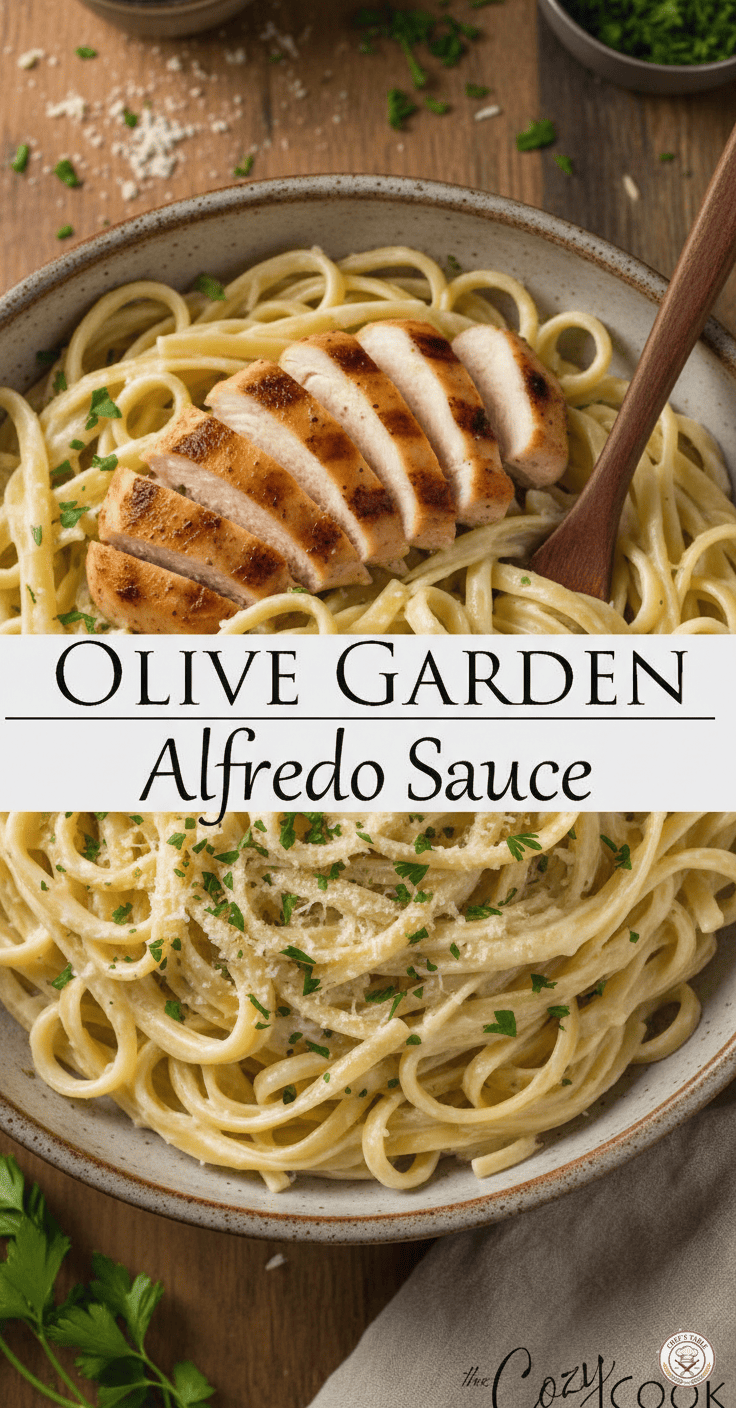
Craving that creamy, comforting, and utterly delicious Alfredo sauce from Olive Garden but want to enjoy it in the comfort of your own home? You’ve come to the right place! This comprehensive guide will walk you through creating a homemade version of this beloved sauce, ensuring that every bite transports you straight to your favorite Italian-American restaurant. Forget the long waits and the drive; with this recipe, you can whip up a batch of rich, velvety Alfredo anytime the craving strikes.
The Magic Behind Olive Garden’s Alfredo
What makes Olive Garden’s Alfredo so incredibly popular? It’s that perfect balance of richness, savory depth, and a silky-smooth texture that coats every strand of pasta. While some believe there are secret ingredients, the truth is often in the quality of ingredients and the technique. Our recipe focuses on replicating that signature taste using readily available ingredients and simple steps, ensuring a consistent and delightful result every time.
Why Make It At Home?
Beyond the convenience, making Alfredo sauce at home offers several advantages:
- Control Over Ingredients: You choose the quality of your dairy and cheese, ensuring freshness and flavor.
- Dietary Customization: Easily adjust for dietary preferences or restrictions (though this recipe is already free from alcohol and pork products!).
- Cost-Effective: Preparing meals at home is almost always more budget-friendly than dining out, especially for a dish as popular as Alfredo.
- The Joy of Cooking: There’s immense satisfaction in creating a restaurant-quality meal from scratch.
Ingredients You’ll Need
Gathering your ingredients beforehand is key to a smooth cooking process. Here’s what you’ll need to create that iconic Olive Garden Alfredo:
- Unsalted Butter: This forms the rich base of our sauce. Unsalted butter allows you to control the overall saltiness.
- Heavy Cream: The star of the show! Heavy cream provides the luxurious body and creaminess that Alfredo is known for. Don’t substitute with milk or half-and-half; it won’t yield the same richness.
- Parmigiano-Reggiano Cheese: This is non-negotiable for authentic flavor. Freshly grated Parmigiano-Reggiano melts beautifully and imparts a nutty, salty, umami depth. Pre-grated cheese often contains anti-caking agents that can make your sauce gritty.
- Garlic: Fresh minced garlic is essential for a pungent, aromatic kick.
- Nutmeg: A pinch of freshly grated nutmeg might seem unusual, but it’s a classic addition to Alfredo that subtly enhances the creaminess and complexity without making the sauce taste overtly like nutmeg.
- Salt and Freshly Ground Black Pepper: To taste, for seasoning.
For serving, you’ll also want:
- Fettuccine Pasta: The traditional choice, its flat, wide surface is perfect for holding onto that rich sauce.
- Cooked Chicken Breast (Optional): Sliced or shredded, for a heartier meal.
- Fresh Parsley: For garnish and a touch of freshness.
Step-by-Step Instructions
Let’s get cooking! Follow these detailed steps to create your perfect Olive Garden-style Alfredo sauce.
1. Prep Your Ingredients
- Grate the cheese: If you haven’t already, finely grate your Parmigiano-Reggiano cheese. Remember, fresh is best!
- Mince the garlic: Peel and mince your garlic cloves.
- Measure: Measure out your butter and heavy cream. This ensures you can add them seamlessly when the time comes.
2. Cook the Pasta
- Bring a large pot of salted water to a rolling boil.
- Add the fettuccine pasta and cook according to package directions until al dente. Al dente means “to the tooth” – it should be firm but still have a slight bite.
- Before draining, reserve about 1 to 1.5 cups of the starchy pasta water. This water is liquid gold for sauces; it helps to emulsify the sauce and adjust its consistency if it becomes too thick.
- Drain the pasta and set aside.
3. Start the Sauce Base
- In a large skillet or saucepan over medium heat, melt the unsalted butter. Swirl to coat the bottom of the pan.
- Add the minced garlic to the melted butter. Sauté for about 1-2 minutes, stirring constantly, until fragrant. Be careful not to burn the garlic, as burnt garlic can taste bitter.
4. Build the Creaminess
- Pour in the heavy cream. Stir well to combine it with the butter and garlic.
- Bring the mixture to a gentle simmer, stirring occasionally. Do not let it come to a rapid boil. Simmer for about 3-5 minutes, allowing the cream to slightly reduce and thicken. You’ll notice it coating the back of a spoon.
5. Incorporate the Cheese
- Reduce the heat to low. This is crucial for preventing the cheese from clumping or seizing.
- Gradually add the freshly grated Parmigiano-Reggiano cheese to the cream mixture, a handful at a time, stirring continuously with a whisk or wooden spoon.
- Keep stirring until each addition of cheese has fully melted and been incorporated into the sauce before adding more. This slow and steady approach ensures a smooth, lump-free sauce. The sauce will thicken considerably as you add the cheese.
6. Season and Adjust
- Once all the cheese has melted and the sauce is smooth, stir in the pinch of freshly grated nutmeg.
- Season with salt and freshly ground black pepper to taste. Remember that Parmigiano-Reggiano is already salty, so taste before adding too much extra salt.
- If the sauce appears too thick, add a splash of the reserved pasta water, a tablespoon at a time, until you reach your desired consistency. The pasta water helps loosen the sauce while also helping it cling to the pasta.
7. Combine and Serve
- Add the cooked and drained fettuccine pasta directly into the skillet with the Alfredo sauce.
- Toss gently with tongs until every strand of pasta is evenly coated in the rich, creamy sauce.
- If using, add your cooked chicken breast and toss to combine.
- Serve immediately, garnished with fresh chopped parsley and an extra sprinkle of Parmigiano-Reggiano cheese if desired.
Tips for the Best Homemade Alfredo
- Quality Ingredients Matter: There are only a few ingredients in Alfredo sauce, so the quality truly shines through. Invest in good quality heavy cream and authentic Parmigiano-Reggiano.
- Freshly Grated Cheese is Key: We cannot stress this enough. Pre-grated cheese is a shortcut that sacrifices texture and flavor.
- Low Heat for Cheese: Always add the cheese off the heat or on very low heat to prevent it from separating or becoming stringy.
- Don’t Overcook the Sauce: Simmering is good, but boiling the cream vigorously can cause it to break.
- Serve Immediately: Alfredo sauce is best enjoyed fresh off the stove. It can thicken considerably as it cools. If you have leftovers, you might need to gently reheat with a splash of milk or cream.
- Experiment with Additions: While classic Alfredo is simple, feel free to add other ingredients like sautéed mushrooms, shrimp, or even some steamed broccoli for added flavor and nutrition.
Common Alfredo Mistakes to Avoid
- Using Milk Instead of Heavy Cream: This will result in a thin, watery sauce that lacks the characteristic richness.
- Boiling the Sauce After Adding Cheese: High heat after the cheese is incorporated can cause the cheese to separate and the sauce to become oily.
- Not Using Reserved Pasta Water: This starchy water is an excellent emulsifier and helps achieve the perfect consistency.
- Adding Cold Cheese: Make sure your cheese is at room temperature or close to it; cold cheese can shock the sauce and make it harder to melt smoothly.
Frequently Asked Questions
Q: Can I make this sauce ahead of time?
A: Alfredo sauce is best served immediately. It tends to thicken significantly as it cools. If you must make it ahead, store it in an airtight container in the refrigerator for up to 2 days. Reheat gently over low heat, adding a splash of milk or cream to loosen it up.
Q: Why did my sauce turn out lumpy?
A: This usually happens if the cheese was added too quickly, the heat was too high, or you used pre-grated cheese with anti-caking agents. Remember to add cheese gradually over low heat and use freshly grated Parmigiano-Reggiano.
Q: Can I use different types of pasta?
A: Absolutely! While fettuccine is traditional, Alfredo sauce is delicious with other pasta shapes like spaghetti, linguine, penne, or even tortellini. Choose a shape that holds sauce well.
Q: How do I store leftovers?
A: Store any leftover Alfredo pasta in an airtight container in the refrigerator for up to 2-3 days. To reheat, gently warm in a saucepan over low heat, adding a tablespoon or two of milk or cream to restore its creamy consistency.
Enjoy Your Homemade Olive Garden Alfredo!
Now you have all the knowledge and steps to recreate that iconic Olive Garden Alfredo sauce right in your own kitchen. This recipe is more than just a set of instructions; it’s a guide to bringing a beloved restaurant experience home, customized to your taste and made with love. So gather your ingredients, put on your favorite apron, and prepare to indulge in a truly satisfying and delicious meal that will have everyone asking for seconds. Happy cooking!