
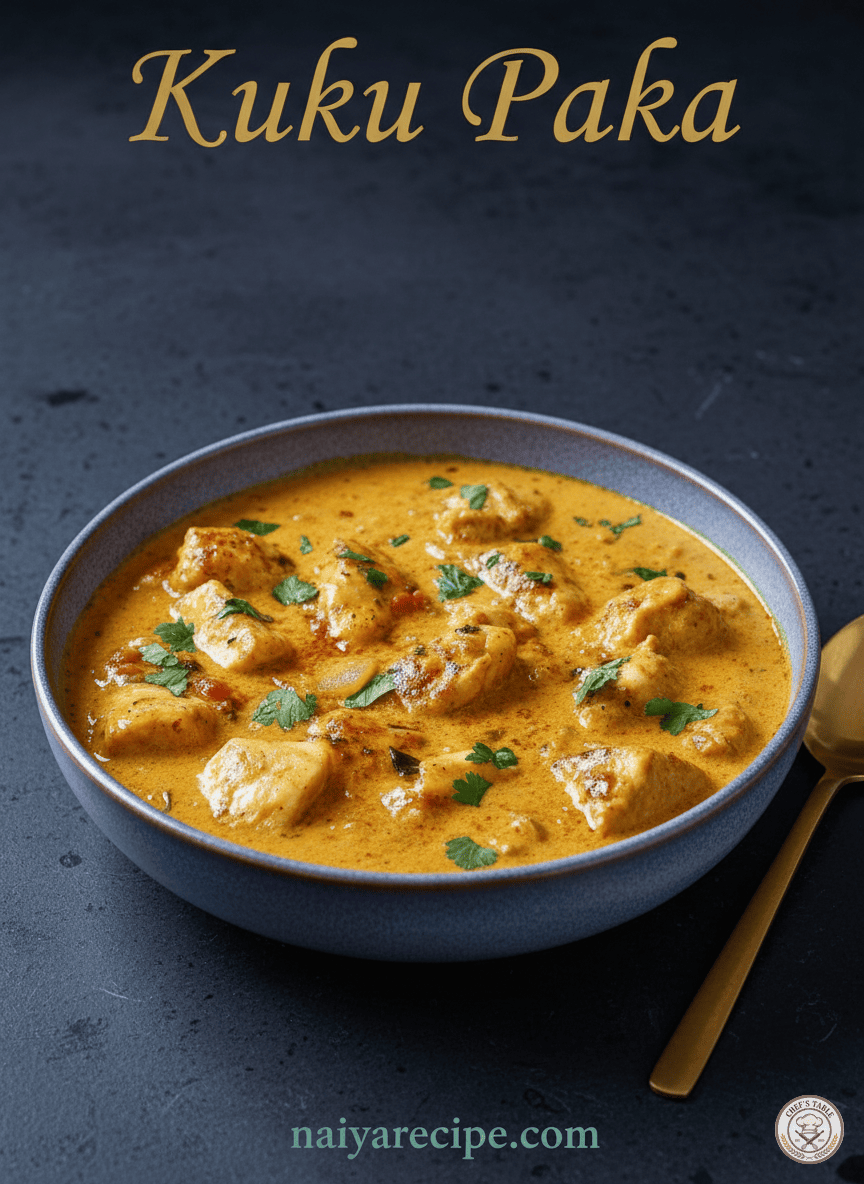
Kuku Paka is a classic East African chicken curry, renowned for its rich, creamy, and subtly spiced coconut milk base. This dish beautifully blends Indian, Arab, and African culinary influences, creating a unique flavor profile that is both comforting and exotic. Originating from the Swahili coast, particularly popular in Kenya and Tanzania, Kuku Paka traditionally involves grilling or frying the chicken before simmering it in the coconut sauce. This method imparts a wonderful depth of flavor and a slightly smoky note that elevates the entire dish.
The name “Kuku Paka” literally translates to “chicken cooked with coconut milk,” accurately describing the heart of this recipe. While it might seem complex, the process is quite straightforward, relying on fresh ingredients and a good balance of aromatic spices. It’s a fantastic meal for family dinners, special occasions, or whenever you crave a taste of vibrant East African cuisine.
The History and Heritage of Kuku Paka
The culinary landscape of East Africa is a fascinating tapestry woven from centuries of trade, migration, and cultural exchange. The Swahili coast, in particular, has been a melting pot of African, Arab, Indian, and even Portuguese influences. Spices like turmeric, cumin, coriander, and chili, brought by traders from the Indian subcontinent and the Arabian Peninsula, became integral to local cooking. Similarly, coconut, a staple crop in coastal regions, naturally found its way into countless dishes, lending its creamy richness.
Kuku Paka stands as a testament to this rich history. Its coconut base is distinctly Southeast Asian and Indian in origin, while the use of specific spices and cooking techniques reflects both Indian and local African adaptations. Over time, the dish evolved, incorporating readily available ingredients and suiting local palates, becoming a beloved comfort food across the region. It’s often prepared for celebrations and gatherings, signifying warmth and hospitality.
Understanding the Flavor Profile
The magic of Kuku Paka lies in its harmonious blend of sweet, savory, and mildly spicy notes. The coconut milk forms the creamy backbone, offering a natural sweetness that mellows the spices. Garlic, ginger, and green chilies provide an aromatic and gentle heat, while a medley of ground spices—often cumin, coriander, and turmeric—adds earthy depth and a beautiful golden hue. A squeeze of fresh lime or lemon juice at the end brightens the flavors, cutting through the richness and adding a delightful zing. Some variations also include a touch of tomato, which adds a subtle tang and helps to thicken the sauce.
The texture is equally important. The chicken, often cooked until tender and falling off the bone, is enveloped in a smooth, velvety sauce that is perfect for soaking up with rice or flatbreads.
Essential Ingredients
To recreate an authentic Kuku Paka, quality ingredients are key. Here’s what you’ll need:
For the Chicken:
- Chicken: Whole chicken, cut into 8-10 pieces (bone-in, skin-on is traditional for flavor, but boneless, skinless chicken can be used for convenience).
- Lime/Lemon Juice: For marinating and a final squeeze.
- Salt: To season.
- Turmeric Powder: For color and mild flavor.
For the Sauce:
- Coconut Milk: Full-fat coconut milk is essential for creaminess and richness. You’ll likely need both thick and thin coconut milk, or you can use canned full-fat coconut milk and dilute some with water for the “thin” portion.
- Onions: Finely chopped, forms the base of the sauce.
- Garlic: Minced or crushed.
- Ginger: Grated or finely minced.
- Green Chilies: Slit lengthwise or finely chopped, adjust to your spice preference.
- Tomatoes: Diced or pureed (optional, but adds depth and color).
- Spices: Ground cumin, ground coriander, turmeric powder, garam masala (optional, for extra warmth).
- Fresh Coriander (Cilantro): Chopped, for garnish and fresh flavor.
- Oil: Vegetable or coconut oil for cooking.
Step-by-Step Preparation Guide
This recipe aims for authenticity while being approachable for home cooks. The traditional method often involves grilling the chicken first, which adds a fantastic smoky dimension. If you don’t have a grill, pan-frying or baking the chicken until lightly browned works perfectly well.
1. Marinate the Chicken:
- Wash and pat dry the chicken pieces.
- In a bowl, combine the chicken with lime/lemon juice, salt, and a pinch of turmeric powder. Mix well, ensuring each piece is coated.
- Let it marinate for at least 30 minutes, or preferably for an hour in the refrigerator. This tenderizes the chicken and infuses it with initial flavor.
2. Prepare the Chicken (Grill, Fry, or Bake):
- Grilling (Recommended): Preheat your grill to medium-high heat. Grill the chicken pieces until they are nicely charred and cooked through, with a smoky aroma. This typically takes about 10-15 minutes per side, depending on the size of the pieces. Set aside.
- Pan-Frying: Heat a tablespoon of oil in a large pan or Dutch oven over medium-high heat. Brown the marinated chicken pieces on all sides until golden. They don’t need to be cooked through at this stage. Remove and set aside.
- Baking: Preheat oven to 400°F (200°C). Arrange chicken pieces on a baking sheet and bake for 20-25 minutes, or until lightly browned and partially cooked.
3. Prepare the Coconut Sauce:
- In the same pan or Dutch oven used for frying (if applicable), add a tablespoon of oil over medium heat.
- Add the finely chopped onions and sauté until softened and translucent, about 5-7 minutes. Do not brown them too much.
- Add the minced garlic, grated ginger, and green chilies. Sauté for another 1-2 minutes until fragrant, being careful not to burn the garlic.
- Stir in the ground cumin, ground coriander, and the remaining turmeric powder. Cook for a minute, stirring constantly, to toast the spices and release their aroma. If using diced tomatoes, add them now and cook until they break down and the oil separates, about 5-7 minutes.
- Pour in the thinner coconut milk (or diluted full-fat coconut milk). Bring to a gentle simmer, scraping any browned bits from the bottom of the pan.
4. Combine and Simmer:
- Carefully add the prepared chicken pieces to the simmering sauce. Ensure the chicken is mostly submerged.
- Reduce the heat to low, cover the pan, and let it simmer gently for 20-30 minutes, or until the chicken is fork-tender and cooked through. Stir occasionally to prevent sticking.
5. Finish the Dish:
- Pour in the thick, full-fat coconut milk. Stir gently.
- If using, add garam masala now.
- Continue to simmer for another 5-10 minutes, uncovered, allowing the sauce to thicken slightly and the flavors to meld. Do not boil vigorously after adding the thick coconut milk, as it can curdle.
- Taste and adjust seasoning with salt if needed.
- Squeeze in additional lime or lemon juice to taste. This brightens the entire dish.
- Stir in a generous amount of fresh chopped coriander (cilantro) just before serving.
Serving Suggestions
Kuku Paka is incredibly versatile and pairs wonderfully with a variety of accompaniments.
- Rice: Steamed white rice, basmati rice, or even coconut rice are classic choices, perfect for soaking up the rich, creamy sauce.
- Ugali: A staple stiff porridge made from cornmeal, popular in East Africa. It’s traditionally eaten with hands and is excellent for scooping up stews and curries.
- Chapati or Roti: Flaky flatbreads are another excellent option, providing a soft vehicle for the flavorful sauce.
- Naan Bread: While more commonly associated with South Asian cuisine, warm naan bread can also be a delightful accompaniment.
- Kachumbari: A simple, refreshing East African salad made with diced tomatoes, onions, chilies, and coriander, dressed with lime juice. Its tanginess provides a lovely contrast to the richness of the curry.
Tips for Success
- Fresh Coconut Milk: If possible, use freshly squeezed coconut milk for the best flavor and texture. However, good quality canned full-fat coconut milk works very well.
- Don’t Rush the Onions: Sautéing the onions until perfectly translucent is crucial for building a flavorful base.
- Toast Your Spices: Briefly toasting the dry spices in oil before adding liquids helps to release their full aroma and flavor.
- Gentle Simmer: After adding the thick coconut milk, keep the heat low and simmer gently. High heat can cause the coconut milk to separate or curdle.
- Adjust Spice Level: Feel free to increase or decrease the number of green chilies according to your preference.
- Marination Time: Don’t skip the marination! It significantly enhances the chicken’s flavor and tenderness.
- Garnish Generously: Fresh coriander (cilantro) not only adds a beautiful pop of color but also a fresh, herbaceous note that complements the curry perfectly.
Variations and Personal Touches
While the traditional recipe is fantastic on its own, you can experiment with slight variations to suit your taste.
- Smoky Flavor: If you enjoy a very pronounced smoky flavor, consider grilling your chicken over charcoal.
- Vegetables: While not traditional, you could add some diced potatoes, bell peppers, or spinach during the simmering stage for added nutrition and texture.
- Spice Blend: Experiment with a touch of cardamom or a cinnamon stick during the sautéing process for an even more complex aroma.
- Creaminess Boost: For an extra rich sauce, you can stir in a spoonful of cashew paste (made by blending soaked cashews with a little water) at the end.
- Seafood Kuku Paka: The same sauce base can be used with firm white fish, prawns, or other seafood for a delicious alternative. Just be mindful of cooking times, as seafood cooks much faster than chicken.
The Cultural Significance
Beyond being just a meal, Kuku Paka holds cultural significance in East Africa. It’s a dish often associated with hospitality, celebrations, and coming together. Preparing and sharing Kuku Paka is an act of love and generosity, a symbol of the region’s rich culinary heritage and its ability to blend diverse influences into something truly unique and delicious. Each spoonful tells a story of trade routes, cultural exchange, and generations of home cooks perfecting a beloved recipe.
Conclusion
Kuku Paka is more than just a chicken curry; it’s an experience that transports you to the sunny coasts of East Africa with its vibrant flavors and comforting warmth. This recipe, with its tender chicken bathed in a luscious, spiced coconut sauce, is a testament to the region’s rich culinary traditions. Whether you’re a seasoned chef or a home cook looking to explore new cuisines, Kuku Paka offers a rewarding and incredibly delicious journey. So, gather your ingredients, take your time with each step, and prepare to be delighted by this East African masterpiece. Enjoy the process of bringing these incredible flavors to your table and sharing a taste of East African heritage with your loved ones.