
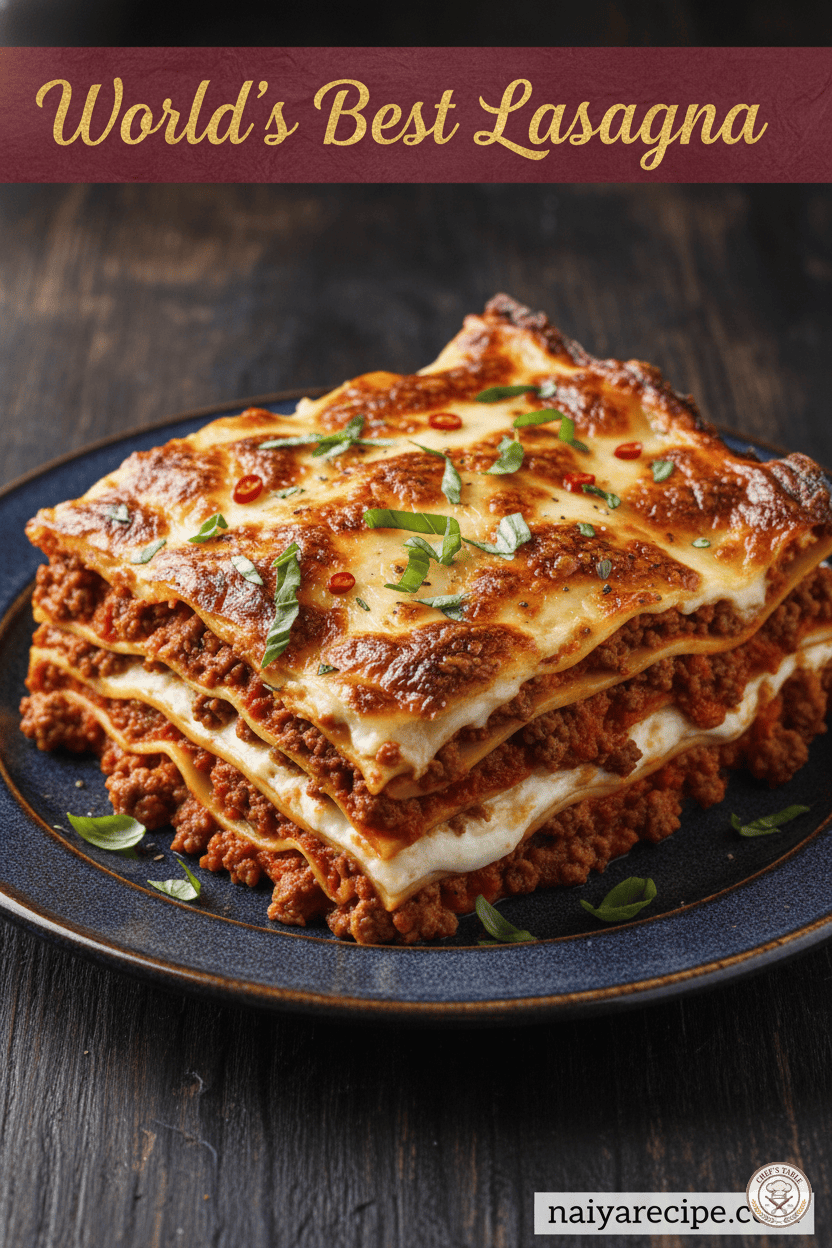
Lasagna. Just the word itself conjures images of bubbling cheese, rich tomato sauce, and perfectly tender pasta. It’s a dish that speaks of comfort, family, and hearty satisfaction. While countless variations exist, striving for the “world’s best” can seem like an ambitious claim. Yet, with a few key principles and a deep understanding of flavor, it’s a goal that’s entirely within reach. This isn’t just a recipe; it’s a journey into the heart of Italian-American culinary tradition, adapted for a universally appealing taste without the inclusion of common non-halal ingredients.
The Foundation: The Meat Sauce
The heart of any great lasagna is undeniably its meat sauce. This is where flavor depth is built, simmered slowly to perfection. Forget quick fixes; a truly exceptional sauce needs time to develop its character.
- The Aromatics: Start with a generous amount of finely diced onion, carrots, and celery – the “soffritto.” Sauté these gently in olive oil until they are soft and translucent, not browned. This sweet base is crucial.
- The Ground Meat: Opt for high-quality ground beef. Brown it thoroughly in the same pot after the soffritto, breaking it up into fine pieces. Draining any excess fat is important for a cleaner, less greasy sauce.
- The Tomato Trio: A combination of tomato products yields the best results. Use crushed tomatoes for body, tomato paste for concentrated sweetness and depth, and a can of diced tomatoes for texture. A touch of sugar can balance the acidity of the tomatoes, though ripe, good-quality tomatoes often need less.
- Herbs and Spices: Fresh herbs are always superior, but dried work well too. Oregano, basil, and a bay leaf are non-negotiable. A pinch of red pepper flakes adds a subtle warmth, not heat. Don’t forget salt and freshly ground black pepper.
- The Simmer: This is where the magic happens. Once all ingredients are combined, bring the sauce to a gentle simmer and let it cook, uncovered, for at least 2-3 hours, stirring occasionally. The longer it simmers, the more the flavors meld and deepen. It should thicken to a rich consistency that coats the back of a spoon.
The Creamy Counterpart: The Ricotta Filling
The ricotta layer provides a delightful contrast to the robust meat sauce, offering a creamy, slightly tangy element that balances the dish.
- Good Quality Ricotta: Use whole milk ricotta for the creamiest texture. Skim milk ricotta can be watery and may not hold up as well.
- Eggs for Structure: Two eggs are essential. They bind the ricotta mixture together, preventing it from oozing out during baking and ensuring a beautiful, sliceable layer.
- Cheese Power: Freshly grated Parmesan cheese adds a salty, nutty depth. A good amount of shredded mozzarella or a blend of Italian cheeses can also be incorporated here for extra cheesiness.
- Herbs and Seasoning: Fresh parsley, chopped fine, is traditional. A pinch of nutmeg might seem unusual, but it enhances the creaminess of the ricotta and is a classic Italian addition. Salt and pepper to taste are vital.
The Pasta: No-Boil vs. Traditional
This is often a point of contention among lasagna enthusiasts. Both have their merits.
- No-Boil Lasagna Noodles: These are incredibly convenient and often produce excellent results. They absorb moisture from the sauce and ricotta during baking, cooking to al dente perfection. If using these, ensure your sauce is adequately moist.
- Traditional Lasagna Noodles: If you prefer traditional noodles, boil them al dente, about 2-3 minutes less than the package directions. They should still have a bite. Immediately drain them and lay them out on a clean kitchen towel or parchment paper to prevent sticking. A little olive oil can also help.
The Cheese Topping: The Golden Crust
No lasagna is complete without a generous, bubbling, golden-brown cheese topping.
- Mozzarella is King: Low-moisture, part-skim mozzarella is ideal here. It melts beautifully without releasing too much water, preventing a soupy top.
- Parmesan for Flavor: A final sprinkle of freshly grated Parmesan adds a sharp, salty finish and helps achieve that irresistible golden crust.
- Optional – Provolone: A layer of thinly sliced provolone can add another dimension of flavor and a lovely melt.
Assembling the Masterpiece
Layering is key to a well-structured lasagna. Think of it as building a delicious edifice.
- Sauce Base: Start with a thin layer of meat sauce on the bottom of a 9×13-inch baking dish. This prevents the noodles from sticking and provides moisture.
- Noodle Layer: Arrange a single layer of pasta noodles over the sauce. Don’t overlap them too much if using traditional noodles; for no-boil, a slight overlap is fine.
- Ricotta Layer: Spread half of the ricotta mixture evenly over the noodles.
- Meat Sauce Layer: Follow with a generous layer of meat sauce, ensuring good coverage.
- Mozzarella Layer: Sprinkle a good amount of shredded mozzarella over the meat sauce.
- Repeat: Repeat the noodle, ricotta, meat sauce, and mozzarella layers.
- Final Top: The top layer should be noodles, covered generously with the remaining meat sauce, and then completely blanketed with mozzarella and a final sprinkle of Parmesan.
Baking to Perfection
- Covered for Moisture: Cover the lasagna tightly with aluminum foil for the first part of baking. This traps steam, ensuring the noodles cook thoroughly and the cheese melts evenly without browning too quickly.
- Uncovered for Browning: Remove the foil for the last 15-20 minutes of baking to allow the cheese to brown and become beautifully bubbly and golden.
- Resting is Crucial: This is arguably the most challenging step. Once out of the oven, let the lasagna rest for at least 15-20 minutes before slicing and serving. This allows the layers to set, preventing a messy, falling-apart presentation. It also keeps the filling from oozing out.
Tips for Success:
- Make Ahead: Lasagna is a fantastic make-ahead meal. You can assemble it a day in advance and refrigerate it. Add about 15-20 minutes to the baking time if baking from cold.
- Freezing: Lasagna freezes beautifully. Bake it, let it cool completely, then wrap it tightly in foil and plastic wrap. It can be frozen for up to 3 months. Thaw in the refrigerator overnight and reheat, covered, in the oven.
- Taste as You Go: Always taste your sauce and ricotta mixture as you’re preparing them. Adjust seasonings as needed.
- Don’t Skimp on Quality: The better the ingredients, the better the final dish. Freshly grated cheese, good quality tomatoes, and lean ground beef make a noticeable difference.
Why This is the “World’s Best” (or close to it!)
This lasagna achieves its “best” status through a combination of factors:
- Layered Flavor: Each component – the deep, slow-simmered meat sauce, the creamy, herbed ricotta, and the generous cheese layers – contributes distinctly yet harmoniously.
- Perfect Texture: The pasta is cooked just right, the sauce is rich but not watery, and the cheese is melted and bubbly with a slight crisp on top. The resting period ensures it holds its shape.
- Balance: It’s a dish that’s incredibly satisfying without being overly heavy. The tang of the tomatoes, the richness of the meat, and the creaminess of the cheese are all in perfect balance.
- Love and Time: Like all truly great dishes, the “world’s best” lasagna is made with patience and care. It’s a labor of love that rewards you with an unforgettable culinary experience.
So, gather your ingredients, set aside an afternoon, and embark on the journey to create your own “world’s best lasagna.” The aroma filling your kitchen will be your first reward, and the smiles around your table will be your ultimate triumph. Serve it with a simple green salad and some crusty bread for a meal that truly nourishes the soul.