
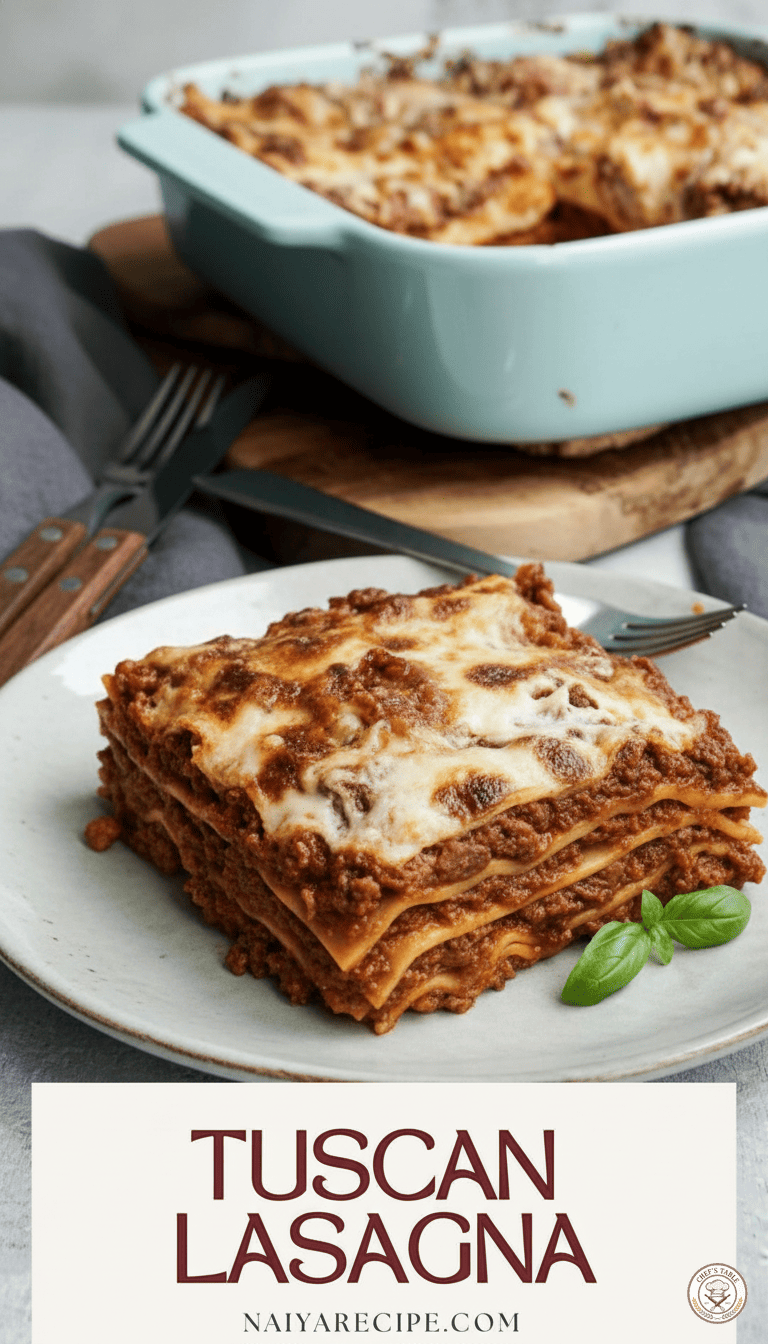
Welcome, food lovers, to a culinary journey that will transport your taste buds straight to the heart of Tuscany! Today, we’re diving deep into the art of making a truly authentic Tuscan Lasagna. Forget everything you thought you knew about lasagna; this isn’t just layers of pasta and sauce. This is a symphony of flavors, a testament to traditional Italian cooking, and a dish that embodies comfort, warmth, and pure joy.
Lasagna, in its essence, is a celebration of simple, high-quality ingredients coming together in perfect harmony. While many variations exist across Italy, the Tuscan version often distinguishes itself with its rich, slow-cooked meat ragù and a creamy béchamel sauce that binds it all together. Our recipe today honors these traditions, ensuring every bite is a delightful experience.
The Heart of the Matter: The Bolognese Ragù (Meat Sauce)
The soul of our Tuscan Lasagna lies undoubtedly in its ragù. This isn’t a quick marinara; it’s a slow-simmered masterpiece, allowing the flavors to meld and deepen over hours. Patience is key here, and the reward is an incredibly rich, savory, and satisfying sauce.
Ingredients for the Ragù:
- 1 kg (2.2 lbs) ground beef (15-20% fat content is ideal for flavor)
- 2 large yellow onions, finely chopped
- 4 carrots, finely chopped
- 4 celery stalks, finely chopped
- 4 cloves garlic, minced
- 2 cans (800g / 28 oz each) crushed tomatoes or passata
- 250 ml (1 cup) beef broth
- 2 bay leaves
- 1 teaspoon dried oregano
- Pinch of nutmeg (freshly grated is best)
- Salt and freshly ground black pepper to taste
- 3 tablespoons olive oil
- A splash of milk (optional, for tenderizing the meat)
Crafting the Ragù: A Step-by-Step Guide
- Preparation is Key: Begin by meticulously chopping your onions, carrots, and celery into very small pieces. This trio, known as a “soffritto” in Italian cooking, forms the aromatic base of our ragù. Minced garlic should also be ready.
- Sauté the Soffritto: Heat the olive oil in a large, heavy-bottomed pot or Dutch oven over medium heat. Add the chopped onions, carrots, and celery. Sauté gently, stirring occasionally, for about 10-15 minutes until the vegetables are softened and translucent. This step is crucial for building deep flavor.
- Add the Garlic: Stir in the minced garlic and cook for another minute until fragrant. Be careful not to burn the garlic.
- Brown the Beef: Increase the heat slightly and add the ground beef to the pot. Break it up with a spoon and cook until it’s evenly browned on all sides. Drain any excess fat if necessary, though a little fat adds to the richness.
- Deglaze (Optional, with milk): If you’re using it, add a splash of milk to the browned beef. Stir and let it simmer until evaporated. This traditional step helps tenderize the meat and adds a subtle richness.
- Introduce the Tomatoes and Broth: Pour in the crushed tomatoes or passata and the beef broth. Stir everything together.
- Seasoning: Add the bay leaves, dried oregano, a pinch of nutmeg, and season generously with salt and freshly ground black pepper. Bring the sauce to a gentle simmer.
- The Slow Simmer: Reduce the heat to low, cover the pot partially (leaving a small gap for steam to escape), and let the ragù simmer for at least 2-3 hours, or even longer (up to 4 hours is fantastic). Stir occasionally to prevent sticking and to ensure even cooking. The longer it simmers, the more complex and delicious the flavors will become. The sauce should thicken significantly, and the meat should be incredibly tender. If it becomes too thick, you can add a little more broth or water.
- Final Touches: Once the ragù has simmered sufficiently, remove the bay leaves. Taste and adjust seasoning as needed. This ragù can be made a day in advance and refrigerated; the flavors often deepen overnight.
The Silky Smooth Companion: Béchamel Sauce
While some lasagnas use ricotta cheese, an authentic Tuscan Lasagna relies on a creamy, luscious béchamel sauce. This white sauce adds moisture, richness, and a beautiful counterpoint to the robust meat ragù.
Ingredients for the Béchamel:
- 100g (7 tablespoons) unsalted butter
- 100g (3/4 cup) all-purpose flour
- 1 liter (4 cups) whole milk, warmed
- 1/2 teaspoon salt
- Pinch of freshly grated nutmeg
- A dash of white pepper (optional)
Making the Béchamel:
- Melt the Butter: In a medium saucepan, melt the butter over medium-low heat.
- Make the Roux: Add the flour to the melted butter and whisk continuously for 2-3 minutes to create a smooth paste, known as a roux. Cook until it smells slightly nutty, but don’t let it brown.
- Whisk in Milk: Gradually add the warmed milk to the roux, a little at a time, whisking vigorously after each addition to prevent lumps. It’s important to add the milk slowly to ensure a smooth sauce.
- Simmer and Thicken: Once all the milk is incorporated, continue to whisk constantly until the sauce thickens and comes to a gentle boil. Reduce the heat to low and let it simmer for another 5 minutes, still whisking, to cook out the raw flour taste.
- Season: Season with salt, nutmeg, and a dash of white pepper if desired. The béchamel should be smooth, creamy, and pourable.
The Pasta and Cheese: Building the Layers
For the pasta, fresh egg pasta sheets are ideal for lasagna. If using dried lasagna noodles, ensure they are the “oven-ready” no-boil type, or cook them al dente according to package directions. For cheese, we’ll use a combination that melts beautifully and adds a savory tang.
Additional Ingredients:
- 500g (1 lb) fresh lasagna sheets (or oven-ready dried lasagna noodles)
- 200g (7 oz) freshly grated Parmesan cheese
- 200g (7 oz) mozzarella cheese, shredded or thinly sliced
- Fresh basil leaves for garnish (optional)
Assembling Your Tuscan Masterpiece
Now for the grand finale – assembling the lasagna! This is where all your hard work comes together to create a stunning dish.
- Preheat and Prepare: Preheat your oven to 190°C (375°F). Lightly grease a large baking dish (approximately 9×13 inches or similar size).
- First Layer of Béchamel: Spread a thin layer of béchamel sauce on the bottom of the prepared baking dish. This prevents the pasta from sticking and keeps the first layer moist.
- First Layer of Pasta: Place a single layer of lasagna noodles over the béchamel, overlapping slightly if necessary to cover the bottom of the dish.
- Ragù and Cheese: Spoon a generous amount of ragù evenly over the pasta. Then, drizzle a bit more béchamel over the ragù, followed by a sprinkle of Parmesan and some mozzarella.
- Repeat the Layers: Continue layering in this order: pasta, ragù, béchamel, Parmesan, mozzarella. Repeat these layers until you run out of ingredients, ending with a layer of pasta topped generously with béchamel, Parmesan, and mozzarella. Ensure the top is well-covered with cheese for that beautiful golden crust.
- The Grand Topping: On the very top, make sure there’s a good amount of béchamel and a generous layer of both Parmesan and mozzarella. This will create that irresistible golden-brown, bubbly crust everyone loves.
- Cover and Bake: Cover the baking dish loosely with aluminum foil. Bake for 20-25 minutes.
- Uncover and Brown: Remove the foil and continue to bake for another 15-20 minutes, or until the top is golden brown and bubbly, and the lasagna is heated through. If your lasagna is browning too quickly, you can cover it again loosely.
- Resting is Crucial: This is arguably one of the most important steps! Once out of the oven, let the lasagna rest for at least 15-20 minutes before slicing and serving. This allows the layers to set, preventing it from falling apart when you cut into it. The flavors will also continue to meld during this resting period.
- Serve and Enjoy: Slice into generous portions and serve hot. Garnish with fresh basil leaves if desired for a burst of color and freshness.
Tips for the Perfect Lasagna
- Don’t Rush the Ragù: The longer you simmer the meat sauce, the better it will taste. It’s truly the foundation of this dish.
- Warm Milk for Béchamel: Using warmed milk for the béchamel helps prevent lumps and makes for a smoother sauce.
- Fresh Pasta Advantage: If you can find fresh lasagna sheets, they are fantastic and often don’t require pre-boiling.
- Don’t Over-Sauce: While it’s tempting to load up on sauce, too much liquid can make the lasagna watery. Aim for even, moderate layers.
- Rest, Rest, Rest: Seriously, don’t skip the resting step! It makes all the difference in presentation and texture.
Why This Tuscan Lasagna is a Must-Try
This Tuscan Lasagna recipe is more than just a meal; it’s an experience. It’s a dish that brings families together, perfect for Sunday dinners, special occasions, or simply when you crave authentic Italian comfort food. The depth of flavor from the slow-cooked ragù, the luxurious creaminess of the béchamel, and the perfectly cooked pasta and melted cheese combine to create something truly magical.
Imagine digging your fork into those tender layers, each one bursting with savory meat, rich tomato, and delicate béchamel, all crowned with a golden, bubbly cheese crust. It’s hearty, satisfying, and utterly delicious. While it requires a bit of time and effort, every moment spent preparing this lasagna is a labor of love that pays off in spades.
So, gather your ingredients, put on some Italian music, and embark on this wonderful culinary adventure. You’ll be amazed at the flavors you can create in your own kitchen. Enjoy the process, savor the aromas, and most importantly, delight in the joy of sharing this incredible Tuscan Lasagna with your loved ones. Buon appetito!
For more authentic Italian recipes and culinary inspiration, visit naiyarecipe.com.