
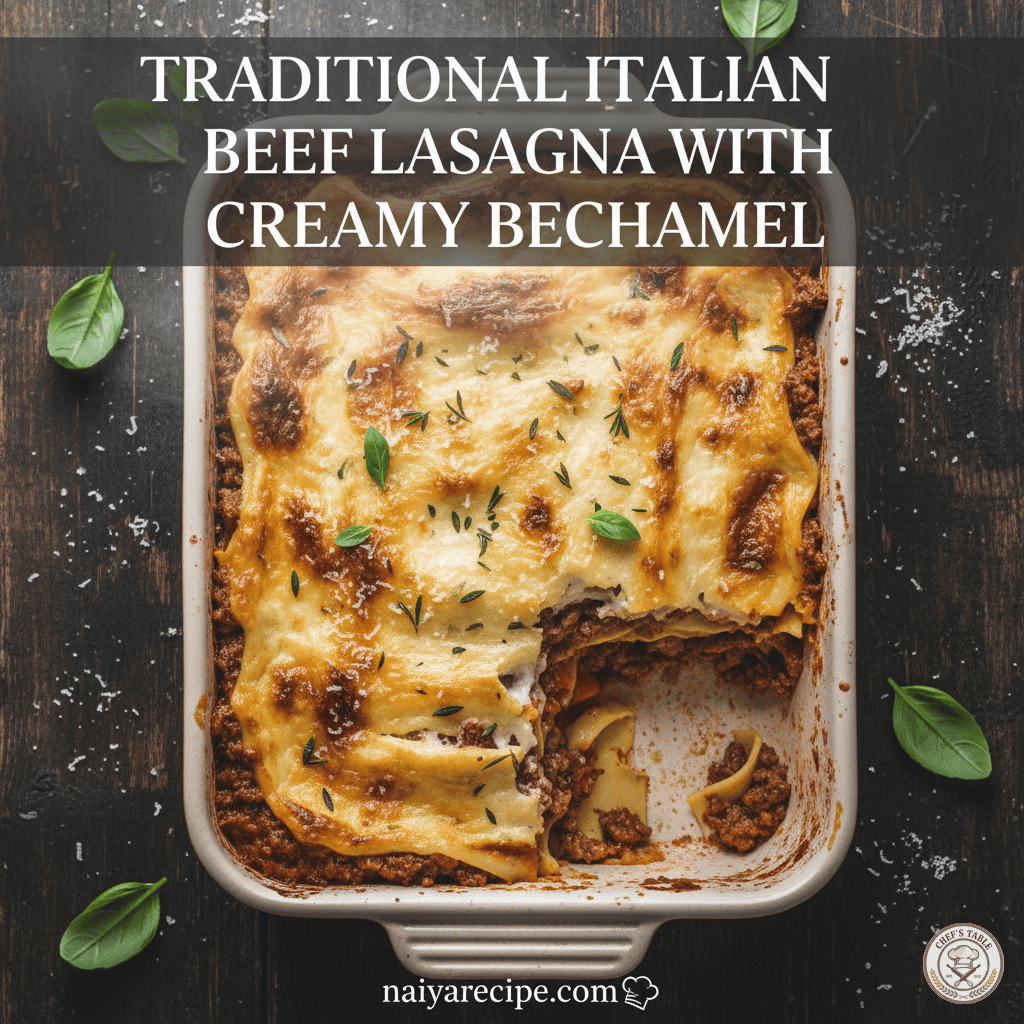
There are few dishes that evoke the warmth, comfort, and culinary artistry of Italy quite like a classic lasagna. But not just any lasagna – we’re talking about a Traditional Italian Beef Lasagna with Creamy Bechamel. This isn’t the quick-and-easy, ricotta-laden Americanized version you might be familiar with. This is the real deal: layers of rich, savory beef ragu, silken béchamel sauce, tender pasta, and a generous topping of melted cheese, all baked to golden perfection. It’s a dish that takes a little time and effort, but every single moment spent in its creation is rewarded tenfold with an explosion of authentic Italian flavors and a truly unforgettable dining experience.
The Heart of the Matter: The Ragu
At the core of any great lasagna lies an equally great ragu. This isn’t simply ground beef browned with some tomato sauce; it’s a slow-simmered symphony of flavors that develops depth and complexity over hours. Our traditional beef ragu starts with a “soffritto” – the holy trinity of Italian cooking: finely diced onion, carrot, and celery. This aromatic base is gently sautéed until softened, releasing its sweet and earthy notes, forming the foundational layer of flavor.
Next, high-quality ground beef is added, browned until no pink remains, breaking it up as it cooks. Once the beef is beautifully browned, it’s time for the liquid gold. We’re talking about rich crushed tomatoes or passata, perhaps a touch of tomato paste for concentrated flavor, and a splash of broth to help everything meld together. A bay leaf or two, a sprig of fresh basil, and a pinch of dried oregano are essential aromatics that infuse the sauce with that unmistakable Italian essence. The key here is patience. This ragu isn’t rushed; it simmers gently for at least 2-3 hours, or even longer, allowing the flavors to marry and deepen, and the sauce to thicken into a luxurious, clingy texture that will coat every strand of pasta and every morsel of beef. The longer it simmers, the more profound and satisfying the taste.
The Silken Dream: Bechamel Sauce
Perhaps the most defining characteristic of an authentic Italian lasagna is the presence of béchamel sauce, rather than ricotta cheese. This creamy, white sauce adds an incredible richness and velvety texture that contrasts beautifully with the robust ragu. Making béchamel might sound intimidating, but it’s surprisingly straightforward.
It begins with a “roux,” a mixture of melted butter and flour cooked together for a minute or two to eliminate the raw flour taste. This roux acts as a thickener for the milk that’s gradually whisked in. The trick is to add the milk slowly, whisking continuously to prevent lumps and create a smooth, homogenous sauce. As the milk heats, the sauce will thicken. Seasoning is simple but crucial: a generous pinch of salt, a dash of white pepper, and a grating of fresh nutmeg are all you need to elevate the béchamel. Nutmeg, in particular, adds a subtle warmth and a classic touch that perfectly complements the other flavors in the lasagna. The finished béchamel should be smooth, thick enough to coat the back of a spoon, and utterly divine.
The Pasta: The Foundation of Layers
For a traditional lasagna, fresh pasta sheets are often preferred, as they cook up incredibly tender and absorb the sauces beautifully. However, good quality dried lasagna noodles work perfectly well too. If using dried noodles, you may need to par-boil them briefly according to package directions, or you can opt for no-boil lasagna sheets if you’re looking to save a bit of time – just ensure your sauces are adequately moist to cook them through. The goal is to have pasta that is pliable enough to layer without breaking and will achieve that perfect al dente bite once baked.
The Art of Assembly: Layer by Layer Perfection
Assembling a lasagna is where all your hard work comes together. It’s a meditative process, a culinary construction that promises delicious rewards.
- A Thin Base: Start with a thin layer of ragu at the bottom of your baking dish. This prevents the pasta from sticking and ensures every bite is saucy from the get-go.
- First Pasta Layer: Lay down a single layer of lasagna noodles, overlapping slightly if necessary to cover the entire base.
- Ragu Abundance: Spoon a generous amount of your rich beef ragu over the pasta, spreading it evenly.
- Béchamel Bliss: Follow with a liberal layer of the creamy béchamel sauce, ensuring it covers the ragu.
- Cheese Please: Sprinkle with grated cheese. While many recipes call for Parmesan, a combination of Parmesan and a melting cheese like mozzarella (low-moisture, full-fat is best) or provolone adds incredible flavor and that coveted gooey, stretchy texture.
- Repeat and Build: Continue layering in this order – pasta, ragu, béchamel, cheese – until you reach the top of your baking dish. Aim for 3-5 layers of pasta, depending on the depth of your dish.
- The Grand Finale Top: The final layer should be pasta, topped generously with béchamel sauce and a generous blanket of cheese. This top layer will bake to a beautiful golden brown, creating a crispy, cheesy crust that is absolutely irresistible.
Baking to Golden Perfection
Once assembled, the lasagna is ready for its transformation in the oven. Cover the baking dish loosely with aluminum foil for the first part of the baking process. This helps to steam the pasta and sauces, ensuring everything cooks through evenly without drying out. After about 30-40 minutes, remove the foil to allow the top layer of cheese to bubble, melt, and turn a glorious golden brown. The aroma that will fill your kitchen during this stage is simply divine – a promise of the deliciousness to come.
Bake until the lasagna is bubbling around the edges, the pasta is tender, and the top is beautifully browned and slightly crispy. A good rule of thumb is to insert a knife into the center; if it slides in easily, the pasta is cooked.
The Crucial Resting Period
This is perhaps the most challenging part: waiting! After removing the lasagna from the oven, it’s absolutely crucial to let it rest for at least 15-20 minutes, preferably even longer. This resting period allows the layers to set, the sauces to redistribute, and the cheese to firm up slightly. If you cut into it too soon, the layers will slide apart, and the beautiful construction will collapse. Patience, my friend, is a virtue that will be greatly rewarded with perfectly defined, stable, and utterly delicious slices.
Serving Suggestions
A traditional Italian beef lasagna is a meal in itself, hearty and incredibly satisfying. To complement its richness, simple side dishes are best. A fresh, crisp green salad with a light vinaigrette provides a welcome counterpoint, cutting through the richness with its acidity. A side of crusty bread is perfect for soaking up any lingering sauce on your plate – not a drop should go to waste!
Why This Lasagna is a Must-Make
Making a traditional Italian beef lasagna with béchamel is more than just cooking; it’s an experience. It’s a journey into the heart of Italian culinary tradition, a testament to the power of slow cooking, and an act of love for those you share it with. The depth of flavor in the slow-simmered ragu, the luxurious creaminess of the béchamel, the tender pasta, and the cheesy golden crust create a symphony of textures and tastes that is unparalleled.
This dish is perfect for family gatherings, special occasions, or simply when you crave a truly comforting and profoundly delicious meal. It freezes beautifully, making it an excellent candidate for meal prepping. Imagine the joy of pulling a homemade, authentic Italian lasagna from your freezer on a busy weeknight!
So, roll up your sleeves, gather your ingredients, and embark on the rewarding journey of creating this magnificent Traditional Italian Beef Lasagna with Creamy Bechamel. It’s a labor of love, but one bite will tell you it’s a labor truly worth savoring. Enjoy the process, and even more so, enjoy the incredible flavors of Italy right in your own home.