
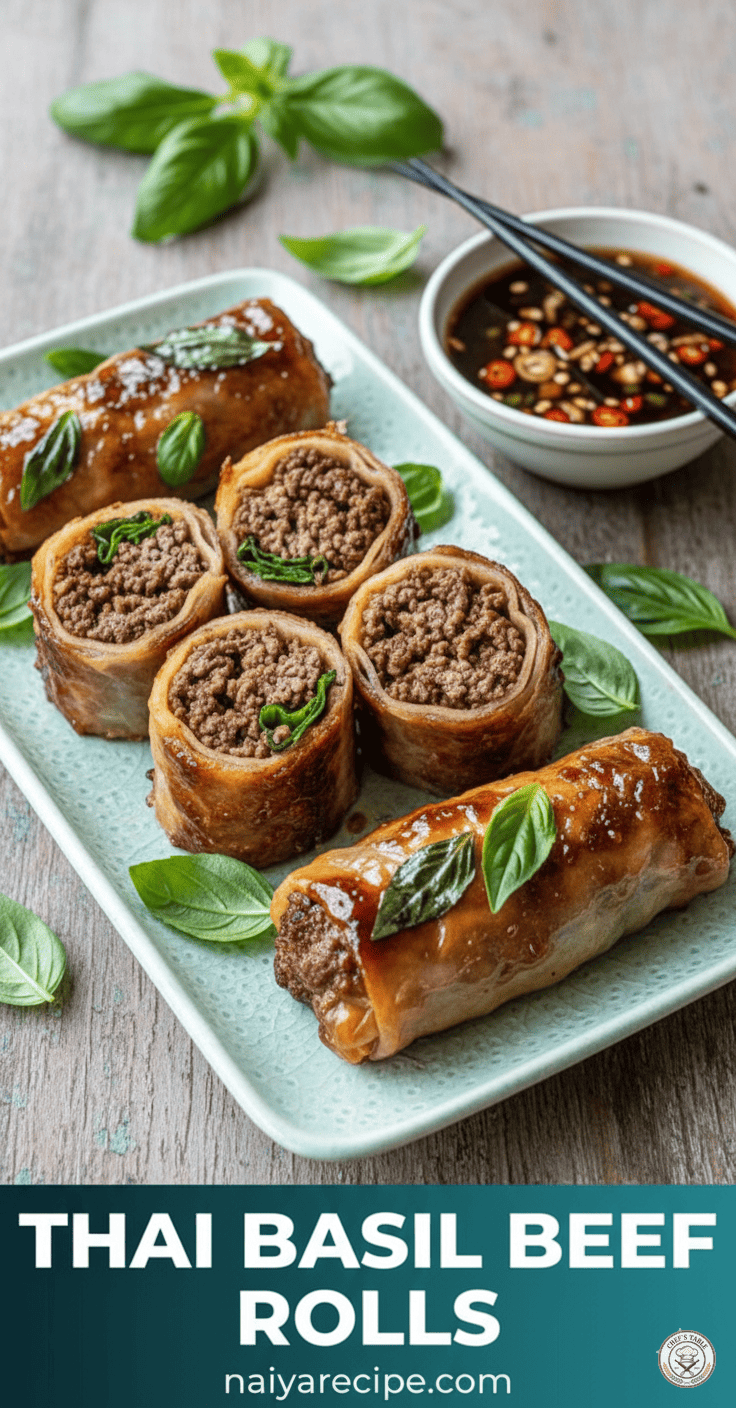
Thai Basil Beef Rolls offer a delightful culinary journey, merging the aromatic essence of Thai cuisine with the comforting familiarity of a well-crafted roll. This dish, often overlooked in the vast landscape of Thai gastronomy, is a testament to the country’s ability to balance vibrant flavors and textures. It’s a perfect appetizer or a light main course, suitable for a weeknight dinner or an impressive addition to a gathering. The beauty of these rolls lies in their simplicity, allowing the fresh ingredients to shine through, while also offering a depth of flavor that keeps you coming back for more.
The inspiration behind these rolls comes from a long-standing tradition of wrapping ingredients, a practice found in many cultures across Asia. In Thailand, fresh herbs and crisp vegetables are often enjoyed with various protein fillings, all brought together with a dipping sauce that provides that quintessential sweet, sour, salty, and spicy balance. These beef rolls take that concept and elevate it with a rich, savory beef filling infused with the unmistakable fragrance of Thai basil, a key herb in many beloved Thai dishes.
The Heart of the Roll: The Beef Filling
The core of our Thai Basil Beef Rolls is, of course, the beef filling. We opt for lean ground beef, which provides a robust flavor without being overly greasy. The preparation of this filling is crucial to the overall success of the dish.
Ingredients for the Beef Filling:
- 1 tablespoon neutral oil (like canola or vegetable oil)
- 1 pound lean ground beef
- 1 small onion, finely minced
- 3-4 cloves garlic, minced
- 2 tablespoons fish sauce
- 1 tablespoon soy sauce (or tamari for a gluten-free option)
- 1 tablespoon brown sugar (or coconut sugar)
- 1-2 tablespoons lime juice (freshly squeezed is best)
- 1/2 teaspoon white pepper
- 1/4 cup finely chopped fresh Thai basil leaves
- Optional: 1-2 small red chilies, minced (adjust to your spice preference)
Instructions for the Beef Filling:
- Heat the neutral oil in a large skillet or wok over medium-high heat.
- Add the minced onion and sauté for 3-4 minutes until softened and translucent.
- Add the minced garlic and optional minced chilies, if using. Sauté for another minute until fragrant, being careful not to burn the garlic.
- Add the ground beef to the skillet. Break it apart with a spoon and cook, stirring frequently, until it is fully browned and no pink remains. Drain any excess fat.
- Stir in the fish sauce, soy sauce, brown sugar, lime juice, and white pepper. Mix well to combine all the seasonings evenly with the beef.
- Reduce the heat to medium-low and let the mixture simmer for 5-7 minutes, allowing the flavors to meld and the sauce to thicken slightly.
- Remove from heat and stir in the fresh Thai basil leaves. The residual heat will wilt the basil, releasing its aromatic oils. Taste and adjust seasonings if necessary. Set aside to cool slightly.
The Wrapper: Crafting the Perfect Embrace
The wrapper for these rolls is equally important. While some variations might use rice paper wrappers similar to fresh spring rolls, for a more substantial and slightly crispy texture, we’re using a thin, durable wrapper that can be pan-fried or baked.
Ingredients for the Wrappers:
- 1 package (about 25-30 sheets) square spring roll wrappers (sometimes labeled “egg roll wrappers” – ensure they are thin, not thick wonton wrappers)
- 1 egg, lightly beaten (for sealing the rolls)
Assembly Instructions:
- Lay a spring roll wrapper on a clean, dry surface with one corner pointing towards you, forming a diamond shape.
- Place about 2 tablespoons of the cooled beef filling horizontally across the center of the wrapper, closer to the corner facing you. Shape the filling into a log.
- Fold the bottom corner of the wrapper over the filling, tucking it snugly.
- Fold in the left and right corners towards the center, creating an envelope shape.
- Starting from the bottom, tightly roll the wrapper upwards, keeping the filling compact.
- Before reaching the top corner, brush a small amount of the beaten egg along the edges of the top corner. This acts as a sealant.
- Continue rolling tightly until the roll is fully sealed.
- Repeat with the remaining wrappers and filling. If you’re not cooking them immediately, you can cover them with a damp cloth to prevent them from drying out.
Cooking Methods: Achieving Crispy Perfection
There are a couple of excellent ways to cook these Thai Basil Beef Rolls, each yielding a slightly different texture.
Pan-Frying Method:
- Heat about 1/2 inch of neutral oil in a large skillet or shallow pot over medium heat. The oil should be hot enough to sizzle when a small piece of wrapper is dropped in, but not smoking.
- Carefully place the beef rolls seam-side down in the hot oil, ensuring not to overcrowd the pan. Cook in batches if necessary.
- Fry for 3-5 minutes on each side, turning occasionally, until golden brown and crispy all over.
- Once cooked, transfer the rolls to a plate lined with paper towels to drain any excess oil.
Baking Method (for a lighter option):
- Preheat your oven to 400°F (200°C).
- Lightly brush each beef roll with a thin layer of neutral oil. This helps with browning and crispiness.
- Place the rolls in a single layer on a baking sheet lined with parchment paper.
- Bake for 15-20 minutes, flipping them halfway through, until they are golden brown and crispy. Keep an eye on them to prevent burning.
The Essential Accompaniment: Dipping Sauce
No Thai roll is complete without a complementary dipping sauce. This sauce is designed to cut through the richness of the beef, adding bright, tangy, and spicy notes that truly elevate the dish.
Ingredients for the Dipping Sauce:
- 1/4 cup fish sauce
- 1/4 cup warm water
- 2 tablespoons lime juice (freshly squeezed)
- 2 tablespoons brown sugar (or palm sugar, finely grated)
- 1-2 cloves garlic, minced
- 1-2 small red bird’s eye chilies, thinly sliced (or more, to taste)
- 1 tablespoon finely chopped fresh cilantro (optional, for garnish)
Instructions for the Dipping Sauce:
- In a small bowl, combine the fish sauce, warm water, lime juice, and brown sugar. Stir until the sugar is completely dissolved.
- Add the minced garlic and sliced chilies.
- Stir well. Taste and adjust seasonings – you might want more lime for tang, more sugar for sweetness, or more chilies for heat.
- If desired, stir in the fresh cilantro just before serving.
Serving Suggestions and Variations
Thai Basil Beef Rolls are incredibly versatile. Serve them immediately after cooking while they are still warm and crispy. They make an excellent appetizer for a Thai-themed dinner party or a flavorful snack for game night.
For a complete meal: Pair these rolls with a simple side salad dressed with a light vinaigrette, or a bowl of fragrant jasmine rice to soak up any extra sauce.
Variations to explore:
- Vegetarian Option: Substitute the ground beef with finely crumbled firm tofu or a mix of finely chopped mushrooms (shiitake or cremini work well) and water chestnuts for a plant-based alternative.
- Spice Level: Easily adjust the heat by increasing or decreasing the amount of fresh chilies in both the beef filling and the dipping sauce. For those who prefer less heat, remove the seeds from the chilies or omit them entirely.
- Herb Twist: While Thai basil is traditional, you can experiment with other fresh herbs. A touch of mint or cilantro in the filling can add another layer of freshness.
- Extra Crunch: For a different texture, consider adding finely chopped roasted peanuts or cashews to the beef filling after it’s cooked, just before rolling.
The Cultural Significance of Thai Basil
Thai basil (Horapha) is more than just an herb; it’s a cornerstone of Thai cuisine. Distinct from common sweet basil, Thai basil boasts a more robust, slightly spicier flavor with subtle anise or licorice notes. Its sturdy leaves hold up well to cooking, making it ideal for stir-fries, curries, and, of course, these beef rolls. Beyond its culinary uses, basil has been revered for centuries in various cultures for its purported medicinal properties and symbolic meanings. In Thai cooking, it provides an essential aromatic lift, balancing the rich, savory, and spicy elements that define many dishes. Its inclusion in these rolls is not merely for flavor but also for its ability to cut through the richness of the beef, leaving a refreshing aftertaste.
Why This Recipe Works
This recipe for Thai Basil Beef Rolls thrives on the harmony of its components. The savory, aromatic beef filling provides a substantial core, seasoned with a quintessential Thai blend of salty fish sauce, sweet sugar, tangy lime, and pungent garlic and chilies. The fresh Thai basil not only imparts its unique flavor but also brightens the entire mixture. Encased in a crispy wrapper, the contrast of textures – the tender interior and the crisp exterior – is incredibly satisfying. Finally, the dipping sauce acts as the perfect counterpoint, adding a burst of freshness and a customizable kick that ties all the flavors together. It’s a dish that engages all the senses, from the vibrant colors to the enticing aromas and the delightful interplay of textures and tastes.
Storage and Reheating
If you have any leftover cooked rolls, store them in an airtight container in the refrigerator for up to 2-3 days. To reheat, the best method is to use an oven or air fryer to bring back their crispiness. Reheating in a microwave might make them soggy.
To reheat in an oven: Preheat to 350°F (175°C) and bake for 8-12 minutes, or until heated through and crispy.
To reheat in an air fryer: Place in a single layer in the air fryer basket and air fry at 350°F (175°C) for 5-7 minutes, shaking the basket halfway through, until hot and crispy.
Uncooked rolls can also be frozen. Arrange them in a single layer on a baking sheet and freeze until solid. Once frozen, transfer them to a freezer-safe bag or container. They can be stored for up to 1-2 months. When ready to cook, you can fry or bake them directly from frozen, adding a few extra minutes to the cooking time.
Enjoy crafting and savoring these wonderful Thai Basil Beef Rolls. They are a true embodiment of Thai culinary artistry, bringing complex flavors and satisfying textures to your table with every bite.