
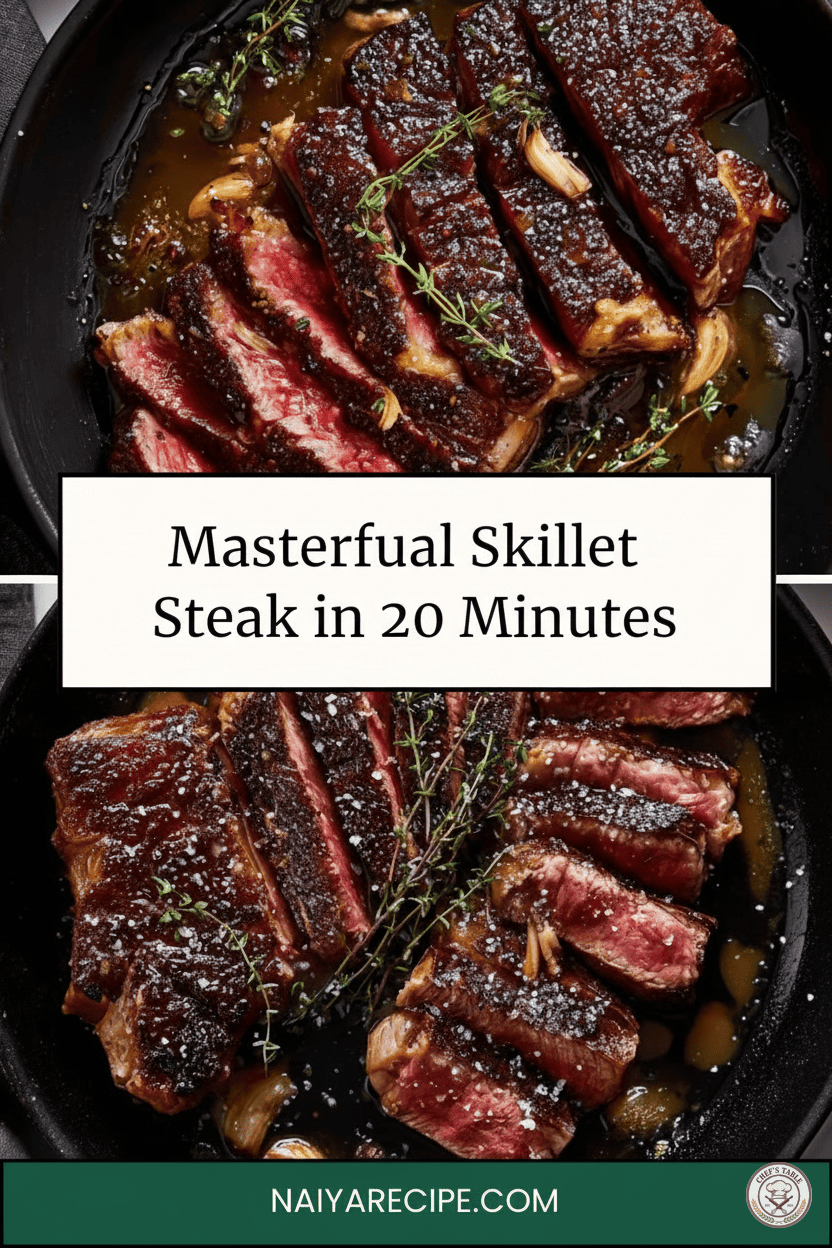
Are you craving a restaurant-quality steak but short on time? Look no further! This guide will show you how to achieve a perfectly seared, juicy skillet steak in just 20 minutes. Forget complicated marinades and lengthy cooking times; with a few simple techniques, you can enjoy a tender, flavorful steak right in your own kitchen. This recipe is designed for maximum flavor with minimal effort, making it ideal for a weeknight dinner or a special meal when time is of the essence.
The Secret to Skillet Steak Perfection
The magic of skillet steak lies in the high heat and direct contact with the cast-iron pan. Cast iron retains heat exceptionally well, creating a beautiful, dark crust on the exterior of the steak while keeping the inside wonderfully tender and moist. This method, often referred to as “reverse searing” or “pan-searing,” is favored by chefs for its ability to deliver consistent results and incredible flavor.
Choosing Your Steak
The journey to a perfect steak begins with selecting the right cut. While many cuts work well for pan-searing, some are particularly suited for this quick-cooking method.
- Ribeye: A classic choice, ribeye is known for its rich marbling, which contributes to its incredible flavor and tenderness. The fat renders beautifully in the hot skillet, basting the meat and adding depth.
- New York Strip: Also known as a strip steak, this cut offers a good balance of tenderness and chew, with a distinct beefy flavor. It often has a nice fat cap on one side that crisps up wonderfully.
- Sirloin: A more economical option, sirloin can be delicious when cooked correctly. Choose a thicker cut for better results.
- Filet Mignon (Tenderloin): While traditionally roasted or grilled, a thick-cut filet mignon can also be pan-seared for an exceptionally tender experience, though it has less marbling and a milder flavor than a ribeye or strip.
Key considerations when choosing your steak:
- Thickness: Aim for a steak that is at least 1 to 1.5 inches thick. Thicker steaks are more forgiving and easier to cook to your desired doneness without overcooking the exterior.
- Marbling: Look for streaks of white fat running through the meat. This marbling melts during cooking, adding moisture, tenderness, and flavor.
- Color: The meat should be a vibrant red color, indicating freshness.
Essential Equipment
While you don’t need a professional kitchen setup, a few key pieces of equipment will make your skillet steak experience much more enjoyable and successful.
- Cast-Iron Skillet: This is non-negotiable for this recipe! A heavy-bottomed cast-iron skillet (10-inch or 12-inch) is crucial for even heat distribution and achieving that perfect sear.
- Tongs: Essential for flipping the steak and holding it on its sides to sear the edges.
- Meat Thermometer: While not strictly necessary for experienced cooks, a good instant-read meat thermometer is invaluable for beginners to ensure your steak reaches the desired internal temperature without guesswork.
- Spatula: Useful for removing the steak from the pan.
- Small Bowl: For mixing seasonings.
- Cutting Board: With a well for juices, if possible.
Ingredients for a Flavorful Skillet Steak
The beauty of a great steak lies in its simplicity. You don’t need a long list of ingredients to achieve outstanding flavor.
- Steak: (1 to 1.5 lbs, 1 to 1.5 inches thick, such as ribeye, New York strip, or sirloin)
- Kosher Salt: Essential for seasoning and drawing out moisture, which helps create a better crust.
- Freshly Ground Black Pepper: Adds a pungent, aromatic kick.
- Cooking Oil: High smoke point oil like avocado oil, grapeseed oil, or canola oil. Olive oil has a lower smoke point and is not ideal for high-heat searing.
- Unsalted Butter: Added towards the end for basting, it contributes richness and helps with browning.
- Garlic Cloves: (3-4 cloves, smashed) For infusing the butter with aromatic flavor.
- Fresh Thyme Sprigs: (2-3 sprigs) Adds an earthy, herbaceous note that complements beef beautifully.
The 20-Minute Master Plan: Step-by-Step
This timeline is tight, so preparation is key! Have all your ingredients measured and tools ready before you start.
Step 1: Prepare the Steak (5 minutes)
- Pat Dry: Remove the steak from its packaging and thoroughly pat it dry with paper towels. This is a critical step! Excess moisture on the surface of the steak will steam rather than sear, preventing a crispy crust.
- Season Generously: Season both sides of the steak generously with kosher salt and freshly ground black pepper. Don’t be shy with the salt; a thick steak can handle a good amount. For optimal results, you can do this 30 minutes to an hour before cooking, allowing the salt to penetrate the meat and draw out some moisture, which then reabsorbs, leading to a more tender and flavorful steak. If you’re truly in a rush for the 20-minute mark, season right before cooking.
- Bring to Room Temperature (Optional but Recommended): If you have an extra 15-20 minutes, let the seasoned steak rest on the counter to come closer to room temperature. This promotes more even cooking. For our 20-minute challenge, this might be a luxury, but keep it in mind for future cooks!
Step 2: Heat the Skillet (5 minutes)
- High Heat: Place your cast-iron skillet over high heat. Let it heat up for a good 4-5 minutes until it’s smoking slightly and very hot. A properly heated pan is essential for a good sear.
- Add Oil: Add a tablespoon or two of high-smoke-point cooking oil to the hot skillet. Swirl to coat the bottom. The oil should shimmer and almost smoke immediately.
Step 3: Sear the Steak (4-6 minutes)
- First Side (2-3 minutes): Carefully place the seasoned steak into the hot skillet. It should sizzle aggressively. Do NOT move the steak for the first 2-3 minutes. Let it develop a deep, golden-brown crust. This is where the magic happens!
- Second Side (2-3 minutes): Flip the steak with tongs and sear the other side for another 2-3 minutes, aiming for a similar crust.
Step 4: Add Aromatics and Baste (3-5 minutes)
- Lower Heat & Add Butter: Reduce the heat to medium-low. Add the unsalted butter, smashed garlic cloves, and fresh thyme sprigs to the pan.
- Baste: As the butter melts, it will sizzle and brown slightly. Tilt the pan and use a spoon to continuously baste the melted butter, garlic, and thyme over the top of the steak. Do this for about 1-2 minutes, flipping the steak once or twice to ensure even cooking and basting both sides. This step adds incredible flavor and helps create a beautiful, glossy finish.
- Sear the Edges (Optional): If your steak is thick enough, use your tongs to hold it on its sides to sear the edges for about 30 seconds each, until a nice crust forms.
Step 5: Check Doneness & Rest (3-5 minutes)
- Check Temperature: For perfectly cooked steak, an instant-read meat thermometer is your best friend. Insert it into the thickest part of the steak, away from the bone.
- Rare: 120-125°F (49-52°C)
Medium-Rare: 130-135°F (54-57°C) – Highly recommended for most cuts!*
- Medium: 140-145°F (60-63°C)
- Medium-Well: 150-155°F (66-68°C)
- Well-Done: 160°F+ (71°C+) (Proceed with caution; well-done can be tough)
Remember, the temperature will rise by 5-10°F as the steak rests! Remove it slightly before your desired final temperature.*
- Rest the Steak: This is arguably the most crucial step! Once the steak reaches your desired doneness, immediately transfer it from the skillet to a clean cutting board. Let it rest for at least 5 minutes (up to 10 minutes for thicker cuts). Do not skip this! Resting allows the juices within the steak to redistribute, resulting in a much more tender and juicy steak. If you cut into it too soon, all those precious juices will run out onto your cutting board.
- Slice and Serve: After resting, slice the steak against the grain into ½-inch thick pieces. Garnish with a fresh sprig of thyme, if desired, and spoon any leftover pan juices over the slices. Serve immediately.
Tips for Success
- Don’t Overcrowd the Pan: If cooking multiple steaks, work in batches to avoid lowering the pan temperature, which would lead to steaming instead of searing.
- Ventilation: High-heat searing can produce some smoke. Ensure good ventilation by turning on your kitchen fan or opening a window.
- Clean-up: While the pan is still warm, carefully scrape out any bits with a metal spatula. For a cast-iron skillet, avoid soap; instead, scrub with hot water and a stiff brush, then dry thoroughly and apply a thin layer of cooking oil to maintain its seasoning.
- Experiment with Flavors: While butter, garlic, and thyme are classic, feel free to experiment with other aromatics like rosemary or a pinch of red pepper flakes for a subtle kick.
Perfect Pairings
A magnificent skillet steak deserves equally delightful accompaniments. Here are some ideas to complete your meal:
- Simple Side Salad: A fresh green salad with a light vinaigrette provides a refreshing contrast to the richness of the steak.
- Roasted Asparagus or Broccoli: These vegetables roast quickly and beautifully, offering a nutritious and colorful side.
- Creamy Mashed Potatoes: A classic pairing that never disappoints, perfect for soaking up those delicious pan juices.
- Sautéed Mushrooms: Earthy mushrooms sautéed in a little butter and garlic are a fantastic complement to beef.
- Garlic Bread: Crusty garlic bread is always a crowd-pleaser and great for dipping.
Troubleshooting Common Issues
- Steak is not searing well:
- Cause: Pan not hot enough, or steak was too wet.
- Solution: Ensure your skillet is screaming hot before adding the steak. Pat the steak thoroughly dry with paper towels.
- Steak is overcooked on the outside, undercooked on the inside:
- Cause: Pan too hot, or steak was too cold when it went into the pan.
- Solution: While you want high heat, if it’s charring instantly, lower it slightly. Try to let your steak come closer to room temperature before cooking.
- Steak is tough:
- Cause: Overcooked, or not rested properly.
- Solution: Use a meat thermometer to avoid overcooking. Always, always rest your steak! Slice against the grain.
- Pan is smoking excessively:
- Cause: Too much oil, or oil with a low smoke point.
- Solution: Use only enough oil to coat the pan. Ensure you’re using a high-smoke-point oil.
The Joy of a Perfectly Cooked Steak
There’s immense satisfaction in preparing a perfectly cooked steak at home. With this 20-minute method, you can achieve results that rival your favorite steakhouses, all with the comfort and convenience of your own kitchen. The crispy, flavorful crust, the tender, juicy interior, and the aromatic notes of garlic and thyme come together to create an unforgettable culinary experience. So, gather your ingredients, fire up that cast-iron skillet, and prepare to impress yourself and your loved ones with a masterful skillet steak that’s ready in a flash! Enjoy every delicious bite.