
There are few dishes that evoke the same feeling of warmth, comfort, and pure satisfaction as a perfectly layered lasagna. It’s a culinary masterpiece, a symphony of flavors and textures that come together to create an unforgettable meal. Forget those pre-made versions; mastering homemade lasagna is a skill that will bring joy to your kitchen and smiles to the faces of everyone at your table. This comprehensive guide will walk you through every step of creating a luscious, deeply flavorful lasagna, ensuring a show-stopping result every time.
The Foundation: Building Blocks of Brilliance
Before we dive into the layering magic, let’s talk about the essential components that make up a truly spectacular lasagna. Each element plays a crucial role in achieving that perfect balance of richness, tang, and savory goodness.
1. The Sauce: The Heartbeat of Your Lasagna
A great lasagna starts with a phenomenal sauce. This isn’t just a covering; it’s a deeply infused flavor base that will permeate every layer. Our recipe focuses on a robust, meaty marinara, simmered to perfection to develop layers of savory depth.
Ingredients for the Meat Sauce:
- 2 tablespoons olive oil
- 1 large onion, finely chopped
- 3-4 cloves garlic, minced
- 1.5 pounds lean ground beef (or a combination of ground beef and ground turkey for a lighter option)
- 1 (28-ounce) can crushed tomatoes
- 1 (15-ounce) can tomato sauce
- 1 (6-ounce) can tomato paste
- 1/2 cup water (or vegetable broth for added depth)
- 2 teaspoons dried oregano
- 1 teaspoon dried basil
- 1/2 teaspoon red pepper flakes (optional, for a subtle kick)
- 1 teaspoon sugar (to balance acidity)
- Salt and freshly ground black pepper to taste
- Fresh parsley, chopped (for garnish, optional)
Instructions for the Meat Sauce:
- Sauté Aromatics: Heat the olive oil in a large, heavy-bottomed pot or Dutch oven over medium heat. Add the chopped onion and cook until softened and translucent, about 5-7 minutes. Add the minced garlic and cook for another minute until fragrant, being careful not to burn it.
- Brown the Meat: Add the ground beef (or meat mixture) to the pot. Break it up with a spoon and cook until thoroughly browned, crumbling it as it cooks. Drain off any excess fat. This step is crucial for developing rich flavor.
- Build the Sauce: Stir in the tomato paste and cook for 1-2 minutes, stirring constantly, to deepen its flavor. Pour in the crushed tomatoes, tomato sauce, and water (or broth). Add the oregano, basil, red pepper flakes (if using), and sugar. Stir everything together thoroughly.
- Simmer for Depth: Bring the sauce to a gentle simmer. Reduce the heat to low, cover the pot, and let it simmer for at least 1 hour, or up to 2-3 hours for an even richer flavor. Stir occasionally to prevent sticking. The longer it simmers, the more the flavors will meld and deepen. Season with salt and pepper to taste. If the sauce becomes too thick, add a little more water or broth.
2. The Creamy Ricotta Layer: The Tangy Counterpoint
The ricotta cheese mixture is what gives lasagna its characteristic creamy texture and delightful tang, balancing the richness of the meat sauce and the savory cheese.
Ingredients for the Ricotta Mixture:
- 24 ounces (about 3 cups) whole milk ricotta cheese
- 1 large egg, lightly beaten (this helps bind the mixture)
- 1/2 cup grated Parmesan cheese
- 1/4 cup fresh parsley, finely chopped
- 1/2 teaspoon salt
- 1/4 teaspoon black pepper
Instructions for the Ricotta Mixture:
- In a medium bowl, combine the ricotta cheese, beaten egg, Parmesan cheese, chopped fresh parsley, salt, and pepper.
- Mix until all ingredients are well combined and the mixture is smooth. Set aside.
3. The Cheeses: Melty, Gooey Goodness
No lasagna is complete without a generous amount of cheese! We’ll use a combination of mozzarella for its amazing melt and stretch, and a touch more Parmesan for its nutty, savory notes.
Ingredients for the Cheeses:
- 1 pound (about 4 cups) low-moisture, part-skim mozzarella cheese, shredded
- 1/2 cup grated Parmesan cheese (for sprinkling)
4. The Noodles: The Structural Integrity
Lasagna noodles are the backbone of your dish, providing structure and absorbing all those wonderful flavors. You have a couple of options here:
- Traditional Lasagna Noodles: These require boiling before assembly. Follow package directions for al dente cooking.
- No-Boil Lasagna Noodles: These are designed to cook in the moisture of the sauce during baking, saving you a step. If using these, ensure your sauce is adequately moist.
For this recipe, we’ll assume you’re using traditional lasagna noodles that have been cooked according to package directions until al dente. If using no-boil, simply proceed directly to assembly.
Prepare Your Noodles:
- Bring a large pot of salted water to a rolling boil.
- Add lasagna noodles one at a time, ensuring they don’t stick together. Cook according to package directions until al dente (slightly firm to the bite).
- Drain the noodles and rinse them briefly with cold water to prevent sticking. Lay them flat on parchment paper or a clean kitchen towel to cool slightly.
The Art of Layering: Bringing It All Together
Now for the fun part! Assembling your lasagna is like building a delicious edible puzzle. The key is to create even layers so every bite is a perfect blend of flavors. You’ll need a 9×13 inch baking dish.
Preheat your oven to 375°F (190°C).
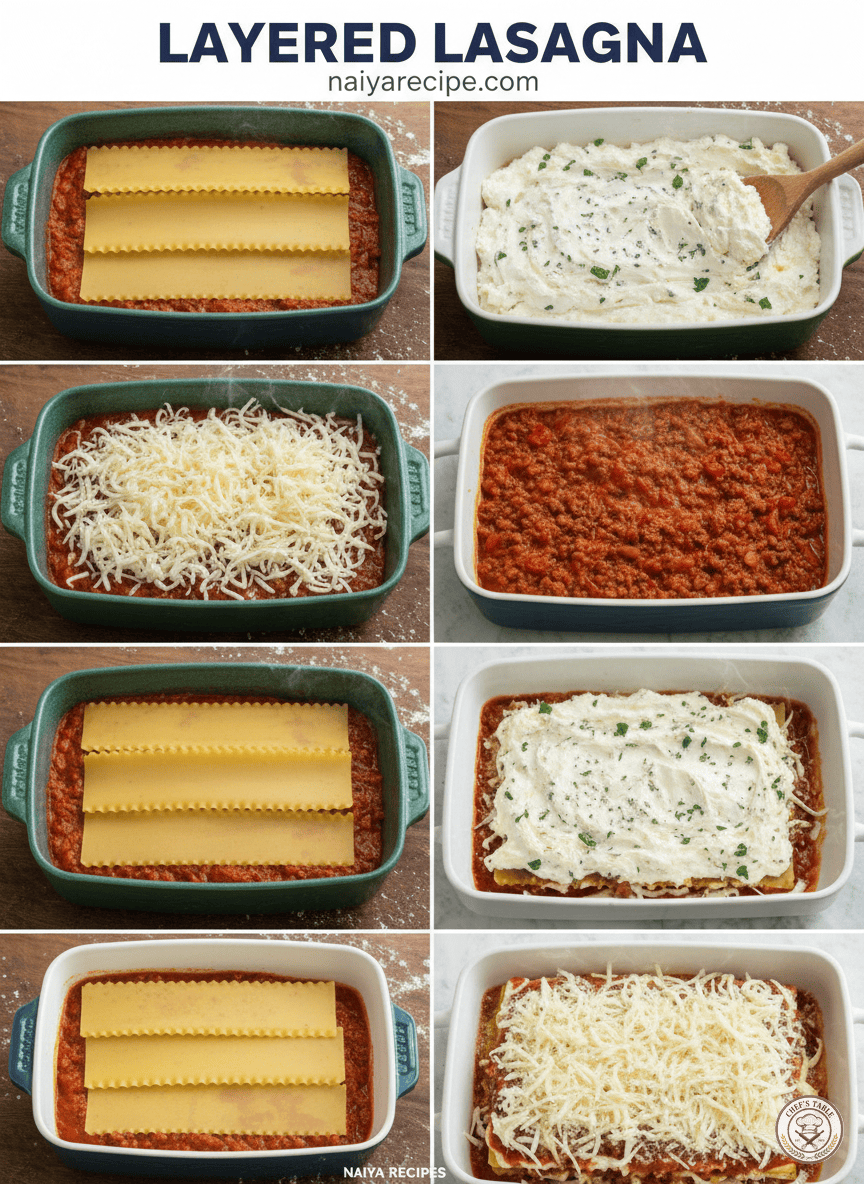
The Layering Process (Refer to the Image for Visual Guidance):
- Sauce Base (Image 1): Start by spreading about 1 to 1.5 cups of meat sauce evenly over the bottom of your 9×13 inch baking dish. This prevents the noodles from sticking and provides a flavorful base.
- First Noodle Layer (Image 1): Arrange a single layer of cooked lasagna noodles over the sauce. Depending on the size of your noodles and dish, you’ll typically use 3-4 noodles, overlapping slightly if necessary to cover the surface. You may need to trim noodles to fit.
- Ricotta Layer (Image 2): Spread half of the ricotta cheese mixture evenly over the noodle layer. Use a spoon or an offset spatula to gently spread it from edge to edge.
- Mozzarella Layer (Image 3): Sprinkle about one-third of the shredded mozzarella cheese over the ricotta layer.
- Meat Sauce Layer (Image 4): Spoon about 2 cups of meat sauce over the mozzarella cheese, spreading it evenly.
- Second Noodle Layer (Image 5): Place another layer of lasagna noodles on top of the meat sauce.
- Remaining Ricotta Layer (Image 6): Spread the remaining half of the ricotta cheese mixture over this noodle layer.
- Mozzarella and Sauce (Image 7): Sprinkle another one-third of the shredded mozzarella cheese over the ricotta. Then, spoon about 2 more cups of meat sauce over the mozzarella.
- Final Noodle Layer (Image 8): Add the last layer of lasagna noodles.
- Grand Finale (Not Pictured, but Essential!): Spoon any remaining meat sauce over the final noodle layer, ensuring it’s well covered. Sprinkle generously with the remaining shredded mozzarella cheese and the grated Parmesan cheese.
Baking Your Masterpiece
Once assembled, your lasagna is ready for its transformation in the oven.
- Cover and Bake: Cover the baking dish tightly with aluminum foil. This helps to steam the noodles and ensure even cooking, preventing the top from drying out or burning.
- Initial Bake: Bake for 25 minutes.
- Uncover and Finish: Remove the foil and bake for another 20-25 minutes, or until the cheese is melted, bubbly, and golden brown. If you like a darker, crispier cheese topping, you can briefly place it under the broiler for 1-2 minutes (watch carefully to prevent burning!).
The Waiting Game: Patience is a Virtue
This is perhaps the hardest part, but it’s absolutely crucial for a perfectly structured lasagna.
- Rest Your Lasagna: Once out of the oven, let the lasagna rest for at least 15-20 minutes before slicing and serving. This allows the layers to set and prevents the lasagna from falling apart when you cut into it. If you cut it too soon, all those delicious layers will slide right out!
Serving Suggestions and Variations
Serve your glorious layered lasagna hot, garnished with a sprinkle of fresh parsley if desired. It pairs beautifully with a simple green salad and some crusty bread to sop up any extra sauce.
Variations to Explore:
- Vegetarian Delight: Omit the meat and instead, sauté a variety of chopped vegetables like zucchini, bell peppers, mushrooms, and spinach. Mix them into your tomato sauce or layer them directly.
- Spinach & Artichoke: Add a layer of well-drained, cooked spinach or a mixture of spinach and chopped artichoke hearts to the ricotta layer for extra flavor and nutrients.
- Spice It Up: Increase the red pepper flakes in the sauce for a bolder, spicier lasagna.
- Herbaceous Boost: Experiment with fresh herbs like rosemary or thyme in your meat sauce for different flavor profiles.
- Different Cheeses: While mozzarella and Parmesan are classics, don’t hesitate to try a small amount of provolone or fontina for subtle variations in flavor and melt.
Troubleshooting Common Lasagna Woes
- Runny Lasagna: This can happen if your ricotta mixture is too watery, your sauce is too thin, or if you don’t let it rest after baking. Ensure you drain the ricotta well if it seems excessively wet.
- Dry Lasagna: Not enough sauce is usually the culprit. Make sure your sauce layers are generous. Using no-boil noodles also requires ample sauce for them to cook properly.
- Noodles Sticking Together: When boiling traditional noodles, add them one by one to boiling water and stir occasionally. Rinsing them with cold water and laying them flat helps too.
- Burnt Top: If your cheese is browning too quickly, simply tent the lasagna with foil for the remainder of the baking time.
Storing and Reheating
Lasagna is one of those fantastic dishes that often tastes even better the next day!
- Storage: Leftover lasagna can be stored in an airtight container in the refrigerator for 3-4 days.
- Freezing: Lasagna freezes beautifully. You can freeze the entire baked and cooled lasagna (covered tightly with foil and then plastic wrap) or individual portions. It will keep for up to 3 months. Thaw overnight in the refrigerator before reheating.
- Reheating: Reheat individual slices in the microwave until hot. For a whole lasagna, cover it with foil and reheat in a 350°F (175°C) oven until heated through, about 30-45 minutes, removing the foil for the last 10 minutes if you want to crisp up the cheese.
Conclusion
Creating a homemade layered lasagna is a rewarding culinary journey. It’s a dish that takes a little time and effort, but the incredible flavors and the satisfaction of sharing such a lovingly prepared meal are well worth it. This comprehensive guide, complete with a robust meat sauce, creamy ricotta, and generous layers of cheese, will empower you to create a lasagna that will become a cherished family favorite. So, roll up your sleeves, gather your ingredients, and get ready to experience the pure joy of a truly spectacular homemade layered lasagna!