
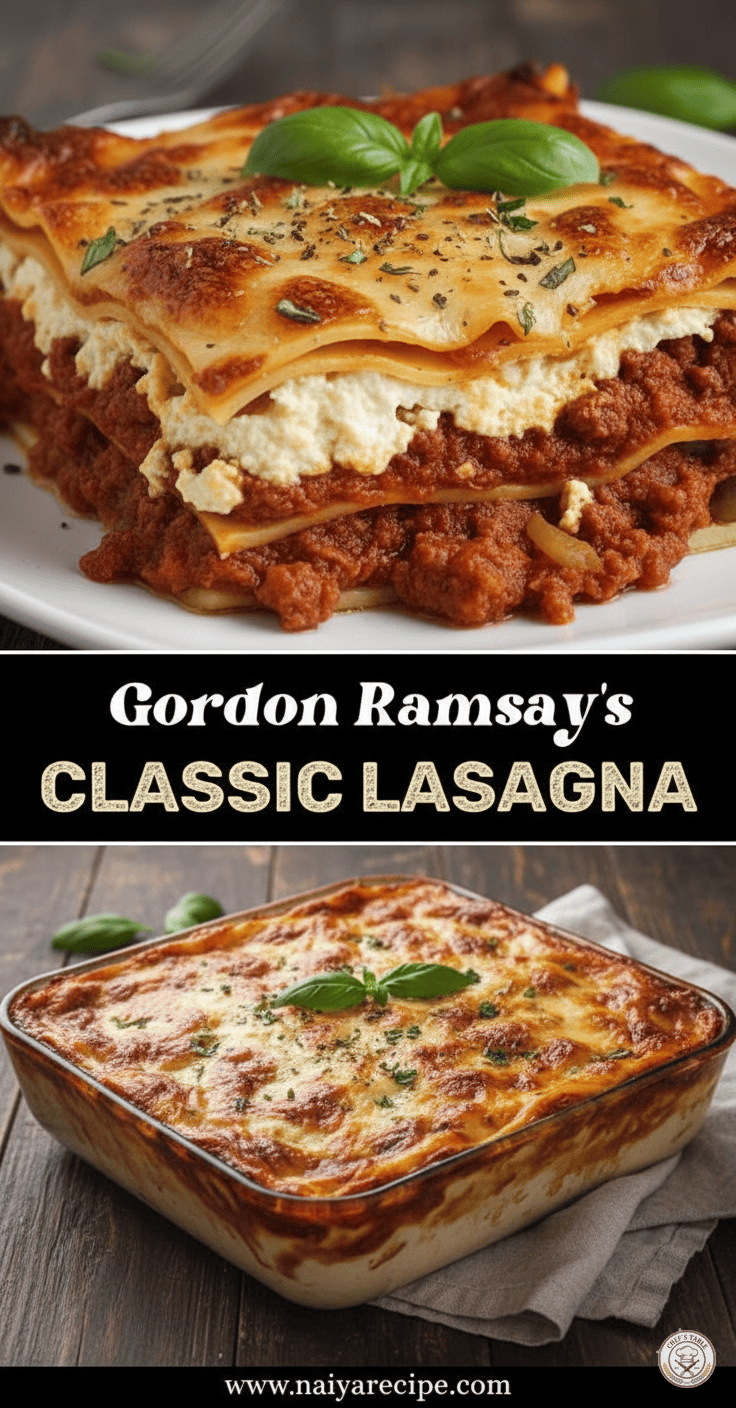
Lasagna, a dish synonymous with comfort, warmth, and hearty satisfaction, has graced tables for centuries. It’s a culinary hug, a layered symphony of flavors and textures that transports you straight to the heart of Italian cooking. While countless variations exist, there’s something truly special about a classic lasagna, particularly when it’s inspired by the meticulous standards of a culinary icon like Gordon Ramsay. This isn’t just a recipe; it’s an experience, a journey into the art of crafting a dish that is both elegant and incredibly comforting.
The beauty of lasagna lies in its components: tender pasta, a rich, slow-cooked meat sauce, a creamy béchamel or a delicate cheese filling, and a generous crowning of melted, golden cheese. Each layer plays a crucial role, contributing to the overall harmony of the dish. While many recipes take shortcuts, a truly exceptional lasagna embraces the process, allowing each element to shine. This rendition focuses on creating depth of flavor without relying on prohibited ingredients, ensuring a delicious and universally appealing dish.
The Foundation: A Robust Meat Sauce
The soul of any great lasagna is its meat sauce, often referred to as ragù. This isn’t a quick affair; it’s a labor of love that rewards patience with unparalleled depth.
Ingredients for the Meat Sauce:
- 2 tablespoons olive oil
- 1 large onion, finely chopped
- 2 carrots, peeled and finely diced
- 2 celery stalks, finely diced
- 3 cloves garlic, minced
- 750g lean ground beef or a mix of ground beef and lamb
- 1 (800g) can crushed tomatoes
- 1 (400g) can tomato paste
- 1 cup beef broth (ensure it’s free of prohibited ingredients)
- 1/2 cup water
- 2 bay leaves
- 1 teaspoon dried oregano
- 1/2 teaspoon dried basil
- Salt and freshly ground black pepper to taste
- A pinch of sugar (optional, to balance acidity)
- Fresh basil leaves, for garnish (optional)
Instructions for the Meat Sauce:
- Sauté the Aromatics: Heat the olive oil in a large, heavy-bottomed pot or Dutch oven over medium heat. Add the chopped onion, carrots, and celery. Cook gently, stirring occasionally, until the vegetables have softened and become translucent, about 8-10 minutes. This step is crucial for building the flavor base.
- Add the Garlic: Stir in the minced garlic and cook for another minute until fragrant, being careful not to burn it.
- Brown the Meat: Increase the heat to medium-high. Add the ground meat, breaking it up with a spoon. Cook until thoroughly browned, crumbling it as it cooks. Drain off any excess fat.
- Deglaze and Build Flavor: Stir in the tomato paste and cook for 2-3 minutes, stirring constantly. This caramelizes the tomato paste, deepening its flavor.
- Add Liquids and Seasonings: Pour in the crushed tomatoes, beef broth, and water. Add the bay leaves, dried oregano, and dried basil. Season with salt, pepper, and a pinch of sugar if using.
- Simmer and Develop: Bring the sauce to a gentle simmer, then reduce the heat to low. Cover partially and let it simmer for at least 1.5 to 2 hours, or even longer for a richer flavor. Stir occasionally to prevent sticking. The longer it simmers, the more the flavors will meld and deepen. If the sauce becomes too thick, add a little more water or broth. Remove the bay leaves before assembling the lasagna.
The Creamy Counterpart: Ricotta and Cheese Filling
While some classic lasagnas feature a béchamel sauce, a ricotta-based filling offers a delightful tang and a lighter texture that beautifully complements the rich meat sauce. This version keeps it simple and incredibly flavorful.
Ingredients for the Ricotta Filling:
- 500g ricotta cheese (full-fat for best results)
- 1 large egg
- 1/2 cup grated Parmesan cheese, plus extra for sprinkling
- 1/4 cup chopped fresh parsley
- 1/4 teaspoon ground nutmeg (optional, but adds a wonderful warmth)
- Salt and freshly ground black pepper to taste
- 250g mozzarella cheese, shredded
Instructions for the Ricotta Filling:
- In a medium bowl, combine the ricotta cheese, egg, Parmesan cheese, fresh parsley, and nutmeg (if using).
- Season generously with salt and freshly ground black pepper. Mix everything until well combined. Set aside.
The Pasta: The Canvas for Flavor
For lasagna, you can choose between no-boil lasagna noodles or traditional lasagna noodles that require pre-cooking. Both work beautifully, but the traditional noodles offer a slightly chewier texture that many prefer.
- 12-16 lasagna noodles (about 250g-300g), either no-boil or traditional (cooked according to package directions, al dente)
If using traditional noodles: Bring a large pot of salted water to a rolling boil. Add the lasagna noodles a few at a time to prevent sticking. Cook according to package directions until al dente. Drain immediately and rinse with cold water to stop the cooking process. Lay them flat on parchment paper or a clean kitchen towel to prevent them from sticking together.
Assembling Your Masterpiece
This is where all the components come together in a beautiful culinary construction. A standard 9×13 inch baking dish is ideal for this recipe.
Ingredients for Assembly:
- All of the prepared meat sauce
- All of the prepared ricotta filling
- All of the shredded mozzarella cheese
- All of the cooked or no-boil lasagna noodles
- Extra Parmesan cheese for topping
Assembly Instructions:
- Preheat and Prep: Preheat your oven to 190°C (375°F). Lightly grease a 9×13 inch baking dish.
- First Sauce Layer: Spread a thin layer of meat sauce (about 1 cup) on the bottom of the prepared baking dish. This prevents the noodles from sticking and provides a flavorful base.
- First Pasta Layer: Arrange a single layer of lasagna noodles over the sauce. You may need to overlap them slightly or break some to fit the shape of your dish.
- Ricotta Layer: Evenly spread half of the ricotta cheese mixture over the noodles.
- Mozzarella Layer: Sprinkle about one-third of the shredded mozzarella cheese over the ricotta.
- Second Sauce Layer: Top with another generous layer of meat sauce (about 1.5-2 cups).
- Repeat Layers: Place another layer of lasagna noodles. Spread the remaining half of the ricotta mixture. Sprinkle another one-third of the mozzarella cheese. Add another layer of meat sauce.
- Final Pasta and Topping: Add the final layer of lasagna noodles. Top with the remaining meat sauce, ensuring the noodles are fully covered. Sprinkle generously with the remaining mozzarella cheese and a good dusting of extra Parmesan cheese.
- Cover and Bake: Cover the baking dish tightly with aluminum foil. Bake for 25 minutes. Covering helps the lasagna cook evenly and prevents the cheese from browning too quickly.
- Uncover and Brown: Remove the foil and continue to bake for another 20-25 minutes, or until the cheese is bubbling, golden brown, and the edges are slightly crispy.
- Rest Before Serving: This is a crucial step! Once out of the oven, let the lasagna rest for at least 15-20 minutes before slicing and serving. This allows the layers to set, making it much easier to cut neat portions and preventing the lasagna from falling apart.
Serving Suggestions and Variations
Serve your classic lasagna with a simple green salad dressed with a vinaigrette to cut through the richness. A side of garlic bread or crusty artisan bread is also a fantastic addition for soaking up any extra sauce.
To make this recipe truly your own, consider these variations (always ensuring compliance with dietary restrictions):
- Vegetable Boost: Feel free to add finely chopped mushrooms, spinach (sautéed and squeezed dry), or bell peppers to your meat sauce for extra nutrients and flavor.
- Herb Power: Experiment with fresh herbs like rosemary or thyme in your meat sauce, adding them in the last 30 minutes of simmering.
- Spice It Up: For a subtle kick, add a pinch of red pepper flakes to your meat sauce.
- Cheese Choices: While mozzarella and Parmesan are classic, you can experiment with a small amount of smoked provolone or fontina for a different cheesy dimension.
The Art of Patience: Why Lasagna is Worth the Wait
Making lasagna from scratch is not a quick meal, and that’s precisely its charm. Each step, from the slow simmering of the ragù to the careful layering, contributes to a final dish that is infinitely more rewarding than any hurried version. The flavors have time to meld, the textures to soften and become cohesive. It’s a dish that speaks of care, tradition, and the simple joy of sharing good food with loved ones.
Gordon Ramsay’s influence here is not about overly complicated techniques, but rather a focus on solid fundamentals: quality ingredients, proper seasoning, and allowing each component to reach its full potential. The result is a lasagna that is rich, comforting, and undeniably delicious – a true classic that will undoubtedly become a staple in your culinary repertoire. Enjoy the process, savor the aromas that fill your kitchen, and delight in the satisfaction of creating a masterpiece that will gather everyone around the table.