
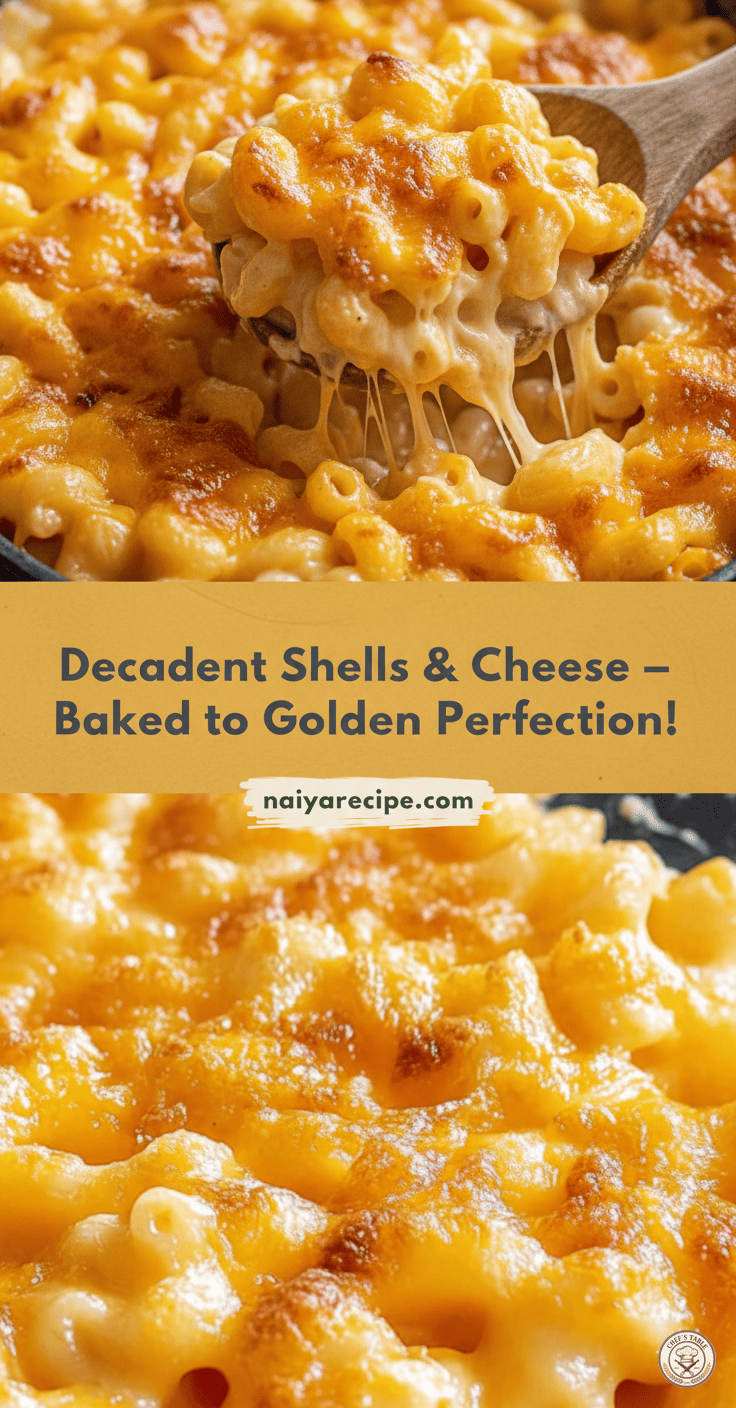
Welcome to a culinary journey that promises to elevate your understanding and appreciation of a timeless classic: baked macaroni and cheese. But this isn’t just any macaroni and cheese; this is “Decadent Shells & Cheese – Baked to Golden Perfection!” – a recipe meticulously crafted to deliver an unparalleled experience of creamy richness, comforting warmth, and that irresistible golden-brown crust we all adore. Forget everything you thought you knew about this dish, because we’re about to dive deep into the art and science of creating a masterpiece that will become a staple in your recipe repertoire.
For many, macaroni and cheese evokes memories of childhood, simple pleasures, and hearty family meals. It’s a dish that transcends generations and cultures, adapting to various interpretations while retaining its core essence of cheesy goodness. However, achieving that truly exceptional, restaurant-quality baked shells and cheese at home can sometimes feel like a daunting task. The good news is, with the right ingredients, techniques, and a touch of passion, it’s not only achievable but incredibly rewarding.
This recipe focuses on shells rather than traditional elbows, which are excellent for cradling the luscious cheese sauce, ensuring every bite is a delightful explosion of flavor and texture. The choice of pasta is crucial, but equally important is the cheese blend, the béchamel base, and the baking process that culminates in that coveted golden crust. We’ll explore each component in detail, offering tips and tricks to ensure your success.
The Foundation: A Rich and Creamy Béchamel
The heart of any truly magnificent baked macaroni and cheese is its béchamel sauce. This classic French mother sauce, made from a roux (butter and flour cooked together) and milk, provides the essential creamy base that binds the cheese and pasta into a harmonious symphony of flavors. Our béchamel isn’t just a thickener; it’s a flavor carrier, infused with subtle aromatics that lay the groundwork for a truly decadent experience.
Ingredients for the Béchamel:
- Unsalted Butter: The foundation of our roux. Unsalted butter allows us to control the overall saltiness of the dish.
- All-Purpose Flour: The thickening agent. Cooking the flour sufficiently in the butter is key to preventing a raw flour taste.
- Whole Milk: Full-fat milk is essential for richness and creaminess. Do not skimp here; skim or low-fat milk will result in a thinner, less satisfying sauce.
- Nutmeg: A pinch of freshly grated nutmeg is the secret ingredient that elevates a béchamel from good to extraordinary. It adds a warm, subtle, almost ethereal note that complements the cheese beautifully.
- White Pepper: Offers a gentle spice without the visual distraction of black pepper flecks.
Making the Béchamel:
- Melt the Butter: In a large, heavy-bottomed saucepan or Dutch oven, melt the unsalted butter over medium heat. A heavy bottom ensures even heat distribution and prevents scorching.
- Add the Flour (Roux): Once the butter is melted and gently bubbling, sprinkle in the all-purpose flour. Whisk continuously for 2-3 minutes, creating a smooth paste. This is your roux. Cooking it for this duration helps to cook out the raw flour taste. You’re looking for a “blonde” roux – light in color, not browned.
- Gradually Whisk in Milk: Slowly, in a steady stream, whisk in the cold whole milk. It’s crucial to add the milk gradually and whisk constantly to prevent lumps. The mixture will initially be very thick, but as you add more milk, it will smooth out.
- Thicken the Sauce: Continue to whisk the sauce over medium heat until it comes to a gentle simmer and thickens. This usually takes about 5-8 minutes. The sauce should be thick enough to coat the back of a spoon.
- Season the Béchamel: Remove from heat and stir in the freshly grated nutmeg and white pepper. Taste and adjust seasoning if necessary, keeping in mind that the cheese will add significant saltiness.
The Cheese Blend: A Symphony of Flavors and Textures
Choosing the right cheese blend is paramount to achieving depth of flavor and the perfect melt. A single cheese often falls short, offering either too much sharpness, not enough creaminess, or an undesirable texture when melted. A thoughtful blend, however, combines the best attributes of several cheeses.
Our Recommended Cheese Blend:
- Sharp Cheddar: The backbone of our cheese sauce, providing that classic, tangy, and robust cheddar flavor. Sharp cheddar melts beautifully and adds a vibrant orange hue.
- Gruyère: A semi-hard Swiss cheese with a nutty, earthy, and slightly sweet flavor. Gruyère melts incredibly smoothly and contributes a sophisticated depth to the sauce.
- Fontina: A semi-soft Italian cheese known for its exceptional melting properties and creamy, buttery flavor. It helps create that desirable gooey, stretchy texture.
- Smoked Gouda (optional, but highly recommended): For an added layer of complexity and a subtle smoky aroma, a touch of smoked gouda can be a game-changer. It introduces a delightful nuance that elevates the dish.
Tips for Cheese:
- Grate Your Own: This is a non-negotiable step for truly superior results. Pre-shredded cheeses often contain anti-caking agents like cellulose, which can prevent them from melting smoothly and result in a grainy sauce. Grating your own cheese ensures a silky, luxurious texture.
- Room Temperature Cheese: Allowing your grated cheese to come to room temperature for about 15-20 minutes before adding it to the béchamel can help it melt more evenly and smoothly.
Incorporating the Cheese:
Once your béchamel is perfectly thickened and seasoned, remove the saucepan from the heat. Begin adding your grated cheeses in handfuls, stirring constantly until each addition is fully melted and incorporated before adding more. This gradual process helps prevent the cheese from clumping and ensures a smooth, homogeneous sauce. Reserve a portion of the sharp cheddar for the top crust.
The Pasta: Shells for Superior Sauce Cradling
While elbows are traditional, medium-sized shells (conchiglie) are an inspired choice for this decadent dish. Their concave shape acts like tiny little cups, perfectly cradling the rich cheese sauce in every single bite. This ensures maximum flavor and a truly satisfying texture.
Cooking the Pasta:
- Boil Water: Bring a large pot of generously salted water to a rolling boil. Salting the pasta water is crucial for seasoning the pasta from within. It should taste like the ocean.
- Cook Al Dente: Add the shells and cook according to package directions, but only to al dente. This means they should still have a slight bite to them. Remember, they will continue to cook in the oven, and you don’t want mushy pasta.
- Drain Thoroughly: Once cooked, drain the pasta thoroughly in a colander. Do not rinse the pasta; the residual starch helps the sauce adhere.
Assembling and Baking: The Path to Golden Perfection
With your creamy cheese sauce and perfectly cooked shells ready, it’s time to bring it all together and prepare for baking.
Assembly:
- Combine Pasta and Sauce: In a large mixing bowl, gently add the drained shells to the cheese sauce. Fold until every shell is generously coated in the luscious sauce. Be careful not to overmix, as this can break down the pasta.
- Prepare Baking Dish: Lightly butter or grease a large (e.g., 9×13 inch) baking dish. This prevents sticking and contributes to that beautiful golden crust.
- Transfer to Dish: Pour the pasta and cheese mixture into the prepared baking dish, spreading it evenly.
- The Golden Topping: Sprinkle the reserved sharp cheddar cheese evenly over the top of the pasta. For an extra layer of crunch and flavor, consider adding a sprinkle of panko breadcrumbs mixed with a tablespoon of melted butter over the cheese. This step is optional but highly recommended for the ultimate golden perfection.
Baking:
- Preheat Oven: Preheat your oven to 375°F (190°C).
- Bake Covered: Cover the baking dish tightly with aluminum foil. Bake for 20 minutes. This initial covered baking allows the dish to heat through evenly and ensures the pasta doesn’t dry out.
- Bake Uncovered for Golden Crust: Remove the foil and continue to bake for another 25-30 minutes, or until the top is bubbly, deeply golden brown, and irresistibly crispy. Keep an eye on it to prevent burning. If it’s browning too quickly, you can loosely tent it with foil again.
Serving Suggestions and Variations
Once out of the oven, allow your “Decadent Shells & Cheese” to rest for 10-15 minutes before serving. This allows the sauce to set slightly, making it easier to portion and ensuring it doesn’t run everywhere. The wait is agonizing, but worth it!
Serving Suggestions:
- As a Main Course: This dish is hearty enough to be a standalone meal. Pair it with a simple green salad dressed with a light vinaigrette to cut through the richness.
- As a Side Dish: It makes an incredible side to roasted chicken, grilled steak, or a simple vegetable medley.
- For a Crowd: This recipe is perfect for potlucks, family gatherings, or holiday meals. It’s a guaranteed crowd-pleaser.
Variations and Enhancements:
- Spice It Up: Add a pinch of cayenne pepper or a dash of hot sauce to the béchamel for a subtle kick.
- Herbaceous Notes: Fresh thyme or rosemary can be added to the béchamel while it simmers for an aromatic twist.
- Roasted Garlic: Sautéed or roasted garlic can be incorporated into the béchamel for a deeper, sweeter garlic flavor.
- Mushroom Medley: Sautéed mushrooms can be folded into the mixture for an earthy addition.
- Crispy Fried Onions: A sprinkle of crispy fried onions on top during the last 10 minutes of baking adds an incredible texture and savory crunch.
- Different Pasta Shapes: While shells are fantastic, feel free to experiment with other shapes like cavatappi, rotini, or even penne.
Troubleshooting Common Issues
Even the most seasoned home cooks can encounter hiccups. Here are some common issues and how to address them:
- Grainy Cheese Sauce: This is almost always due to using pre-shredded cheese or adding the cheese to a sauce that is too hot. Remember to grate your own and remove the béchamel from the heat before incorporating the cheese.
- Lumpy Béchamel: This usually happens if the milk is added too quickly or if it’s not cold. Gradually whisking in cold milk will prevent lumps. If you end up with a few lumps, a quick pass with an immersion blender or through a fine-mesh sieve can salvage it.
- Dry Mac and Cheese: Overcooking the pasta or not having enough sauce can lead to a dry dish. Ensure pasta is cooked al dente and there’s plenty of béchamel. Covering the dish for the initial bake also helps retain moisture.
- Soggy Pasta: This is a result of overcooking the pasta before baking. Stick to al dente!
The Joy of Homemade Comfort
There’s an undeniable satisfaction that comes from creating a truly exceptional dish from scratch. This “Decadent Shells & Cheese – Baked to Golden Perfection!” recipe isn’t just about following steps; it’s about understanding the nuances of each ingredient and technique to build layers of flavor and texture. From the creamy béchamel to the thoughtful cheese blend, and the perfect pasta, every element plays a crucial role in achieving that ultimate comfort food experience.
So, gather your ingredients, put on your apron, and prepare to impress yourself and your loved ones with a dish that is far more than just macaroni and cheese. It’s a celebration of flavor, a testament to the power of homemade goodness, and a guaranteed crowd-pleaser that will have everyone asking for seconds. Enjoy the process, savor the aroma, and delight in every single decadent, golden, and perfectly cheesy bite! Visit naiyarecipe.com for more incredible recipes that bring joy to your kitchen.