
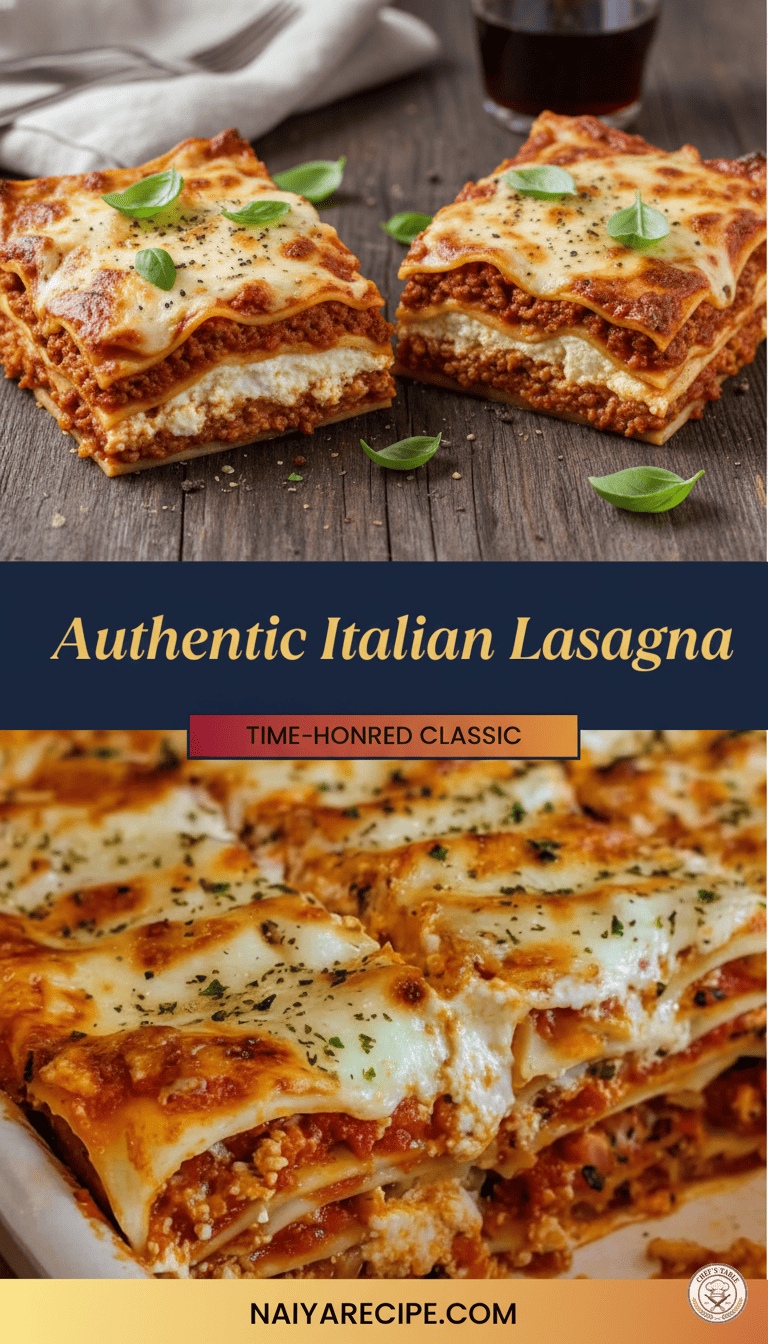
There are dishes that simply transcend time and trends, becoming staples in kitchens and hearts across generations. Lasagna, with its comforting layers of pasta, rich tomato sauce, creamy cheese, and savory meat, is undoubtedly one of them. It’s a dish that evokes warmth, family gatherings, and the sheer joy of a perfectly balanced, deeply flavorful meal. Forget the quick fixes and pre-made versions; today, we’re diving into the creation of an Authentic Italian Lasagna, a recipe that honors tradition and delivers an unforgettable culinary experience.
This isn’t just any lasagna recipe; it’s a journey into the heart of Italian cooking, focusing on fresh ingredients, meticulous layering, and a slow-cooked ragù that forms the very soul of the dish. We’re steering clear of common shortcuts and ingredients that might stray from a truly traditional and broadly appealing approach, ensuring this recipe is perfect for everyone, regardless of dietary preferences concerning certain types of meat or spirits. Get ready to impress your family and friends with a lasagna that tastes like it came straight from a nonna’s kitchen in Italy.
The Foundation: A Rich, Flavorful Ragù
The secret to an authentic Italian lasagna lies heavily in its ragù – a slow-simmered meat sauce that’s miles away from a simple jar of marinara. This isn’t just about combining ingredients; it’s about building layers of flavor over time, allowing each component to meld into a harmonious symphony.
Ingredients for the Ragù:
- 2 tablespoons olive oil
- 1 large onion, finely chopped
- 2 carrots, finely chopped
- 2 celery stalks, finely chopped
- 1.5 pounds ground beef (lean or regular, based on preference)
- 2 (28-ounce) cans crushed tomatoes
- 1 (6-ounce) can tomato paste
- 2 cups beef broth (ensure it’s free of any forbidden ingredients)
- 4 cloves garlic, minced
- 2 bay leaves
- 1 teaspoon dried oregano
- 1/2 teaspoon dried basil
- Salt and freshly ground black pepper to taste
- A pinch of red pepper flakes (optional, for a subtle kick)
- 1/2 cup whole milk (this helps tenderize the meat and mellow the acidity of the tomatoes, a classic Italian trick)
Instructions for the Ragù:
- Sauté the Soffritto: Heat the olive oil in a large, heavy-bottomed pot or Dutch oven over medium heat. Add the chopped onion, carrots, and celery (this trio is known as “soffritto,” the aromatic base of many Italian dishes). Sauté gently for 8-10 minutes, until the vegetables are softened and translucent, but not browned. This step is crucial for building a deep flavor base.
- Brown the Meat: Add the ground beef to the pot. Break it up with a spoon and cook until it’s evenly browned. Drain any excess fat if necessary, but a little fat adds to the flavor.
- Add Garlic and Tomato Paste: Stir in the minced garlic and cook for another minute until fragrant. Add the tomato paste and cook, stirring constantly, for 2-3 minutes. This step, often called “caramelizing” the tomato paste, deepens its flavor and removes any raw metallic taste.
- Simmer with Liquids and Seasonings: Pour in the crushed tomatoes, beef broth, and milk. Add the bay leaves, oregano, basil, salt, pepper, and red pepper flakes (if using). Bring the sauce to a gentle simmer.
- Low and Slow: Reduce the heat to low, cover partially, and let the ragù simmer for at least 2-3 hours, or even longer (up to 4 hours is ideal). Stir occasionally to prevent sticking. The longer it simmers, the richer and more complex the flavors will become. The meat will become incredibly tender, and the sauce will thicken beautifully. Remember to remove the bay leaves before assembling the lasagna.
The Creamy Heart: Béchamel or Ricotta?
While many Americanized lasagna recipes rely solely on ricotta cheese, a truly authentic Italian lasagna (especially from the Emilia-Romagna region) often features béchamel sauce. However, a ricotta-based filling can also be delicious and is certainly a valid choice for many. For this recipe, we’ll offer a delicious ricotta mixture that brings creaminess and a slightly tangy counterpoint to the rich ragù.
Ingredients for the Ricotta Filling:
- 2 pounds whole milk ricotta cheese
- 1 large egg
- 1/2 cup grated Parmesan cheese, plus extra for sprinkling
- 1/4 cup chopped fresh parsley
- Salt and freshly ground black pepper to taste
- A pinch of nutmeg (optional, but highly recommended for depth)
Instructions for the Ricotta Filling:
- In a medium bowl, combine the ricotta cheese, egg, Parmesan cheese, fresh parsley, salt, pepper, and nutmeg (if using).
- Mix well until all ingredients are thoroughly combined and the mixture is smooth. Set aside.
The Pasta: The Backbone of Lasagna
Choosing the right pasta is crucial. While “no-boil” lasagna noodles are convenient, traditional lasagna often uses dried lasagna sheets that are briefly par-boiled or cooked directly in the sauce. For the best texture and authentic feel, we recommend using regular dried lasagna noodles.
Preparing the Lasagna Noodles:
- 1 (16-ounce) package dried lasagna noodles (about 12-14 sheets)
- Cold water (for shocking the noodles)
- Bring a large pot of salted water to a rolling boil.
- Add the lasagna noodles, stirring occasionally to prevent them from sticking. Cook according to package directions until al dente – still firm to the bite. Do not overcook, as they will continue to cook in the oven.
- Immediately drain the noodles and rinse them under cold water to stop the cooking process and prevent them from sticking together. Lay them flat on parchment paper or a clean kitchen towel while you assemble the lasagna.
The Glorious Layers: Assembling Your Masterpiece
This is where all your hard work comes together! Assembling lasagna is a meditative process, a careful construction of flavors and textures that will bake into a cohesive, delectable dish.
Additional Ingredients for Assembly:
- 1 pound fresh mozzarella cheese, shredded or thinly sliced
- Extra grated Parmesan cheese for sprinkling
Assembly Instructions:
- Preheat Oven: Preheat your oven to 375°F (190°C).
- Prepare Baking Dish: Lightly grease a 9×13-inch baking dish.
- First Sauce Layer: Spread a thin layer of ragù (about 1 cup) on the bottom of the prepared baking dish. This prevents the noodles from sticking and provides moisture from the start.
- First Noodle Layer: Arrange a single layer of cooked lasagna noodles over the sauce, slightly overlapping if necessary to cover the entire surface. You will likely use 3-4 noodles per layer, depending on their size.
- Ricotta Layer: Evenly spread half of the ricotta cheese mixture over the noodles.
- Mozzarella and Parmesan: Sprinkle generously with a layer of shredded mozzarella and a good dusting of grated Parmesan cheese.
- Second Sauce Layer: Spoon about 1.5 to 2 cups of ragù over the cheese layer, spreading it gently to cover.
- Repeat the Layers:
- Add another layer of lasagna noodles.
- Spread the remaining half of the ricotta cheese mixture.
- Sprinkle with mozzarella and Parmesan.
- Add another generous layer of ragù.
- Final Noodle Layer and Topping: Place the last layer of lasagna noodles on top. Cover generously with the remaining ragù.
- Cheese Grand Finale: Top the entire lasagna with a generous amount of shredded mozzarella and a final sprinkle of grated Parmesan cheese. This will create that beautiful, bubbly, golden-brown crust.
Baking to Perfection
Now for the magic to happen in the oven!
- Cover and Bake: Cover the baking dish tightly with aluminum foil.
- Initial Bake: Bake for 25 minutes. The foil helps steam the noodles and allows the flavors to meld without the top browning too quickly.
- Uncover and Brown: Remove the foil and continue to bake for another 20-25 minutes, or until the top is golden brown and bubbly, and the sauce is simmering at the edges. If the top is browning too quickly, you can loosely tent it with foil again.
- Resting Period: This step is absolutely crucial! Once baked, remove the lasagna from the oven and let it rest for at least 15-20 minutes before slicing and serving. This allows the layers to set, making it much easier to cut neat portions and preventing it from falling apart. If you cut it too soon, the cheese and sauce will ooze out, and the layers won’t hold.
Serving Your Authentic Italian Lasagna
Once rested, slice your beautiful lasagna into generous squares. Serve hot, perhaps with a simple green salad dressed with vinaigrette and some crusty bread to sop up any extra sauce. A sprinkle of fresh basil or parsley before serving adds a touch of freshness and color.
This Authentic Italian Lasagna is more than just a meal; it’s an experience. It’s a testament to the power of slow cooking, quality ingredients, and the simple joy of sharing good food. The depth of flavor in the ragù, the creamy ricotta, the perfectly cooked pasta, and the blanket of melted cheese all come together in a dish that truly embodies comfort and tradition.
Take your time with each step, savor the aromas that fill your kitchen, and enjoy the process of creating something truly special. This recipe is designed to bring a piece of Italy right to your dining table, proving that some classics are timeless for a very delicious reason. Enjoy every bite!