
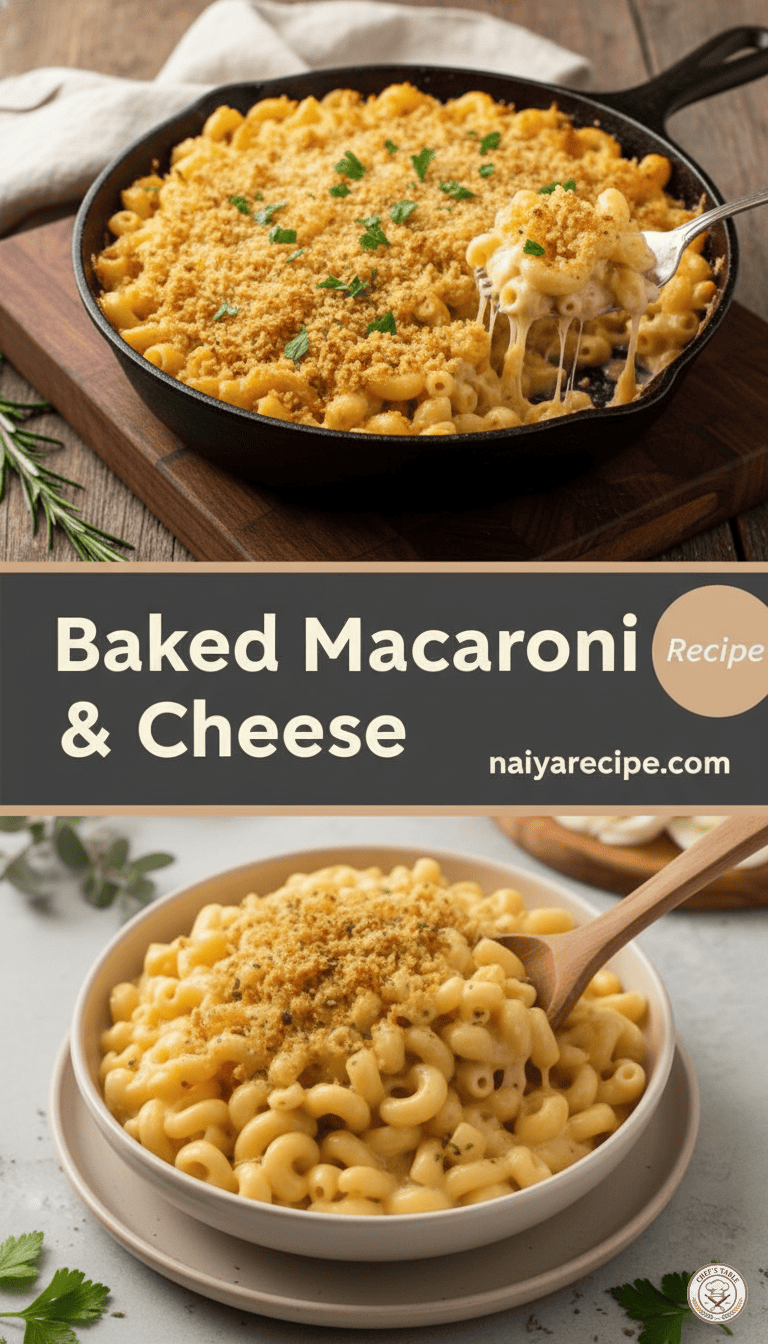
Baked Macaroni & Cheese is the ultimate comfort food, a dish that evokes warmth, nostalgia, and pure culinary bliss. This classic American staple, with its creamy cheese sauce and tender macaroni, topped with a golden, crispy crust, is more than just a meal; it’s an experience. Whether you’re gathering with family for a holiday feast, bringing a potluck dish to a community event, or simply craving a satisfying weeknight dinner, this baked macaroni & cheese recipe is sure to be a crowd-pleaser.
Unlike its stovetop counterpart, baked macaroni & cheese offers an added layer of texture and depth of flavor. The time spent in the oven allows the cheese sauce to meld beautifully with the pasta, creating a rich and complex taste profile. The topping, whether it’s breadcrumbs, crushed crackers, or even a sprinkle of extra cheese, becomes gloriously golden and provides a delightful contrast to the creamy interior. It’s this textural interplay that elevates baked mac & cheese from good to truly extraordinary.
The beauty of this dish lies in its simplicity and versatility. While the core ingredients remain consistent – pasta, cheese, and a creamy base – there are endless possibilities for customization. You can experiment with different cheese blends, add various spices, or incorporate other ingredients to make it uniquely your own. This recipe provides a foundational guide to achieving a perfect baked macaroni & cheese, encouraging you to adapt it to your taste preferences.
The Heart of the Dish: Choosing Your Cheeses
The cheese is, without a doubt, the most important component of baked macaroni & cheese. A good blend of cheeses will offer a complex flavor profile, excellent melt, and a beautiful golden color. While cheddar is the traditional choice, don’t be afraid to branch out.
For this recipe, we’ll focus on a classic blend that provides both sharpness and creaminess:
- Sharp Cheddar: This is your workhorse cheese. Sharp cheddar offers that iconic, tangy flavor that defines mac & cheese. Choose a good quality block cheddar and grate it yourself. Pre-shredded cheeses often contain anti-caking agents that can make the sauce grainy.
- Gruyère: A wonderful addition for its nutty, earthy notes and excellent melting properties. Gruyère adds a sophisticated depth that elevates the dish beyond basic.
- Monterey Jack or Mozzarella: These cheeses are fantastic for creating that coveted gooey, stretchy texture. They melt incredibly smoothly and help bind the sauce.
- Smoked Gouda: For a subtle smoky flavor that adds another dimension, smoked Gouda is a fantastic choice. It pairs beautifully with cheddar and Gruyère.
Pro Tip on Cheese: Always grate your own cheese from blocks. The difference in melt and texture is significant. It might take a few extra minutes, but the superior result is well worth the effort.
The Creamy Foundation: Building the Béchamel
The creamy cheese sauce starts with a béchamel, a classic French mother sauce made from a roux (butter and flour) and milk. This creates a smooth, velvety base that suspends the cheese perfectly and prevents the sauce from breaking.
Ingredients for the Béchamel:
- Unsalted Butter: Forms the fat component of the roux and adds rich flavor.
- All-Purpose Flour: Thickens the sauce, creating the desired consistency.
- Milk (Whole Milk Recommended): Whole milk provides the richest, creamiest sauce. You can use 2% milk, but the sauce will be slightly less indulgent.
- Seasonings: Salt, freshly ground black pepper, a pinch of nutmeg, and a touch of mustard powder are essential. Nutmeg enhances the cheese flavor, while mustard powder (don’t worry, you won’t taste mustard!) acts as a powerful flavor enhancer for dairy.
Making the Béchamel:
- Melt the Butter: In a large saucepan or Dutch oven, melt the butter over medium heat.
- Add Flour and Cook Roux: Whisk in the flour and cook, stirring constantly, for 1-2 minutes. This is your roux. It should be light in color and smell slightly nutty. Cooking the flour prevents a raw flour taste in your sauce.
- Gradually Add Milk: Slowly whisk in the milk, a little at a time, ensuring each addition is fully incorporated before adding more. This prevents lumps. Continue whisking until the sauce is smooth and thickened. Bring it to a gentle simmer, still whisking occasionally, until it coats the back of a spoon.
- Season the Béchamel: Remove from heat and stir in the salt, pepper, nutmeg, and mustard powder.
The Pasta: Macaroni of Choice
While elbow macaroni is traditional, you can use other short pasta shapes that have nooks and crannies to hold the cheese sauce. Cavatappi, shells, and rotini are excellent alternatives.
Cooking the Pasta:
- Boil Water: Bring a large pot of salted water to a rolling boil.
- Cook Al Dente: Add the macaroni and cook according to package directions, but cook it slightly under al dente. This means it should still have a little bite to it, as it will continue to cook in the oven. If you overcook it now, it will become mushy in the baked dish.
- Drain Thoroughly: Drain the pasta well. Do not rinse it; the starch clinging to the pasta helps the cheese sauce adhere.
The Glorious Topping: A Crispy Crown
A crunchy topping is essential for baked macaroni & cheese, providing a textural contrast that makes each bite irresistible.
Topping Options:
- Breadcrumbs (Panko Recommended): Panko breadcrumbs are fantastic for their light, airy texture and exceptional crispiness. Toss them with melted butter for extra richness and golden browning.
- Crushed Crackers: Butter crackers or even seasoned croutons can be crushed and used as a topping.
- Extra Cheese: A layer of freshly grated cheddar or Parmesan on top will create a beautiful cheesy crust.
- Herbs: Freshly chopped parsley or chives can be mixed with the breadcrumbs or sprinkled on top after baking for freshness and color.
Assembling and Baking Your Masterpiece
Once you have your béchamel, cooked pasta, and grated cheese ready, assembly is quick and easy.
Instructions for Assembly:
- Combine Cheese and Béchamel: With the béchamel removed from the heat, gradually add the grated cheeses, stirring until completely melted and smooth. Reserve a small amount of cheese if you plan to mix it with your breadcrumb topping.
- Add Pasta to Sauce: Pour the drained macaroni into the cheese sauce and stir gently to ensure every piece is thoroughly coated.
- Prepare Baking Dish: Lightly grease a 9×13-inch baking dish.
- Transfer to Dish: Pour the macaroni and cheese mixture into the prepared baking dish, spreading it evenly.
- Add Topping: If using breadcrumbs, toss them with a tablespoon or two of melted butter and sprinkle evenly over the mac and cheese. If using extra cheese, sprinkle that on top now.
- Bake: Place the baking dish in a preheated oven (usually around 375°F or 190°C) and bake for 20-30 minutes, or until the top is golden brown and bubbly. The baking time can vary depending on your oven and the depth of your dish.
- Rest: Once baked, remove from the oven and let it rest for 5-10 minutes before serving. This allows the sauce to set slightly, preventing it from being too runny when scooped.
Tips for the Perfect Baked Macaroni & Cheese
- Don’t Overcook the Pasta: This is crucial. Slightly undercooked pasta will absorb some of the cheese sauce during baking, resulting in a perfectly tender bite. Overcooked pasta will turn mushy.
- Grate Your Own Cheese: Seriously, it makes a huge difference in the creaminess and texture of your sauce. Pre-shredded cheese contains starches that can make your sauce gritty.
- Taste and Adjust: Always taste your béchamel before adding the cheese and then taste the final cheese sauce. Adjust salt, pepper, and other seasonings as needed. Remember, cheese is salty, so add salt in stages.
- Don’t Rush the Roux: Cooking the flour in butter for a couple of minutes helps eliminate the raw flour taste.
- Gradually Add Milk: Adding milk slowly and whisking constantly is the key to a lump-free béchamel.
- Rest Time is Important: Allowing the baked mac and cheese to rest for a few minutes after coming out of the oven helps the sauce set and prevents it from being a runny mess when you serve it.
- Embrace Customization: This recipe is a fantastic starting point. Feel free to experiment with different cheese combinations, add a pinch of cayenne pepper for a subtle kick, or stir in some sautéed onions or bell peppers for extra flavor and vegetables.
Serving Suggestions
Baked Macaroni & Cheese is hearty enough to be a meal on its own, especially when paired with a fresh side salad to cut through the richness. It also makes an excellent side dish for a variety of main courses.
- Grilled Chicken or Fish: The creamy mac and cheese provides a comforting contrast to lean protein.
- Steamed Green Vegetables: Broccoli, green beans, or asparagus offer a healthy and colorful addition to your plate.
- Coleslaw or Salad: A crisp, tangy coleslaw or a light garden salad can balance the richness of the dish.
- Sweet Potato Fries: For a truly indulgent comfort food spread.
Storage and Reheating
Baked macaroni & cheese stores well and makes for delicious leftovers.
- Storage: Store cooled leftovers in an airtight container in the refrigerator for up to 3-4 days.
- Reheating: For best results, reheat individual portions in the microwave, adding a splash of milk to help rehydrate the sauce. For a larger portion or the whole dish, cover it with foil and reheat in a preheated oven (around 300°F or 150°C) until warmed through, removing the foil for the last few minutes if you want to re-crisp the topping.
Baked Macaroni & Cheese is more than just food; it’s a culinary hug, a dish that brings smiles to faces and warmth to hearts. This recipe provides a solid foundation for creating a truly exceptional version of this beloved classic. With its rich, creamy cheese sauce, perfectly cooked pasta, and irresistible crispy topping, it’s a dish that will undoubtedly become a treasured staple in your recipe collection. Enjoy the process of creating this comforting masterpiece, and savor every delicious, cheesy bite!